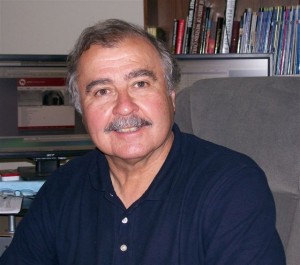
Interview with activist and economic pioneer Wayne Walton. Wayne is an entrepreneur and founder of Mountain Hours: a community-based, usury-free, alternative currency. Much of his activism takes place in his native Summit County, Colorado where he is currently working toward restoring human sovereignty through monetary reform. More information about Wayne, Mountain Hour Money, and Jubilee Shares can be found at http://mtnhours.com/ as well as http://start.hourmoney.net/
“The real question to me is not whether private banks should be allowed to create money through the lending process, but whether – and to what extent – there should be private banking at all. Nationalized banking, at least the nationalization of big banking, should be considered, in my opinion.”
A few days ago, we published a podcast-interview with Ben Dyson, of Positive Money. After sharing it on Facebook, Dmytri Kleiner suggested the following article, written by Peter Cooper and originally published in heteconomist.com, which criticises some of Positive Money’s proposals. Aside from his suggestion to stop playing nice with private banking altogether (which I agree with), Cooper states, “The biggest problem is the notion of an undemocratic, independent committee determining the government’s capacity to create new money”. Conversely, Positive Money argues that “… the MCC (Monetary Creation Committee) is a democratically accountable transparent public body with the remit to work in the public interest.”
Now, to me, “democratically accountable” isn’t the same thing as democratically elected, even if it arguably is, by proxy. Nor do I think that representative democracy is all that democratic, but I understand Positive Money’s choice to keep their narrative within mainstream ideology, even if a lot of it is quite subversive. They’re certainly doing a good job of opening Pandora’s box in exposing money creation, and it’s my hope that this will serve as a gateway drug to the work of Silvio Gesell or Charles Eisenstein, among others.
We’ve long known that life isn’t fair and that the world’s wealth is unevenly distributed. But the latest factoid from Oxfam on global poverty and inequality is breathtaking. In a new report, the nonprofit reports that just 85 people—the richest of the world’s rich—hold as much wealth as the poorest 3.5 billion. That’s half the world’s population.
In other words, the top 0.00000001 percent are worth as much as the bottom 50 percent combined. The top 1 percent, meanwhile, control nearly half the world’s wealth, or 65 times as much as the world’s less-fortunate half.
Why do the people in charge of our security apparatus behave as though they can do whatever they want? Because no one has stopped them.
Sen. Dianne Feinstein, a stalwart ally of the nation's intelligence agencies, says she is appalled to learn they have been spying on her committee, ignoring federal law and possibly trampling on the Constitution in a heavy-handed targeting of innocent people. Hey! Maybe now she knows how the rest of us feel.
Web content is a way for companies to attract attention and keep the organization in relevant social media feeds and search results. It is time consuming to generate content. Linguastat claims it offers a solution combining the power of big data and content.
Linguastat tells users that it will turn “haystacks into gold.” It is an interesting tagline, but not as believable as Linguastat’s software description:
“Built on proprietary natural language and artificial intelligence our cloud-based Content Transformation Platform ™ reads, understands, and transforms the vast amount of Big Data found in the world and automatically publishes unique, insightful, and optimized digital stories…at massive scale…at a fraction of the cost!”
If your company is tired of hiring third-parties or using valuable employee time developing Web content, Linguastat offers a solution. It will annotate and analyze your big data and the software’s AI will generate “optimized digital stories.” It also saves typing time and spares people from inflamed carpal tunnel syndrome.
Without seeing the finished product and the less than appealing “turning haystacks to gold” tagline, it is wise to be skeptical about Linguastat. They might be worth researching, however, and getting a trial run.
The American Gulag, the largest prison system in human history is now facing transformation into the largest geriatric ward in the world. As this report makes clear we pay dearly for the stupidity of our social policies — you pay dearly that is, since it is all being done with tax monies. Most of these people are in jail for Marijuana. We spend more on warehousing aging prisoners than we do for elementary and sec! ondary schools. How stupid is that? Click through to see the accompanying chart.
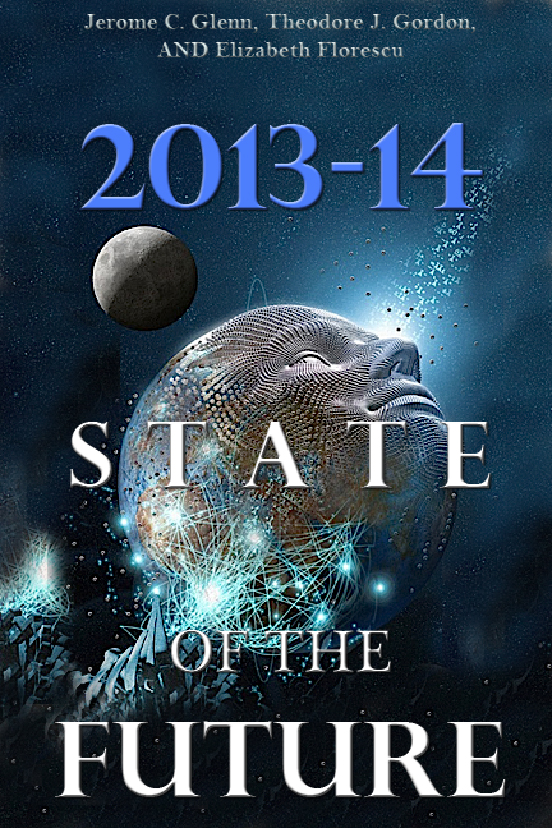
The “State of the Future” is a comprehensive annual overview of the present global situation and prospects for humanity. It integrates forecasts, trends, and judgments of thought leaders and scholars from around the world, sharing important future possibilities to improve strategies today. Led by Jerome Glenn, the Millenium Project sponsors this collective intelligence endeavor.
Good and bad news
Click on Image to Enlarge
The report shows that the world is improving more than most pessimists realize. For example:
People around the world are becoming healthier, wealthier, better educated, more peaceful, increasingly connected, and living longer.
Child mortality rate has dropped 47% since 1990, extreme poverty in the developing world fell from 50% in 1981 to 21% in 2010, primary school completion rates grew from 81% in 1990 to 91% in 2011, only one transborder war occurred in 2013.
Nearly 40% of humanity is connected via the Internet, and life expectancy has increased 10 years over the past 20 years to reach 70.5 years today.
However, the report also warns that water tables are falling on all continents, intrastate conflicts and refugees are increasing, glaciers are melting, income gaps are increasingly obscene, coral reefs are dying, ocean acidity is increasing, ocean dead zones have doubled every decade since the 1960s, half the world’s topsoil is destroyed, youth unemployment has reached dangerous proportions, traffic jams and air pollution are strangling cities, $1–1.6 billion annually is paid in bribes, organized crime gets twice the money per year than all the military budgets combined, and half the world is potentially unstable.