Neal Rauhauseer: Afghanistan Coalition Casualties, Opium Poppies & Drone Strikes

04 Inter-State Conflict, 05 Civil War, 08 Wild Cards, 09 Terrorism, 10 Transnational Crime, Cultural Intelligence, Peace Intelligence
Neal Rauhauser
Neal Rauhauser

Afghanistan: Coalition Casualties, Opium Poppies & Drone Strikes


Here’s a map of Afghanistan’s opium poppy production by province:


Afghanistan Opium Prodution

Afghanistan Opium Prodution


Here’s a map of coalition casualties in Afghanistan, with a highlight of Waziristan, where drone strikes are most prevalent.


Afghanistan Casualties

Afghanistan Casualties

Kandahar and Helmand are the gold mine, they are where coalition troops were most at risk. The area being droned is Waziristan, home to the political leadership of the bi-national Haqqani network. Afghan Logistics Just Got Much Harder describes the added distance and costs we face in our withdrawal due to the slaughter of 24 Pakistani troops in 2011. We are simply not wanted in Afghanistan, and the residents have the temperament to make that decision, and then make it stick.

This will never work politically, but if we intended to reduce the hazard Afghanistan poses the right thing to do would have been a short, sharp action against radicalized Arabs in the country, then spending our dollars facilitating legal use of the country’s opium crop. Global Access to Pain Relief Initiative is just one many efforts that could use opium derivatives, relieving the suffering of both Afghans and cancer victims worldwide.

Chuck Spinney: Uri Avner on Greatest Danger to Israel – Meddling Idiot “Leaders”

Cultural Intelligence, Government, Idiocy, Peace Intelligence
Chuck Spinney
Chuck Spinney

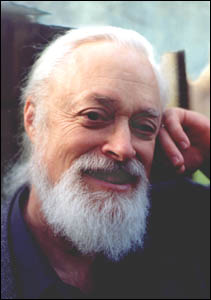
The author of this incisive — and entertaining — analysis of (1) Israel's political condition and (2) its arrogance with regard to pernicious meddling in the domestic politics of it friends is a former member of the Knesset, a hero of the 1948 War, and perhaps Israel's leading (and most rational) peace activist.  He is also one of my heros.

Chuck Spinney

Jim Fetzer: Fallujah Mutations Study

07 Other Atrocities
Jim Fetzer
Jim Fetzer

Scientists Insist [Small] Nuclear Munitions Used in Iraq

Jim Fetzer, Lauren Moret, Christopher Busby

J im Fetzer, McKnight Professor Emeritus at the University of Minnesota Duluth, is a former Marine Corps officer and the founder of Scholars for 9/11 Truth.

Leuren Moret is an independent geoscientist who has done expert studies on the Fukushima disaster, radiation problems around the world including depleted uranium.

Dr. Christopher Busby is a visiting biomedical studies professor at the University of Ulster and is the co-author of reports about the effects of enriched uranium in Iraq especially in Fallujah.

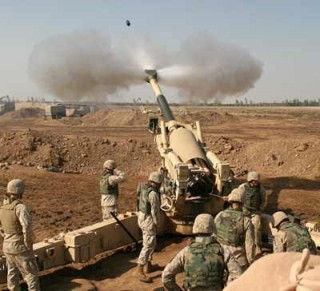
HEAVY FIRE POWER WAS USED IN FALLUJAH IN 2004: U.S. Marines fire Nov. 11, 2004, on Fallujah with a 155 mm Howitzer.

One of the weapons originally designed for this artillery piece was a tactical nuclear weapon (that could include a neutron warhead) designed by Samuel Cohen, to be fired in eastern Europe on Soviet troops during President Ronald Reagan’s term in office. [Photo: Lance Cpl. Samantha L. Jones]

On Friday, 28 October 2011, it was my honor to host Leuren Moret and Christopher Busby as my guests on “The Real Deal”, an internet radio program broadcast on M/W/F from 5-7 PM/CT over revereradio.net. Leuren Moret is an independent geoscientist who has done expert studies on the Fukushima disaster, radiation problems around the world including depleted uranium.

Continue reading “Jim Fetzer: Fallujah Mutations Study”

Tom Atlee: Our Responses to Existential Threats

Cultural Intelligence, Earth Intelligence
Tom Atlee
Tom Atlee

I explore here the diversity of responses – my own and others’ – to existential threats like extreme climate change … and I offer one way to map and make sense of those responses.

This essay makes an interesting companion to my earlier essay
Crisis Fatigue and the Co-Creation of Positive Possibilities

Dear friends,

In my last post I said that in this post I would “discuss some of my own strategies for affirming life in the strange circumstances in which we find ourselves… in the face of the possible end of civilization or of the human race itself.”

Working on this has turned out to be more complex, interesting, challenging, and productive than I expected – especially since my own responses to our “strange circumstances” have been changing so often, even day to day and hour to hour.

Continue reading “Tom Atlee: Our Responses to Existential Threats”

David Swanson: What Did Not Kill Mandela Made Him Stronger

Cultural Intelligence, Peace Intelligence
David Swanson
David Swanson

Nelson Mandela's story, if told as a novel, would not be deemed possible in real life.  Worse, we don't tell such stories in many of our novels.

A violent young rebel is imprisoned for decades but turns that imprisonment into the training he needs.  He turns to negotiation, diplomacy, reconciliation.  He negotiates free elections, and then wins them. He forestalls any counter-revolution by including former enemies in his victory.  He becomes a symbol of the possibility for the sort of radical, lasting change of which violence has proved incapable.  He credits the widespread movement in his country and around the world that changed cultures for the better while he was locked away.  But millions of people look to the example of his personal interactions and decisions as having prevented a blood bath.

Mandela was a rebel before he had a cause.  He was a fighter and a boxer.  Archbishop Desmond Tutu says that South Africa benefited greatly from the fact that Mandela did not emerge from prison earlier: “Had he come out earlier, we would have had the angry, aggressive Madiba. As a result of the experience that he had there, he mellowed. … Suffering either embitters you or, mercifully, ennobles you.  And with Madiba, thankfully for us, the latter happened.”

Continue reading “David Swanson: What Did Not Kill Mandela Made Him Stronger”

Berto Jongman: Campaign to Legislate End of Water for NSA in Utah…Going National

12 Water, Idiocy, Military
Berto Jongman
Berto Jongman

Some NSA Opponents Want to ‘Nullify' Surveillance With State Law

Activists say legislation can cut water, kill snooping at Utah Data Center

The National Security Agency has an Achilles heel, according to some anti-surveillance activists. The key vulnerability, according to members of the OffNow coalition of advocacy groups: The electronic spy agency's reliance on local utilities.

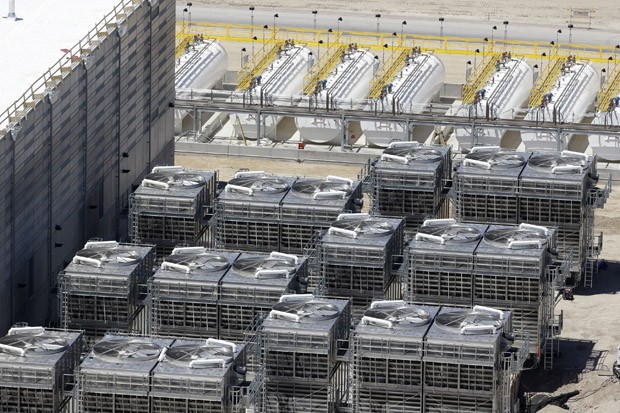
1.7 Million Gallons a DAY -- Water Utah Does Not Have to Spare...
1.7 Million Gallons a DAY — Water Utah Does Not Have to Spare…

The activists would like to turn off the water to the NSA's $1.5 billion Utah Data Center in Bluffdale, Utah, and at other facilities around the country.

Dusting off the concept of “nullification,” which historically referred to state attempts to block federal law, the coalition plans to push state laws to prohibit local authorities from cooperating with the NSA.

Draft state-level legislation called the Fourth Amendment Protection Act would – in theory – forbid local governments from providing services to federal agencies that collect electronic data from Americans without a personalized warrant.

Continue reading “Berto Jongman: Campaign to Legislate End of Water for NSA in Utah…Going National”

noble gold