INFORMATION SHARING AND COLLABORATION IN THE UNITED STATES INTELLIGENCE COMMUNITY: AN ETHNOGRAPHIC STUDY OF THE
NATIONAL COUNTERTERRORISM CENTER
Bridget Rose Nolan
A DISSERTATION in Sociology Presented to the Faculties of the University of Pennsylvania in Partial Fulfillment of the Requirements for the Degree of Doctor of Philosophy
On balance, then, the combination of structural and cultural issues discussed in this dissertation—the role of status, the flow of information, and the tension between secrecy and openness—suggests that NCTC has not achieved the information sharing and collaboration envisioned by the 9/11 Commission.
Welcome to the Free Software Supporter, the Free Software Foundation's monthly news digest and action update — being read by you and 70,716 other activists. That's 1,090 more than last month!
FSF seeks full-time senior GNU/Linux systems administrator
Questions about DRM? Visit our new FAQ
GNU's big “three-o”
New iPhones put more polish on Apple's restrictions
Interview with Caleb James DeLisle of cjdns
Recap of New Haven Software Freedom Day Cryptoparty
June 2013 – Torreón, Mexico – RMS at the Museo Arocena
Show your allegiance to GNU at the office with this GNU polo shirt!
Celebrate GNU's 30th birthday with this commemorative mug!
Twenty-one organizations ask Italian Data Protection Authority to publish readable documents
Jamaica Ministry of Health adopts GNU Health
LibreOffice migration in Valencia, Spain complete
MediaGoblin 0.5.0: Goblin Force
LibrePlanet featured resource: GNU 30th media
GNU Spotlight with Karl Berry: 23 new GNU releases!
GNU Toolchain Update
Richard Stallman's speaking schedule and other FSF events
Thank GNUs!
Take action with the FSF!
FSF seeks full-time senior GNU/Linux systems administrator
From September 24th
The FSF seeks a full-time senior systems administrator. The ideal candidate will be a well-rounded GNU/Linux systems administrator who enjoys learning and problem-solving. (S)he will be familiar with the free software community and how it works, and will be more interested in making a substantial contribution to software freedom and having employment consistent with ethical ideals than obtaining the highest salary.
The anti-DRM team at Defective by Design has compiled a Digital Restrictions Management (DRM) FAQ, or “Frequently Asked Questions” list, to address the most common misconceptions regarding DRM.
This past weekend, the FSF celebrated thirty years of GNU with free software supporters around from the world at our event in Cambridge, MA and at satellite events being held in eighteen different cities.
New iPhones put more polish on Apple's restrictions
From September 10th
As with previous iPhones, apps and devices come with a kill switch, third party peripherals are arbitrarily restricted, books and other media purchased from iTunes come with DRM, and all software must be cryptographically signed and approved by Apple. The iPhone 5s and 5c succeed in leaving their users at the mercy of Apple.
This is the latest installment of our Licensing and Compliance Lab's series on free software developers who choose GNU licenses for their works. In this edition, we talk to Caleb James DeLisle of cjdns, a mesh networking application.
Recap of New Haven Software Freedom Day Cryptoparty
From September 26th
Joshua Gay, FSF licensing and compliance manager, helped host and run a Software Freedom Day event in New Haven, Connecticut where he currently lives and works.
June 2013 – Torreón, Mexico – RMS at the Museo Arocena
From September 25th
On June 13th, 2013, RMS was at the Museo Arocena, in Torreón, Mexico, to give a speech hosted by the GULAG (the La Laguna GNU/Linux User Group) for their seventh Free Software Conference, to students, professors, and the general public.
Show your allegiance to GNU at the office with this GNU polo shirt!
From September 26th
Polo shirts featuring the new GNU head logo are now available in the GNU Press store for $35. Also available are limited edition GNU 30th anniversary travel mugs for $25.
Celebrate GNU's 30th birthday with this commemorative mug!
From September 27th
Celebrate the 30th anniversary of GNU with this limited edition commemorative travel mug. The side of the cup features the outline of the new GNU mascot logo in front of a rising yellow sun, and the lid is blue.
Twenty-one organizations ask Italian Data Protection Authority to publish readable documents
By FSF Europe, from September 21st
The Free Software Foundation Europe and twenty Italian civil society organizations wrote a letter to the President of the Authority for the Protection of Personal Data, asking the agency to ensure that all documents published on its website can be read and used with Free Software programs.
The Jamaica Ministry of Health and GNU Solidario have signed an agreement to cooperate in the implementation of GNU Health as the Free Health and Hospital Information System in this country.
The Valencia autonomous region government expects to save around 1.5 million euro per year on proprietary software licenses since having finished the migration to LibreOffice on all 120,000 desktop PCs of the administration which includes schools and courts. More important than the money, they have made a great advance toward user freedom.
Join the FSF and friends in updating the Free Software Directory
From September 30th
Tens of thousands of people visit directory.fsf.org each month to discover free software. Each entry in the Directory contains a wealth of useful information, from basic category and descriptions to version control, IRC channels, documentation, and licensing. The Free Software Directory has been a great resource to software users over the past decade, but it needs your help staying up-to-date with new and exciting free software projects.
To help, join our weekly IRC meetings on Fridays. Meetings take place in the #fsf channel on irc.gnu.org, and usually include a handful of regulars as well as newcomers. Everyone's welcome.
The next meeting is Friday, October 4th, from 2pm to 5pm EDT (18:00 to 21:00 UTC). Details here:
After this meeting, you can check https://www.fsf.org/events to see the rest of October's weekly meetings as they are scheduled.
LibrePlanet featured resource: GNU 30th media
Every month on LibrePlanet, we highlight one resource that is interesting and useful — often one that could use your help.
For this month, we are highlighting GNU 30th media, which is a collection of videos and photos from GNU 30th celebrations. You are invited to adapt, spread, and improve this important resource.
This month we welcome Juergen Sauermann as the author and maintainer of the new GNU APL package, a full APL interpreter, and Brian Tiffin, Simon Sobisch, and Bernard Giroud as the maintainers of the new GNU Cobol package.
Also welcome to Ludovic Courtes as the new maintainer of DMD, in addition to his existing work on many other packages, notably Guile (the GNU extension language) and GUIX (a functional package manager for GNU). Although technically still an alpha release, GUIX 0.4 was released as part of the GNU 30th birthday celebration, https://www.gnu.org/software/guix/. A new version of GNU HURD (the GNU kernel) and related packages was also released for the celebration, https://www.gnu.org/software/hurd/.
As always, please feel free to write to me, karl@gnu.org, with any GNUish questions or suggestions for future installments.
GNU Toolchain update
From September 23rd
The GNU toolchain refers to the part of the GNU system which is used for building programs. These components of GNU are together often on other systems and for compiling programs for other platforms.
This month features improvements to binutils, GCC, and other programs.
We appreciate everyone who donates to the Free Software Foundation, but we'd like to give special recognition to the folks who have donated $500 or more in the last month.
Contributions from thousands of individual members enable the FSF's work. You can contribute by joining at https://www.fsf.org/join. If you're already a member, you can help refer new members (and earn some rewards) by adding a line with your member number to your email signature like:
The FSF is also always looking for volunteers (https://www.fsf.org/volunteer). From rabble-rousing to hacking, from issue coordination to envelope stuffing — there's something here for everybody to do. Also, head over to our campaign section (https://www.fsf.org/campaigns) and take action on software patents, DRM, free software adoption, OpenDocument, RIAA and more.
What kind of country lets its grandmothers sink into despair and poverty — living on less than $5,500? It embarrasses me that my country has come to this; I take it personally. Perhaps you do too. This is the result of policies dictated by the Theocratic Right, through its possession of the Republican Party.
“The potential of the surveillance state goes way beyond anything in George Orwell's 1984, (said Guardian Editor) Alan Rusbridger . ‘Orwell could never have imagined this concept of scooping up everything all the time’. The NSA stories were ‘clearly’ not about totalitarianism, but an infrastructure had been created that could be dangerous if it fell into the wrong hands. ‘In history, all the precedents are unhappy. The ability of these big agencies to keep entire populations under a system of monitoring and surveillance, is astonishing.’”
“George Orwell’s classic dystopian novel 1984 described a fictitious totalitarian society control(ing its) population through invasive surveillance. Today, as the Snowden documents make clear, it is the NSA that keeps track of phone calls, monitors communications, and analyzes people’s thoughts through data mining of Google searches and other online activity. Of course the US is not a totalitarian society. Still, the US intelligence agencies also seem to have adopted Orwell’s idea of doublethink—`to be conscious of complete truthfulness,’ he wrote, `while telling carefully constructed lies.’”
— “They Know Much More Than You Think”, James Bamford, N.Y. Review of Books, August 15, 2013
Below our fifth and final segment on what must be done to end the U.S. Executive Branch’s present creation of a Surveillance State and infrastructure for a future Police State. Because surveillance is largely invisible, many economically comfortable journalists remain complacent, and so many other issues – Syria, a government shutdown, gun control, climate change, economic inequality, food stamp cuts, Iran, etc. etc. – call for our attention, the enormity and unprecedented nature of the Executive Branch’s assault on democracy itself has not yet sunk in for many. It is those closest to the story, like Alan Rusbridger and NSA expert James Bamford, who understand the full implications of the Orwellian threat to everything in which we believe.
Forget owning a solar panel, buy a stake in one instead
Without the right roofing, if you rent, or if you can’t afford the initial investment to acquire solar panels for your home, how do you get in on the clean energy game?
Click on Image to Enlarge
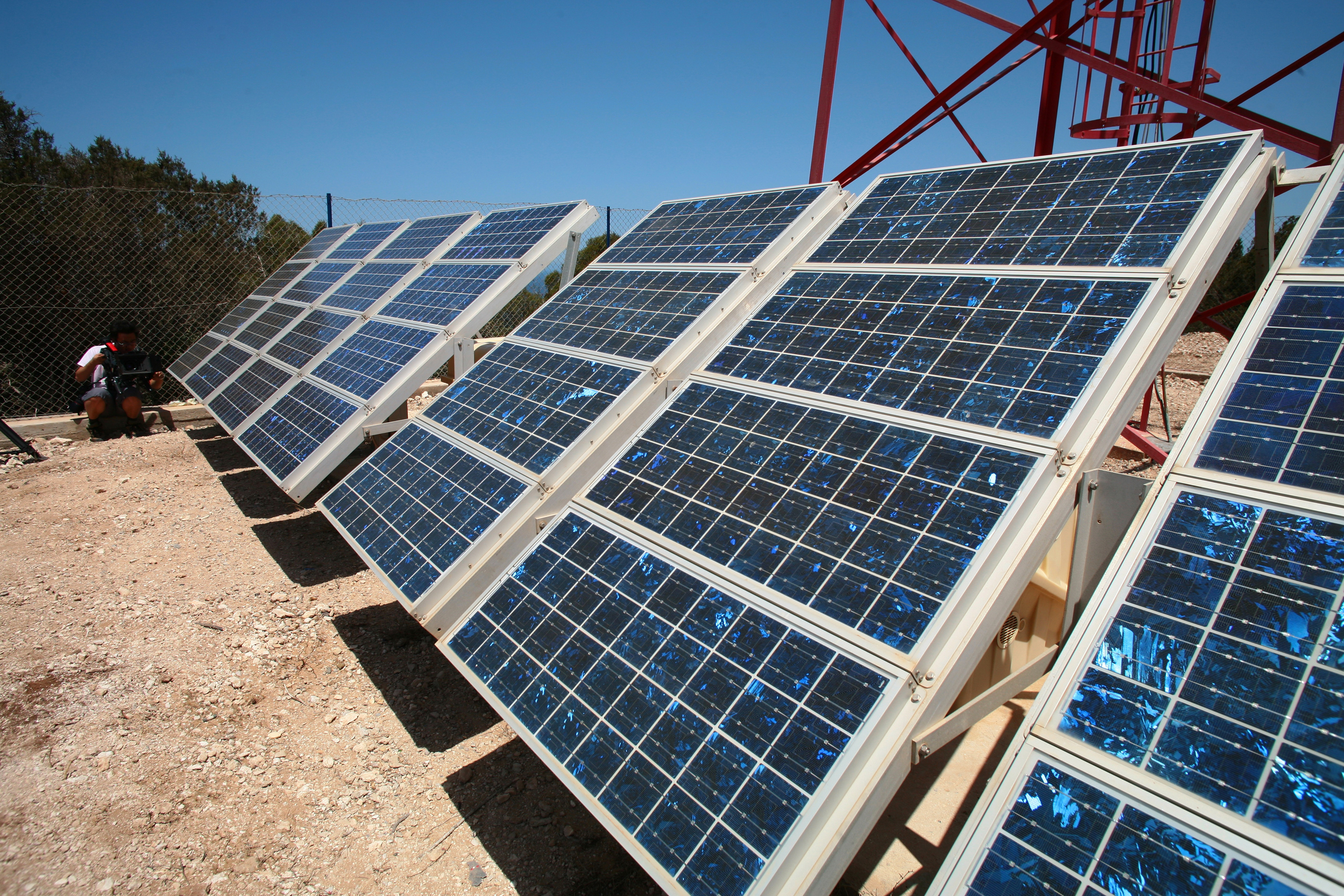
The solution could be community-driven solar panel leasing, which is beginning to take off in the United States. An increasingly popular alternative to self-installation, rather than placing panels on your own roof, you buy one at a local collective — and allow a utility or developer to use it for you, and take a slice of the profit in turn.
Colorado-based Clean Energy Collective launched the first community solar facility three years ago. The alternative to self-ownership, which is less threatening to utilities, has proven popular with consumers — as the CEC now owns 25 farms in four states, serving 2,000 customers.
The average customer buys a three-gigawatt panel for about $9,000, and are able to make about a seven percent return in their first year. However, the firm’s customer base ranges from firms splashing out millions to consumers that pay no more than $400.
CEO Paul Spencer said:
“It opens up solar financially to a much broader swath of people, and, of course, you don’t have to have a roof that’s perfectly sited for solar, because it’s not sited there. You don’t have to worry about shading or living in New York City, or anything like that.”
There are several dozen similar projects currently operating in the United States. The U.S. Department of Energy says that roughly 50 megawatts of solar energy is generated each year by shared facilities, but would like to expand this to 5,000 MW by 2020.