Here are a couple of riddles for you: When is a coup not a coup? And why is the White House not like Humpty Dumpty?
In Through the Looking Glass, Humpty tells Alice: “When I use a word, it means just what I choose it to mean – neither more nor less.”
Click on Image to Enlarge
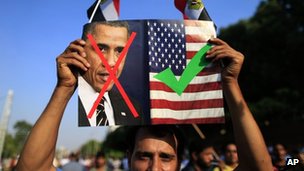
The White House press secretary, Jay Carney, doesn't have that luxury. If he called the Egyptian military's intervention in the democratic process a “coup”, it would clearly mean the huge amount of aid the US gives to Egypt would have to be cut off.
Because that's what it says, in black and white, in the US Code:
In a unanimous vote last month, the Regents of the University of California created a corporate entity that, if spread to all UC campuses as some regents envision, promises to further privatize scientific research produced by taxpayer-funded laboratories. The entity, named Newco for the time being, also would block a substantial amount of UC research from being accessible to the public, and could reap big profits for corporations and investors that have ties to the well-connected businesspeople who will manage it.
Former Navy SEAL Eric Prince faces ghost writer's lawsuit
Jeff Stein
AND Magazine, 11 July 2013
The author of The World's Most Dangerous Places is threatening to take Eric Prince, founder of the notorious Blackwater private security firm, to court.
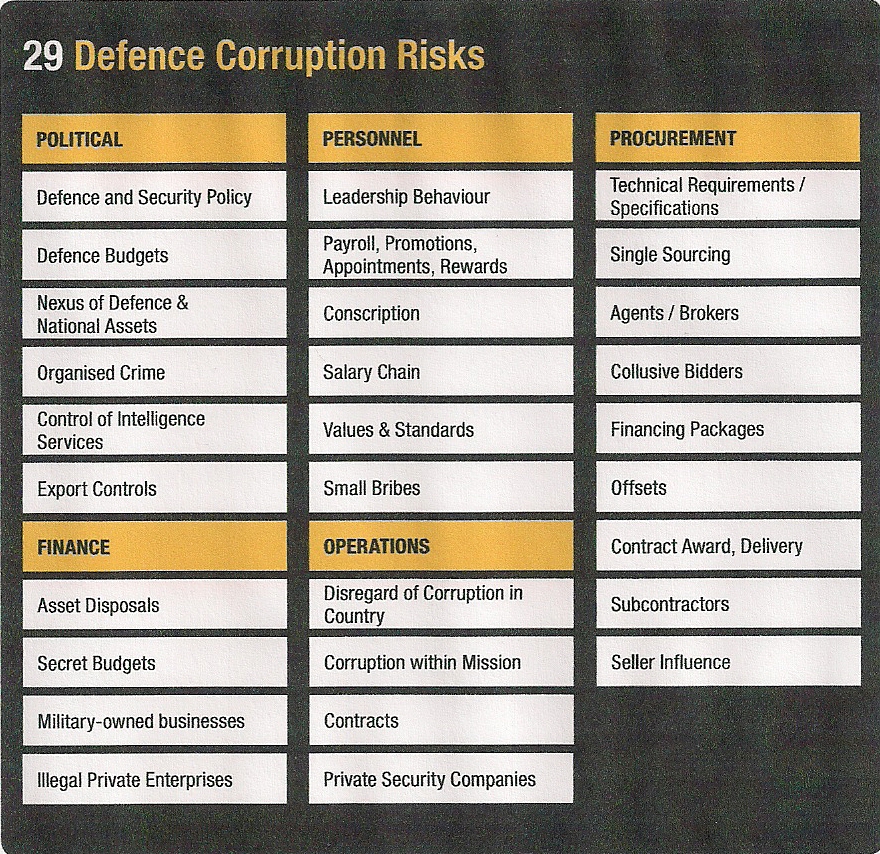
Phi Beta Iota: A good first effort but spectacularly off on the USA and completely lacking in total life cycle costs and in operational test & evaluation — most systems cost far more than they should, do not work as advertised, have huge logistics tails and intelligence needs that are rarely met, and so on. A good start, a long way to go.
Wastewater, increasingly injected into deep disposal wells amid the energy boom, appears to be the culprit in an increase in U.S. quakes.
EXTRACT:
In a study out today that provides the strongest link to date between wastewater wells and quakes, seismologists and geologists say U.S. earthquakes have become roughly five times more common in the past three years. They warn about inadequate monitoring of deep wastewater disposal wells that are setting off these small quakes nationwide.
There are more than 30,000 such deep disposal wells nationwide. They're increasingly used as mile-deep dumping grounds for fluids left over from the more shallow hydraulic fracturing, or “fracking,” wells responsible for surging U.S. natural gas production. The earthquakes have been linked to the wastewater wells but not the fracking drilling wells themselves.
Researchers at Columbia University have conducted the first exhaustive study into kinetic energy harvesting — the harvesting of “free” energy from common human activities, such as walking, writing with a pencil, taking a book off a shelf, or opening a door. Surprisingly, except for those living the most sedentary lifestyles, we all move around enough that a kinetic energy harvester — such as a modified Fitbit or Nike FuelBand — could sustain a wireless network link with other devices, such as a laptop or smartphone.
Click on Image to Enlarge
Energy harvesting is expected to play a very important role in the future of wearable computing and the internet of things, where direct sources of power — such as batteries or solar power — are cumbersome, expensive, and unreliable. At its most basic, a kinetic/inertial energy harvester is a small box with a weight attached to a spring. When the spring moves, the mechanical energy is converted into electrical energy, usually by means of piezoelectrics or MEMS (microelectromechanical systems). If the spring moves with more force, or it bounces back and forth rapidly, more energy is produced.
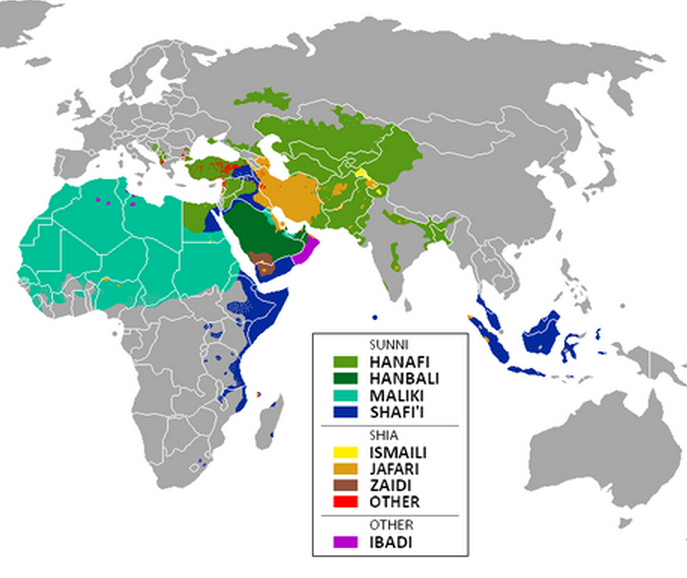
The differences between the Sunni majority and the Shia and other related derivative sects are something of an analog to the split between Protestants and the Catholic church between four and five hundred years ago. Christendom fought it out, coming to the separation of church and state as a solution to the conflict. Islam is six hundred years newer that Christianity and they have not yet had such a resolution.
Our society, with the Wars of Reformation long over and four hundred years of English liberalism as a foundation, has an expectation of what democracy means – a pluralist government with regular elections that enforces the rule of the law. What we are seeing in Egypt today is that the Muslim Brotherhood viewed democracy in the way Erdogan represented it; they rode it past the removal of a compliant strongman, then wanted to hop off at the “majoritarian Islamist” stop. What happened there a few days ago fits the definition of a coup, but our definition might be in need of an update.
Syrian Alawites, facing a loss of control of the country and an aggressive, majoritarian Sunni insurgency funded by Saudi Arabia and Qatar, are suddenly interested in democracy – a peaceful, pluralist government strikes them as a better deal than payback for years of oppression at the hands of the Assad regime. If you ask any policy maker outside of the Arabian peninsula you would get a heartfelt “YES!” if you could point the way to achieving this. The conflict has already spilled into Lebanon, once part of Greater Syria, and it’s starting to draw would-be jihadis from across Europe, who can make it as far as Turkey without needing a visa. The border is porous and policy makers fret about radicalized jihadists returning home as hardened urban guerrillas after spending time in Syria.
Trying to see the Mideast as we saw eastern Europe during the Cold War – as a place that needed and wanted to be liberated, is fundamentally incorrect. Islam is the substrate upon which societies there are built, and we have to see things as they are, not through some simple minded lens of western rhetoric. Egypt’s coup may be the clean, well lit, safe stop for its people. If we insist on enforcing our idea of what democracy means we could well be compelling the Egyptians towards something similar to what is happening in Syria, and no one wants to face that.
I see varying opinions on this, some simple minded and knee jerk, while others are carefully measured positions by those who have traveled and worked in the region. The only consensus I see right now is that rushing to judgment could have grim consequences.