Citation: Robert David STEELE Vivas, “The Human Factor & The Human Environment: Concepts & Doctrine? Implications for Human & Open Source Intelligence,” Phi Beta Iota Public Intelligence Blog (12 December 2012).
For Part II See: 2012 Robert Steele: The Human Factor & The Human Environment: Contextual Trust for Sources & Methods
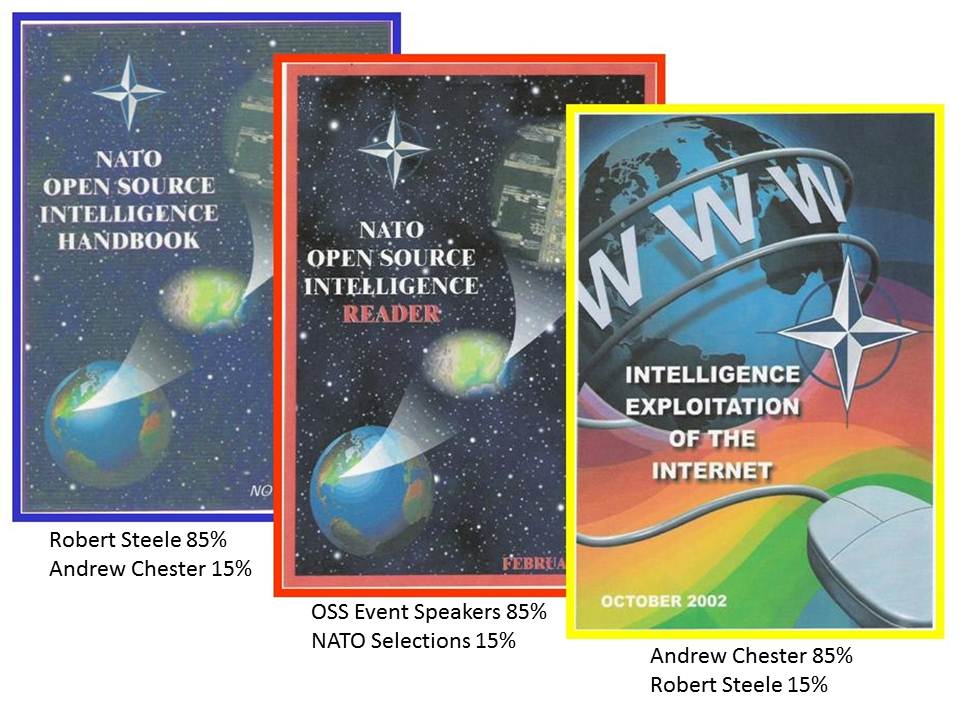
UPDATE 16 Dec 2012: Added NATO OSINT Series, pointer to other OSINT Handbooks. Added Thomas Briggs: Reflections on OSINT in Support of HUMINT
UPDATE 15 Dec 2012: Robert Steele: How Dutch Intelligence Survived & Prospered Using Open Source Human Intelligence as a Foundation for Ethical Evidence-Based Decisions
UPDATE 14 Dec 2012: 2012 Tom Briggs on The Human Factor & 2012 Ishmael Jones (P) on The Human Factor
Hi Robert,
There is one consideration I would like to discuss with you. While exploring for many years how to address the need for the military to understand all areas and aspects of the human environment, I had the opportunity to listen to many members of the intelligence community speaking about their role in achieving that understanding. I used to have the traditional military idea that it was the role of intel to provide the information and much of the knowledge. Along the way, they got me to doubt this view. Finally, they convinced me that the intel community, as we still know it today, is not a supplier of this understanding, but a customer. Understanding the human environment is a product stemming from Open Sources Information, but not from military intelligence. Intel's role might be, based on the understanding made available by others, to develop the specific products suiting its specific goals : targeting and counter intelligence.
As a general statement, no one nation has put this together — the Mediterranean countries have the skills and mind-set, the Sandanavian countries have the motivation and interest, and the Americans have the money — but the three “sets” are not coming together at this time.
Thank you for all the material you are producing.
Cheers,
REDACTED
Long Answer with Graphics to Four Part Question Below the Line

 Regulators Under Fire for Keeping Fracking Pollution Test Results Under Wraps