Tip of the Hat to American Studies Institute and Mark Thompson at Google+.

The truth at any cost lowers all other costs — curated by former US spy Robert David Steele.
Tip of the Hat to American Studies Institute and Mark Thompson at Google+.
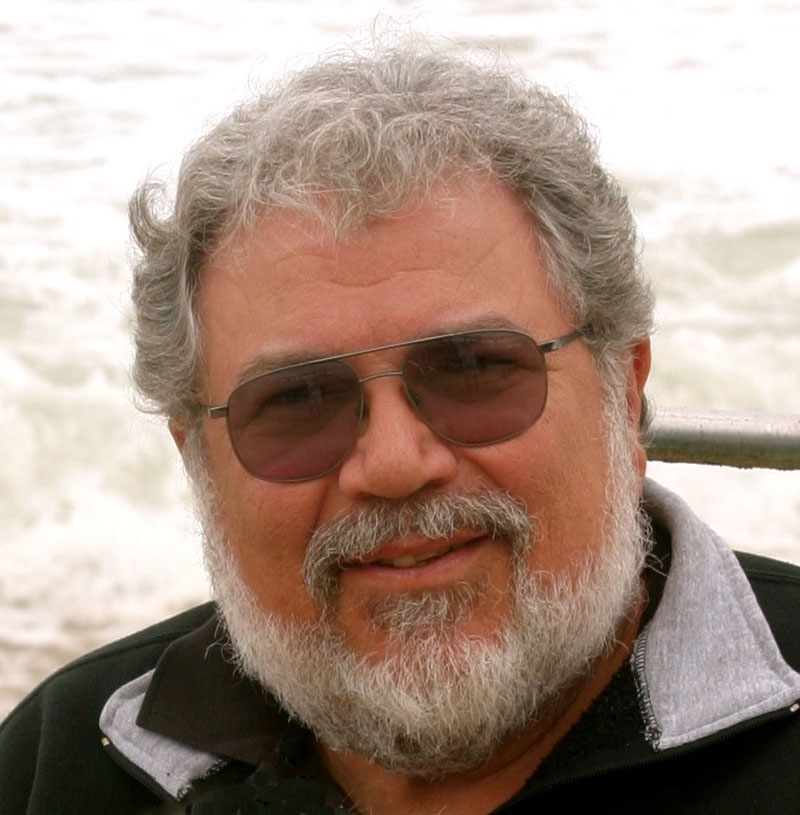
Tom Briggs is a former CIA clandestine case officer with an excellent book to his credit, Cash on Delivery: CIA Special Operations During the Secret War in Laos (Rosebank Press, 2009). Before joining CIA he was the Acting Provost Marshal (sheriff) for 25,000 US personnel operating in Cam Ranh Bay, Viet-Nam.
Robert,
As I hope you remember, I started my time in info technology in requirements after many years in operations. I learned that when you ask someone what his requirements are he most often begins to include his solutions, e.g. we need a computer database to help us keep weapons from being smuggled into this country. My response was you don't know if you need a computer until you tell me what data you have, what data you might be able to collect but are not collecting, and what questions you want to ask that the data might be able to help you answer. It was hard to keep them off solutions and focused on what they knew and what they wanted to know. As I read Part IV, 01 Requirements Definition, I thought of my experience and wondered whether the definitions were being simplified to their very basics. A colleague and I wrote the very first requirements for automating the DO. When the IBM programmers with the contract read them they sneered and said, ‘these are high level requirements, we need to have the requirements that tell us exactly how to build the automated system'. My colleague and I said, if you don't understand the high level requirements, how can you begin to write the specific requirements? Thus, the first specific things that were developed for the automated DO system were faulty in many ways. The programmers excluded my colleague and I from their deliberations as THEY wrote the specific requirements, and no one in management thought there was anything wrong with that.
My colleague was the one who named the highest level requirements. He called one ‘author'. He didn't say we needed to write cables, or memos or whatever, he said we needed a computer based author capability and proceeded to outline in general the authoring needs. I don't remember the other 4 or 5 categories but they were similar.
So, I wonder if we really ‘assign' requirements to humint or osint or techint? Should we have ‘high level' requirements from policy makers or military commanders and then figure out which int can collect on them, or, let them all collect and see whose information is the most relevant and useful? I am talking mostly about operations, but except for acquisition of which I know not much, I think I am also talking to strategy and policy.
I read through your ‘conversation' once and the above represents the one thing I wanted to say right away. There are other things to say, but I can't do it in well ‘fell swoop' as you often do. I need to rest to read your ‘conversation' again and see what else I might add.
Almost any problem you can name in the intel community begins with bad management. Even if you have an excellent manager, it is only until he moves on, and the odds are good he will be replaced with a much lesser manager. I guess I tend to have a negative attitude.
That's all for now.
-Tom

The US claims it does not want to allow foreign intrusion into multi-stakeholder business, including the regulation of spam. The rest of the world sees the US as ignorant and arrogant, insisting on the rights of its telecommunications stakeholders as opposed to the rights of its own public and the public in the rest of the world.
U.S. announces will not sign ITU treaty, period
Summary: The U.S. has just announced that, “U.S. cannot sign revised telecommunications regulations in their current form.”
US and UK refuse to sign UN's communications treaty
The US, Canada, Australia and UK have refused to sign an international communications treaty at an conference in Dubai.
Phi Beta Iota: The US is being duplicitous here. What is really going on is that the telecommunications providers are using their illicit power over the US Government to block any democratization and coincident draconian reduction in cost of goods and services associated with the Internet. The real solution lies in Panarchy, in an Autonomous Internet that leverages Open Source Everything — the kind of thing we have proposed that Sir Richard Branson take the lead on with The Virgin Truth. The rest of the world is not stupid — the US position is not just unsustainable, it will lead, as its SWIFT sanctions against Iran led, to the rest of the world routing around the USA and ignoring the US Government. The era of imperial mandate is over. The US will be the last to read the memo.
 Global report: Obesity bigger health crisis than hunger
By Danielle Dellorto, CNN
updated 5:41 AM EST, Fri December 14, 2012
Obesity is a bigger health crisis globally than hunger, and the leading cause of disabilities around the world, according to a new report published Thursday in the British medical journal The Lancet.
Nearly 500 researchers from 50 countries compared health data from 1990 through 2010 for the Global Burden of Disease report, revealing what they call a massive shift in global health trends.
“We discovered that there's been a huge shift in mortality. Kids who used to die from infectious disease are now doing extremely well with immunization,” said Ali Mokdad, co-author of the study and professor of global health at the Institute for Health Metrics and Evaluation at the University of Washington, which led the collaborative project.
“However, the world is now obese and we're seeing the impact of that.”
The report revealed that every country, with the exception of those in sub-Saharan Africa, faces alarming obesity rates — an increase of 82% globally in the past two decades. Middle Eastern countries are more obese than ever, seeing a 100% increase since 1990.
“The so-called ‘Western lifestyle' is being adapted all around the world, and the impacts are all the same,” Mokdad said.
The health burden from high body mass indexes now exceeds that due to hunger, according to the report.
Phi Beta Iota: Counter-intuitive and therefore all the more interesting. This is a classic example of “true cost” being recognized. The Industrial Era approach to food is not only very expensive in terms of water, fuel, and toxins into ground water and the atmosphere, but now also clearly impacting in a most negative way on humanity at large. This is why true cost economics and whole systems thinking is so vital to the future of our children and their children on into eternity. Self-discipline can only do so much.
 Why more U.S. states could legalize marijuana
By David Worthington | December 13, 2012, 8:19 PM PST
Marijuana advocates scored major victories at the polls in the U.S. November election. Voters approved ballot measures in Colorado and Washington that bucked federal law to legalize the drug’s recreational use. The victories could be short lived as the federal government ponders its response, but there has been a notable change in public sentiment. It’s now conceivable that marijuana could be legalized throughout more of the country, so we sought answers about who would profit from the end of its prohibition from William Martin, director of the Drug Policy Program at Rice University’s Baker Institute to learn more. Dr. Martin’s research focuses on ways to reduce the harms associated with both drug abuse and drug policy. Here’s what he had to say.
SmartPlanet: Is there momentum toward lifting the federal ban on marijuana, and who would profit from it?
Dr. William Martin: At this point, there is little expectation that Congress will lift the national prohibition of marijuana production, distribution, and use anytime soon. National change, when it comes, will follow in the wake of change at the state and local level.
At these lower levels, the financial benefits of legalization will fall into three major categories: profit, taxes, and savings related to law enforcement.
The market for marijuana is already large and will almost certainly grow substantially, though I suspect an initial surge will be followed by a drop-off after current non-users satisfy their curiosity.
Large profits await savvy and successful growers, sellers, and entrepreneurs in associated enterprises such as fertilizer and grow-light vendors; pipe, bong, and vaporizer manufacturers and dealers; banks and other financial-service providers; not to mention munchie-selling convenience stores and all-night diners. In addition, a once-thriving hemp industry could again produce high-quality cloth, paper, nutritious oil, and biodiesel fuel. Obviously, all of these businesses will need employees, providing another boost to the economy.
SP: Is a vice tax likely?
WM: I expect the taxes will be similar to those for alcohol and tobacco, about as high as the traffic will bear. But as noted before, there’s a ceiling. Set it too high and folks will either go back to the black market or grow their own.
SP: How much tax revenues would pot bring into these cash strapped state governments?

Human, force is.
Plugging into the Future of Humanity: Exploring the Human API
I recently had the opportunity to present at LeWeb in Paris, arguably Europe’s largest conference dedicated to the future of technology. The theme of the conference explored the Internet of Things, where devices and things connect to one another to perform certain tasks and/or track activities to improve what we already do or make possible what we’re trying to do.
The Internet of Things is bigger than we may realize. We are experiencing a shift from a world of inanimate objects and reactive devices to a world where data, intelligence, and computing are distributed, ubiquitous, and networked. My fellow analysts and I at Altimeter Group refer to the Internet of Things (IoT) as the Sentient World. It’s the idea that inanimate objects gain the ability to perceive things, perform tasks, adapt, or help you adapt over time. And, it’s the future of the Internet and consumer electronics.
In 2008, the number of things connected to the Internet exceeded the number of people on earth. By 2020, it’s expected that there will be 50 billion things connected.
A network of things creates an incredible information ecosystem that connects the online and physical world through a series of transactions. In a world where data becomes a natural bi-product of these exchanges, developers, businesses, and users alike are faced with the reality that data isn’t only big, its volume and benefits are also overwhelming.
Did you know that the world creates 2.5 quintillion bytes of new data every day? According to IBM, 90% of the data in the world today has been created in the last two years alone.

How to Get Better At Predicting the Future
Could human and machine forecasters work together to increase the intelligence agencies' foresight?
By Alexis C. Madrigal
Atlantic, 11 December 2012
We would like to know what the future is going to be like, so we can prepare for it. I'm not talking about building a time machine to secure the winning Powerball number ahead of time, but rather creating more accurate forecasts about what is likely to happen. Supposedly, this is what pundits and analysts do. They're supposed to be good at commenting on whether Greece will leave the Eurozone by 2014 or whether North Korea will fire missiles during the year or whether Barack Obama will win reelection.
A body of research, however, conducted and synthesized by the University of Pennsylvania's Philip Tetlock finds that people, not just pundits but definitely pundits, are not very good at predicting future events. The book he wrote on the topic, Expert Political Judgment: How Good Is It? How Can We Know?, is a touchstone for all the work that people like Nate Silver and Princeton's Sam Wang did tracking the last election.
But aside from the electorate, who else might benefit from enhanced foresight? Perhaps the people tasked with gathering information about threats in the world.
You probably have never heard of IARPA, but it's the wild R&D wing of our nation's intelligence services. Much like the Defense Advanced Research Projects Agency, which looks into the future of warfare for the Department of Defense, the Intelligence Advanced Research Projects Activity looks at the future of analyzing information, spying, surveillance, and the like for the CIA, FBI, and NSA.
Continue reading “David Isenberg: IARPA Trys to Predict Future”
