Initially, a place to store all your photos and artwork that’s as
awesome as, if not more awesome than, existing network services (Flickr, DeviantArt, SmugMug, Picasa, etc)
Later, a place for all sorts of media, such as video, music, etc hosting. Federated with OStatus!
Customizable!
A place for people to collaborate and show off original and derived
creations. Free, as in freedom. We’re a GNU project in the making, afterall.
On Thursday, Gallup reported that “More than half of Americans say the U.S. economy is in a recession or a depression despite official data that show a moderate recovery…..The April 20-23 Gallup survey… found that only 27 percent said the economy is growing. 29 per cent said the economy is in a depression and 26 per cent said it is in a recession, with another 16 per cent saying it is “slowing down,” Gallup said.”
55 percent of Americans believe we are in a depression or a recession a full 5 years after the housing bubble burst (2006) and 3 years after Lehman Brothers collapsed. (2008) Gallup's findings jibe with other surveys that indicate growing desperation among the public. For example, Globescan found that a large number of Americans have given up on free-market capitalism altogether, while other polls show dwindling confidence in government institutions, the Federal Reserve, the Congress, the judicial system and the media.
. . . . . . .
Do you have any idea how bad unemployment really is? Take a look at this from Calculated Risk:
“There are currently 130,738 million payroll jobs in the U.S. (as of March 2011). There were 130,781 million payroll jobs in January 2000. So that is over eleven years with no increase in total payroll jobs.
“And the median household income in constant dollars was $49,777 in 2009. That is barely above the $49,309 in 1997, and below the $51,100 in 1998……
EBD, or ‘emergent by design,’ was the phrase I chose when naming this blog to describe what I was seeing around me in the most inspiring and passionate people and organizations making positive change in themselves and the world around them. To me, that means not being a passive bystander to life and letting it happen to you, but really grabbing life by the short and curlies and manifesting greatness in this epic adventure!
I’ve been on Twitter now for about 2 years, and love finding people doing amazing things. It gives me hope & energizes my spirit. I shared my technique for Twitter a while back – with “How to Use Twitter to Build Intelligence.” Let this be the 2011 curated update.
Here are some people I’d recommend following for their passion, creativity, wisdom, empathy, intelligence, and love. Some I’ve met in real life, many I simply admire from a far. I would be so curious to see what would happen if we got all them together in the same room. (how bout at Contact?) 😉
Who’s on your list of awesome? Let us know in the comments below. And here we are, in no particular order:
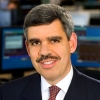
Mohamed A. El-Erian is CEO and co-CIO of PIMCO, and author of When Markets Collide.
NEWPORT BEACH – It was relegated to the Q&A session, rather than featured prominently in the opening statement, at last week’s first-ever press conference of US Federal Reserve Board Chairman Ben Bernanke. It is an issue that too many in Washington, DC are willing to dismiss as “transitory,” despite visible evidence to the contrary. It is extremely vulnerable to high oil and food prices. And it undermines the operational assumptions that underpin the long-standing characterization of the US economy as vibrant and responsive.
The issue is the scope and composition of unemployment in America – a problem that is yet to be sufficiently recognized for its increasingly detrimental impact on the country’s social fabric, its economic potential, and its already-fragile fiscal position and debt dynamics.
Let us start with the facts:
· At 8.8% almost three years after the onset of the global financial crisis, America’s unemployment rate remains stubbornly (and unusually) high;
· Rather than reflecting job creation, much of the improvement in recent months (from 9.8% in November last year) is due to workers exiting the labor force, thus driving workforce participation to a multi-year low of 64.2%;
· If part-time workers eager to work full time are included, almost one in six workers in America are either under- or unemployed;
· More than six million workers have been unemployed for more than six months, and four million for over a year;
· Unemployment among 16-19 year olds is at a staggering 24%;
What would taking $5B from Defense and put into nation wide teacher's salaries (not administrators who are grossly overpaid in comparison to their teachers) do?
WHEN we don’t get the results we want in our military endeavors, we don’t blame the soldiers. We don’t say, “It’s these lazy soldiers and their bloated benefits plans! That’s why we haven’t done better in Afghanistan!” No, if the results aren’t there, we blame the planners. We blame the generals, the secretary of defense, the Joint Chiefs of Staff. No one contemplates blaming the men and women fighting every day in the trenches for little pay and scant recognition.
Click on Image to Enlarge
And yet in education we do just that. When we don’t like the way our students score on international standardized tests, we blame the teachers. When we don’t like the way particular schools perform, we blame the teachers and restrict their resources.
Compare this with our approach to our military: when results on the ground are not what we hoped, we think of ways to better support soldiers. We try to give them better tools, better weapons, better protection, better training. And when recruiting is down, we offer incentives.
Phi Beta Iota: It is helpful to compare the salaries of teachers, responsible for the future of the country, and financial arbitragers allowed to destroy the entire economy without penalty.
This is a vital search, exactly on point. 21st Century public administration must be about design. The machine search results are disappointing. Here are a few thoughts and some links from the human in the loop.
1. Public Administration is not Public Management. The administrator should be a civil servant in the fullest sense of the word, dedicated to connecting the common sense of the public to the public interest through transparency, truth, and trust. The acme of skill for a public administrator is to harness the distributed intelligence of the collective, to enable the collective to connect to all information in all languages all the time, and to enable real-time integrated humanities, faith, and science in the service of all humanity.
2. Design is the acme of skill for the public administrator in the new century. However, the design must be holistic, taking into account the importance of eradicating all ten high-level threats to humanity by harmonizing the policies and spending of all stakeholders across the twelve core policies, with particular respect for the concerns of the eight demographic challengers.
3. Intelligence (decision-support) and integrity are the twin elements that in combination enable holistic design. If it is not holistic, it is not design but rather a kludge that is unsustainable.