Tip of the hat to Berto Jongman in The Netherlands for this lead.

The truth at any cost lowers all other costs — curated by former US spy Robert David Steele.
Tip of the hat to Berto Jongman in The Netherlands for this lead.

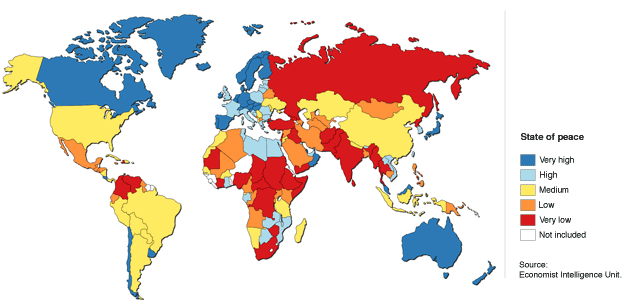
The below report provides a summary of major reports that are being integrated into the Millenium Project under the State of the Future project inspired by Jerome Glenn. Their Futures Matrix and the Indicators they have devised for each global domain are instructive.


So, let me see — State wants, say, a billion dollars worth of DoD hardware gratis…what does the Marine Corps Security Guard Battalion say about all that? I guess that means jobs for former aviation warrant officers and maybe retired SF NCOs….but who pays for the contractors?
Boston Globe June 15, 2010 Associated Press
Diplomats Seek War Gear As Troops Exit Iraq
WASHINGTON — The State Department says its diplomatic staff won’t be safe after the American military leaves Iraq unless it has its own combat-ready protection force, a warning that underscores concerns about the Iraq army and police the US has spent billions of dollars training and equipping.
Vehicles and aircraft used by the department’s Bureau of Diplomatic Security to protect personnel in other parts of the world are “inadequate to the extreme security challenges in Iraq,’’ according to documents the State Department sent to the Pentagon in April.
The bureau will need to “duplicate the capabilities of the US military’’ by December 2011, the documents say, when all American forces are scheduled to leave Iraq.
The State Department wants 24 of the Army’s Black Hawk helicopters, which cost between $12 million and $18 million each; 50 bomb-resistant vehicles; heavy cargo trucks; fuel trailers; and high-tech surveillance systems, according to the documents.
Patrick Kennedy, the State Department’s undersecretary for management, wants the equipment transferred at “no cost’’ from military stocks.

Rotting Oder of Pentagon Info Op Signals Effort to Shore Up its Great Game in the Hindu Kush
On 13 June, James Risen of the New York Times conveniently (at least for the Pentagon and the war party) reported that the “United States has discovered $1 trillion in untapped mineral deposits in Afghanistan [also attached below for your convenience]. I say convenient, because time is running out for the Pentagon in Afghanistan, and this report introduces a ‘new’ reason for occupying Afghanistan. The timing of this report was noticed very quickly by several skeptical commentators ( e.g., here and here).
But there is more. The NYT report has the rotting odor of yet another Pentagon misinformation operation to lather up the masses using the willing offices of the tired old Gray Lady of journalism. The oder is intense, because Risen’s Pentagon-inspired geological report coincides with the growing disenchantment with Afghan adventure. And more people are coming to appreciate the disconnect between (1) a spate of credible reports (e.g., here) describing the lack of progress in Afghanistan, particularly the failure of the showcase Marja COIN strategy to deliver its predicted result and (2) the requirement imposed by President Obama to show progress by the end of this summer. Bear in mind, Obama’s ‘requirement’ was imposed on the Pentagon when he improved the flawed McChrystal/Petraeus surge plan and sold it to the American people last fall. The military and spokesmen for the Obama administration began immediately to back away from the deadline shortly after its inception, and it has already been stretched to coincide with the mid-term elections in November — which goes to show that domestic politics do not end at the water’s edge?
Although the several commentators expressed their justifiable skepticism about the timing of the NYT report, to the best of my knowledge, none have addressed the substance of the mineral estimate. Shortly after it was published, my good friend and colleague Pierre Sprey, who has been called a vampire because he does his best work in the dark after midnight, got to the heart of the latter question and put the entire story together in an elegantly brief email that he distributed in the dark early hours of 14 June.
Attached for your reading pleasure is Pierre’s incisive critique:
U.S. Identifies Vast Riches of Minerals in Afghanistan
Pierre Sprey 14 June 2010
The timing of this release of ancient mining news–especially when floated with Petraeus' name plastered all over it in a tried-and-true government propaganda outlet like the N.Y. Times–smells to me like a last ditch attempt to invent an economic justification for hanging on many more years in the hopeless Afghani morass.
Note that the now sacrosanct 1980s Russian mineral survey was “stumbled on” six years ago in 2004 by an American reconstruction team foraging in the Afghan Geological Survey Library. Then, according to the Times' (read Petraeus and DoD) spin, nothing happened until two years later when the U.S. Geological Survey launched a 2006 aerial mineral survey followed by another in 2007, supposedly yielding all-new evidence of astonishing mineral wealth (iron, gold, copper, lithium, supposedly a trillion dollar's worth) just waiting to be tapped. Supposedly, this astonishing new evidence was then ignored by all until a Pentagon business development task force “rediscovered” the ignored USGS mineral data in 2009.
This spin is quite untrue: in 2005, the Afghan government, quite aware of their mineral resources, opened bidding on copper mining leases in Logar Province, bidding that was won by the Chinese in 2007. As for the reliability of the USGS data, note that they report 1.8 billion tons of potential lithium deposits (lithium is very trendy with the greens these days) but only a puny 111 million tons in proven or probable deposits.
But none of this purportedly astonishing USGS aerial survey data has raised much dust in the international mining world, despite the fact that the entire current New York Times scoop was thoroughly covered by Reuters and Mining Exploration News a year ago in April of 2009.
So what turned the ho-hum Reuters news of April, 2009 into a hot Times scoop in June of 2010? Is there any connection with the desperate need of McChrystal, Petraeus and Gates for a life jacket, now that the Afghan surge they floated is sinking so rapidly?

Here it is….
U.S. Identifies Vast Mineral Riches in Afghanistan
By JAMES RISEN New York Times, 13 June 2010
WASHINGTON — The United States has discovered nearly $1 trillion in untapped mineral deposits in Afghanistan, far beyond any previously known reserves and enough to fundamentally alter the Afghan economy and perhaps the Afghan war itself, according to senior American government officials.
The previously unknown deposits — including huge veins of iron, copper, cobalt, gold and critical industrial metals like lithium — are so big and include so many minerals that are essential to modern industry that Afghanistan could eventually be transformed into one of the most important mining centers in the world, the United States officials believe.
An internal Pentagon memo, for example, states that Afghanistan could become the “Saudi Arabia of lithium,” a key raw material in the manufacture of batteries for laptops and BlackBerrys.
And so on….read the full deception.
See Also:
Chapter 20, “21st Century Counterintelligence: Evaluating the Health of the Nation,” especially Dereliction of Duty (Defense); Disinformation, Other Information Pathologies, & Repression; Emprire as a Cancer including Betrayal & Deceit; Impeacahable Offenses (Modern); Institutionalized Ineptitude; and Intelligence (Lack Of), all in the online hyperlinked version of INTELLIGENCE for Earth: Clarity, Diversity, Integrity, & Sustainability (pages 179-205, in Part III.
Can You Help Me Now? Mobile Phones and Peacebuilding in Afghanistan
Please note: This event will be webcast live beginning at 9:00am EDT on June 24, 2010 at www.usip.org/webcast.html
Location: U.S. Institute of Peace, 2nd floor, conference room 1200, 17th St, NW Washington, DC 20036
Mobile phone technologies are the subject of considerable enthusiasm in the peacebuilding sector. In the past few years, they have been used in connection with campaigns to restrain election violence, reduce corruption, develop the news media, and support counter-insurgency to name just a few. Success has been significant, but mixed. Yet little has been done to evaluate systematically the factors of success or failure in the use of mobile phones for peacebuilding.
So to best understand the true potential of these increasingly powerful tools, USIP — in partnership with cell phone pioneer Mobile Accord (who raised a record sum of over $37 million within three weeks of Haiti’s earthquake crisis with their “Text HAITI to 90999” campaign), the National Defense University, the United Nation’s-mandated UPeace, and TechChange — will bring together experts on international peacebuilding and mobile phone technology to focus on the use of mobile phones in one of the most difficult conflict environments today: Afghanistan.
Panel 1: Mobile Phones for Tackling Corruption and Improving Governance
Panel 2: Mobile Phones for Countering Extremism and Counter-insurgency
Panel 3: Mobile Phones and Essential Service Delivery
Panelists will include innovators from the DoD, Department of State, UN personnel, World Bank, Internews, and NGOs (US and European) like ICT4Peace, Ushahidi, FrontlineSMS, and Mobile Active.
Phi Beta Iota: Occasionally we stumble across value-added efforts by others who have re-mixed or clipped portions of longer pieces featuring our founder, Robert Steele. Provided for information.

Talk of wealth from minerals by US geologists and Pentagon personnel add to the darkening view that those involved in war, corruption and disregard for the people of Afghanistan (and sacrificed soldiers + more to be sacrificed) will prosper…
+ Opium = supplies 90% of crop source for heroin (president Karzai's brother links to heroin trade)
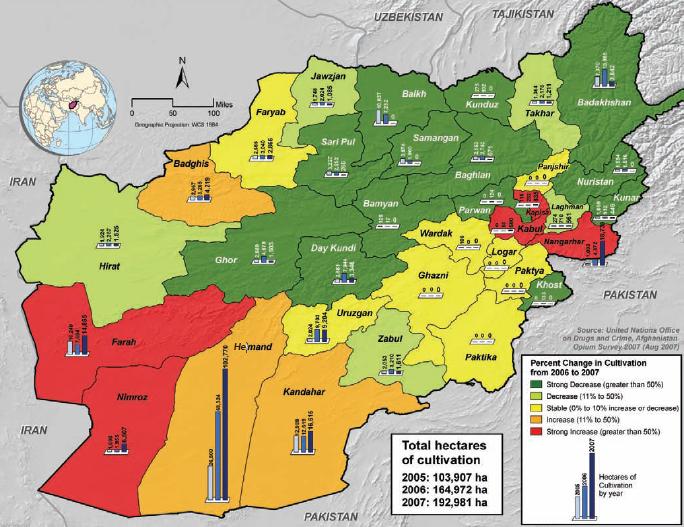
+ Hashish = April 2010 report: Afghanistan Hashish, (not only opium) Declared World’s Largest Producer

+ Minerals = US geologists, Pentagon, Indian firms claim 1-3 trillion dollar value of mineral wealth in Afghanistan
and “Afghanistan's resources could make it the richest mining region on earth” and more importantly, this being ‘known' in 2007. (direct: USGS link) and that the Soviets were aware of mineral wealth during their Afghanistan occupation.
+ Gas Pipeline attempts = 1998 Congressional record related to Unocal/U.S. interests in Central Asia & November 2001 Asia Times article about the book “Bin Laden, la verite interdite (Bin Laden, the forbidden truth)” mentioning the US government's main objective in Afghanistan was to consolidate the position of the Taliban regime to obtain access to the oil and gas reserves in Central Asia.

BBC in 2002 mentions Unocal (Unocal.com is now Chevron.com) and others abandoning pipeline plans due to U.S. missile attacks in 1999. Reports on Enron attempts to make a deal with the Taliban (this 2002 CounterPunch article too). Encyclopedia of Earth also has a short mention of this topic
+ HistoryCommons.org Unocal profile timeline on their Central Asia activities
+ HistoryCommons.org timeline of president Karzai (election organized by the United Nations).
+ Corruption in Afghanistan = Transparency International ranks Afghanistan 179th of 180 countries. And Afghan corruption has doubled since 2007 (IntegrityWatch survey).
Pre-existing plan to attack Taliban before 9/11 was even posted in the BBC and a variation of this was posted at MSNBC in 2002.
“To be truthful about it, there was no way we could have got the public consent to have suddenly launched a campaign on Afghanistan but for what happened on September 11”
-Tony Blair (London Times, 7/17/02)
originally at http://www.timesonline.co.uk/article/0,,2-358038,00.html but no longer at that URL
Related:
+ Karzai Aide in Corruption Inquiry Is Tied to C.I.A. (Aug 26, 2010)
+ Corruption Suspected in Airlift of Billions in Cash From Kabul (WSJ: June 25, 2010)
+ Event Report: 20 Nov 09 NYC, Counterinsurgency–America’s Strategic Burden
+ (Book) Taliban: Militant Islam, Oil and Fundamentalism in Central Asia by Ahmed Rashid – Mar. 1, 2001
+ Afghan War Diaries Explorer
+ UN/World Bank Afghanistan Drug Industry Report (2006)
+ SourceWatch: Opium economy in Afghanistan
+ GlobalSecurity.org: Afghanistan Opium cultivation
+ Wkipedia: Trans-Afghanistan Pipeline
+ Free Book: “The Politics of Heroin in Southeast Asia by Alfred W. McCoy“

