Penguin: Saudi Prince Bandar Dead? Syria Waging War on Saudis and CIA?

08 Wild Cards, IO Deeds of War, Officers Call
Who, Me

Lebanese general, CIA base, Bandar assassination or grievious wounding?  Not a word about Bandar since August, and July-August were all second and third stories.

Bandar still alive, insiders say

The Aspen Times, Friday, August 24, 2012

EXTRACT:

“The Iranians are constantly putting out stories through their agents of some mishap about Bandar that have been all false so far,” Ottaway wrote Thursday in response to an email query.

Read full article.

Phi Beta Iota:  We have no direct knowledge, but we do believe that the Syrian leadership understands the vulnerabilities of the Saudis as well as the Americans, and we share with Penguin the view that the car bomb on 19 October in Lebanon, the eradication of the CIA base in Benghazi, and the attack against Bandar are probably related to Syria and probably all “direct actions” funded and directed by the Syrian leadership.  More to come.

See Also:

DefDog: Bimbo-Gate Covering Up CIA’s Continuing Use of Proxy Terrorists, Regime Change, and Triad of Drugs, Arms, and Money-Laundering

Robert Steele: Post-Benghazi — Open Season on CIA?

Chuck Spinney: End Time of Tribulation for Israel, the Fake State

04 Inter-State Conflict, 07 Other Atrocities, 08 Wild Cards, 10 Security, 11 Society
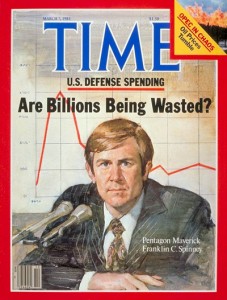
Chuck Spinney

With the exception of the problematic reference Iron Dome missile defense system (notwithstanding all the hype, school is still out on its performance, IMO), the attached opinion piece is an excellent summary of the grand strategic ramifications of the recent dustup in Gaza. CS

Why Israel Didn’t Win

Adam Shatz, London Review of Books, Vol. 34 No. 23 · 6 December 2012

The ceasefire agreed by Israel and Hamas in Cairo after eight days of fighting is merely a pause in the Israel-Palestine conflict. It promises to ease movement at all border crossings with the Gaza Strip, but will not lift the blockade. It requires Israel to end its assault on the Strip, and Palestinian militants to stop firing rockets at southern Israel, but it leaves Gaza as miserable as ever: according to a recent UN report, the Strip will be ‘uninhabitable’ by 2020. And this is to speak only of Gaza. How easily one is made to forget that Gaza is only a part – a very brutalised part – of the ‘future Palestinian state’ that once seemed inevitable, and which now seems to exist mainly in the lullabies of Western peace processors. None of the core issues of the Israel-Palestine conflict – the Occupation, borders, water rights, repatriation and compensation of refugees – is addressed by this agreement.

The fighting will erupt again, because Hamas will come under continued pressure from its members and from other militant factions, and because Israel has never needed much pretext to go to war. In 1982, it broke its ceasefire with Arafat’s PLO and invaded Lebanon, citing the attempted assassination of its ambassador to London, even though the attack was the work of Arafat’s sworn enemy, the Iraqi agent Abu Nidal. In 1996, during a period of relative calm, it assassinated Hamas’s bomb-maker Yahya Ayyash, the ‘Engineer’, leading Hamas to strike back with a wave of suicide attacks in Israeli cities. When, a year later, Hamas proposed a thirty-year hudna, or truce, Binyamin Netanyahu dispatched a team of Mossad agents to poison the Hamas leader Khaled Meshaal in Amman; under pressure from Jordan and the US, Israel was forced to provide the antidote, and Meshaal is now the head of Hamas’s political bureau – and an ally of Egypt’s new president, Mohamed Morsi.

Continue reading “Chuck Spinney: End Time of Tribulation for Israel, the Fake State”

Chuck Spinny: Israel Alone, Declared a Terrorist State by Turkey, USA Fading in Region, China Rising….

04 Inter-State Conflict, 08 Wild Cards, 09 Terrorism, 10 Security, IO Deeds of War
The Financial Times, Ian Bremmer, November 20, 2012

On Monday, Turkish Prime Minister Recep Tayyip Erdogan denounced Israel as a “terrorist state”. Whether you find yourself nodding or shaking your head in response, take a moment to consider those words.

This judgment did not come from predictable quarters: from Syria’s soldiers, Iran’s mullahs, or even Saudi royals. Turkey is a moderate Muslim democracy, a member of Nato, one that has traditionally protected constructive relations with Israel. And Mr Erdogan did not simply denounce a particular Israeli action, as he did in 2010 following an Israeli raid on a Turkish aid ship bound for Gaza.

He labeled Israel itself as a source of terrorism.

What’s truly new about Israelis and Palestinians exchanging fire? It isn’t Israeli politics. Early elections are on the way, and there are few signs that Prime Minister Benjamin Netanyahu faces a serious leadership challenge. Nor is it the increasing number and accuracy of rockets fired by Hamas and its Al-Qassam brigades.

Continue reading “Chuck Spinny: Israel Alone, Declared a Terrorist State by Turkey, USA Fading in Region, China Rising….”

Berto Jongman: OECD Looking to 2060: Long-term global growth prospects

02 China, 03 Economy, 03 India, Commercial Intelligence
Berto Jongman

Looking to 2060: Long-term global growth prospects

OECD Economic Policy Paper 03

Their key points:

China, India, and Indonesia are going to blast forward past USA and EU

Structural changes needed to how money is managed

China will go 25% above US in income per capita while India will only rise to half US income per capita.

Our key points:

Elderly need to be brought back into the economy as producers (e.g. child care)

They do not address the need to change the education, intelligence, and research domains

Definitions of living standards are hosed, need to be revised

NIGHTWATCH: Israel & It’s US Enabler Uniting Muslims

04 Inter-State Conflict, 05 Civil War, 06 Genocide, 07 Other Atrocities, 08 Wild Cards, 11 Society, Corruption, Government, Military, Officers Call

Special Comment: Feedback from brilliant Readers conveys concern that Israel is presented as justified in its retaliation and not as the instigator of the latest round of attack exchanges.

In the NightWatch experience, causality takes about 20 years to determine with any confidence. Survival in the neighborhood requires that the intelligence and special operations forces of all parties constantly are at work all the time. Thus, escalation is always a political decision, often related to political maneuverings and calculations in Hamas, the Palestinian Authority, Iran or Israel that cannot be known from open source channels.

Both sides of this conflict are fighting as they must or can. Hamas, Palestinian Islamic Jihad and others Palestinian groups have no weapons to attack Israel except rockets. As for Israel, the day it fails to fight asymmetrically, that is the day it submits to national suicide. Asymmetrical tactics have nothing to do with justice.

Conflicts often bring clarity to political struggles. The US has unequivocally backed Israel's right of self-defense, which implies endorsement of the Israeli interpretation of events. However, a look into the exchanges of attacks in September and October and earlier clouds the determination of who shot first.

For NightWatch that question is less interesting than what comes next. This is the first major combat action between Arabs and Israelis since the Arab Spring uprisings changed governments in Tunisia, Egypt and, arguably, Libya. New Arab governments will be judged on their reaction to it.

It contains ominous portents because Hamas would have been reluctant, if not unable, to engage Israel in this fashion were Mubarak still in power in Egypt. It has rallied Muslims of all sects and ethnicities, and as far away as Malaysia and Indonesia to denounce Israel and state their support for the Palestinian Arabs in Gaza.

Thus one ripple effect of this fighting is that it shows that hostility to Israel can unite Muslims across national, ethnic and sectarian divides. The emergence of pro-Islamist governments in previously secular states always has contained the potential for the emergence of a greater threat to Israel than has been the case in many decades.

Another ripple effect is that the US outreach to Muslim countries has been undermined by the decision to take sides, supporting Israel as acting in self-defense. Arabs do not agree with that view of events and will distrust US diplomats in the future. Some Arab commentators have criticized the US for not restraining Israel.

A third ripple effect is that the Israel-Gaza crisis has displaced the Syria crisis as the headline news item around the world. International attention on Syria has been refocused on Gaza. The fight in Syria is less consequential than the fighting in Gaza because the Gaza fight risks regional conflict in ways Syria does not.

This does not appear to be accidental and appears to benefit Iran. At this point, however, Iranian instrumentality in provoking a proxy fight between Hamas and Israel remains only a working hypothesis.

Continue reading “NIGHTWATCH: Israel & It's US Enabler Uniting Muslims”

Mini-Me: Why Are US and France Invading Mali?

04 Inter-State Conflict, 05 Civil War, 07 Other Atrocities, 08 Wild Cards, DoD, Government, IO Deeds of War, Military, Office of Management and Budget
Who? Mini-Me?

Huh?

US, France assemble coalition to confront Islamists in Mali

By CJ Radin

The Long War Journal, November 18, 2012

The Islamist takeover of two-thirds of Mali this year has spurred the West as well as concerned neighboring countries in Africa to find a way to restore Mali to its democratic path and drive out jihadist elements. Islamist groups in Mali currently include Ansar Dine, the Movement for Oneness and Jihad in West Africa (MUJAO), and al Qaeda in the Islamic Maghreb (AQIM), which is considered one of the most dangerous of al Qaeda's affiliated groups.

Read full article

Continue reading “Mini-Me: Why Are US and France Invading Mali?”

Chuck Spinney: Whithering Israel

06 Genocide, 07 Other Atrocities, 08 Wild Cards, Officers Call
Chuck Spinney

This is an excellent summary of the context for viewing Israel's latest attack on Gaza

A Pillar Built on Sand

John Mearsheimer, LRB Blog, 16 November 2012

In response to a recent upsurge in tit for tat strikes between Israel and the Palestinians in Gaza, Israel decided to ratchet up the violence even further by assassinating Hamas’s military chief, Ahmad Jabari. Hamas, which had been playing a minor role in these exchanges and even appears to have been interested in working out a long-term ceasefire, predictably responded by launching hundreds of rockets into Israel, a few even landing near Tel Aviv. Not surprisingly, the Israelis have threatened a wider conflict, to include a possible invasion of Gaza to topple Hamas and eliminate the rocket threat.

There is some chance that Operation ‘Pillar of Defence’, as the Israelis are calling their current campaign, might become a full-scale war. But even if it does, it will not put an end to Israel’s troubles in Gaza. After all, Israel launched a devastating war against Hamas in the winter of 2008-9 – Operation Cast Lead – and Hamas is still in power and still firing rockets at Israel. In the summer of 2006 Israel went to war against Hizbullah in order to eliminate its missiles and weaken its political position in Lebanon. That offensive failed as well: Hizbullah has far more missiles today than it had in 2006 and its influence in Lebanon is arguably greater than it was in 2006. Pillar of Defence is likely to share a similar fate.

Israel can use force against Hamas in three distinct ways.

Continue reading “Chuck Spinney: Whithering Israel”

noble gold