Wayne Walton explains a new complementary currency that is popping up around the US. Mountain Hours, Mile High Hours, and Island Hours are just a few examples of this voluntary co-operative currency, which allows for more transactions than were previously available connecting more unmet needs with unused resources.
Completely sustainable, shifts power of the monetary system from banks to people. Voting is ineffective. Opt out of the monetary system, create your own benevolent local monetary system.
Decades of class war leaves most Americans nearing retirement woefully unprepared.
Since the mid-1970s, real wages haven’t kept pace with inflation. Benefits steadily eroded. High-paying jobs disappeared. Improved technology forces wage earners to work harder for less.
So-called “free” markets work only for those who control them. A handful of winners benefit at the expense of most others. Conditions get progressively worse.
Wealth disparity extremes are unprecedented. Neoliberal harshness force-feeds austerity when stimulus is needed. Public needs go begging.
American inequality is institutionalized. Bipartisan complicity assures it. Class war rages. America’s social contract is targeted for destruction.
Both sides agree. They support giving bankers, war profiteers, other corporate favorites, and super-rich elites greater wealth at the expense of most others.
AirBnb, etsy and Relay Rides are the current poster children of the sharing economy. If you don’t know what that is, it’s also called collaborative consumption or peer-to-peer selling. In other words, just fancy names for one person selling or renting their stuff to another person. Clearly this is not a new idea but it has never really been possible to do it on such a large scale. In the case of a site like Etsy – which describes itself as a global marketplace for unique goods, from furniture to food – they have allowed the local artisan to take his or her products far beyond the confines of their communities, towns, cities or countries and sell to a global market.
Tim O’Reilly, tech venture capital pioneer and CEO of O’Reilly Media, moderated a panel at SXSW Interactive with Nate Blecharczyk, CTO and co-founder of AirBnb, Juliet Gorman, communications director of Etsy, and Shelby Clark, founder of Relay Rides, and they explored some drivers of growth in the sharing economy as well as what it takes to be successful. It kind of goes without saying that the convergence of social networks, commercial payment, distribution and logistics technology – and perhaps a greater willingness for people to explore alternative income streams in tough economic times – created the right conditions for peer-to-peer selling to take off.
The future of high-speed rail in the U.S. remains anything but certain, but in the meantime one person has taken it upon himself to show us what it should look like.
Activist and artist Alfred Twu began working on the map in 2009, in response to President Obama’s plan for high-speed rail. The map has gone viral on Facebook, and a petition Twu created to ask the White House to fund a system like the one he proposed has already received 52,389 signatures.
Click on Image to Enlarge
In designing the map’s routes, Twu relied on studies from government agencies and advocacy groups. He said such a system could be built out like the Interstate Highway System.
“Some artistic license was applied to make it more elegant and have it be a series of distinct lines like a subway map,” he said. “Colors were selected to convey the idea of the U.S. being made up of several interwoven regional cultures that come together at major cities — like an internal melting pot.”
According to Twu, a rail system like the one he’s designed would cost $1 – $2 trillion to build. “Sounds like a lot,” he said, “but divided over four decades, that is around $25-$50 billion a year or 80-160 dollars a year per person. That’s one tank’s worth of gas money.”
Readers, should the U.S. be investing in high-speed rail? Or, considering the country’s persistent economic hardships, is this an unnecessary diversion that would distract us from more important issues?
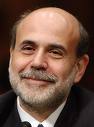
“A More Than Questionable Bernanke Fed Monetary Policy.”
“If the American people ever allow private banks to control the issuance of their currency, first by inflation and then by deflation, the banks and corporations that will grow up around them will deprive the people of all their property until their children will wake up homeless on the continent their fathers conquered.” Thomas Jefferson (1743-1826), 3rd US President
“It is well enough that people … do not understand our banking and monetary system, for if they did, I believe there would be a revolution before tomorrow morning.” Henry Ford (1863-1947), American automobile industrialist
“When plunder becomes a way of life for a group of men living together in society, they create for themselves, in the course of time, a legal system that authorizes it and a moral code that glorifies it.” Frederic Bastiat (1801-1850), French economist
It is becoming increasingly obvious that the Bernanke Fed’s monetary policy of fixing short-term interest rates at close to zero percent, and (with inflation at two percent or so) of forcing negative real interest rates, was primarily designed not to help the U.S. economy but to shore up the super large American banks that were on the verge of bankruptcy when the investment bank Lehman Brothers failed on September 15, 2008. Indeed, with this policy, the Bernanke Fed has transferred hundreds of billions to these super banks at a huge cost to the rest of the economy and to international holders of U.S. dollars.
Just as the Greenspan Fed created the housing bubble and let the derivatives market explode, thus sowing the seeds of the 2007-2008 financial crisis, the Bernanke Fed, using faulty economic analysis, has embarked upon a policy of zero short-term interest rates for many years, —an open-ended QE3 policy of buying mortgages and other financial instruments with newly printed money, thus creating the largest bond bubble in U.S. history.
When the distortions it has created in the U.S. economy unfolds in the coming years, the true costs of this policy will become clearer. Indeed, when the Fed tries to unload the financial assets it has acquired from the near-insolvent super large American banks, in a not too distant future, bond prices will be in danger of collapsing and nominal interest rates could spike, with a very negative impact on financial markets and on the real economy.
Perception versus reality is truly frightening. Reality is much, much worse than perception. Average worker has to work for one month to earn what the average CEO earns in one hour.
Published on Nov 20, 2012
Infographics on the distribution of wealth in America, highlighting both the inequality and the difference between our perception of inequality and the actual numbers. The reality is often not what we think it is.

 Wayne Walton explains a new complementary currency that is popping up around the US. Mountain Hours, Mile High Hours, and Island Hours are just a few examples of this voluntary co-operative currency, which allows for more transactions than were previously available connecting more unmet needs with unused resources.