

The truth at any cost lowers all other costs — curated by former US spy Robert David Steele.

Phi Beta Iota: We take everything with some skepticism. We are quite certain that 95% or more of the U.S. officers training Indonesian military and police personnel had no intention of enabling the atrocities that came later–the problem–as we personally experienced in Central America–is when the 1% to 5%, including personal emissaries from the White House, the Secretary of Defense, and the Central Intelligence Agency all say that there will be no U.S. retribution or blow-back from committing atrocities using US training, equipment, and forms of organization intended to counter bona-fide subversion. Hence, one bad apple rots the entire barrel of good apples.

British student held over alleged airline bomb attempt
Nigerian man reportedly linked to al-Qaida in custody after foiled terror attempt on transatlantic flight to Detroit
Police identified the suspect as Umar Farouk Abdul Mutallab, 23. It is understood that he is an engineering student at University College London.
One official said the man claimed to have been instructed by al-Qaida to detonate the plane over US soil.
Failed terror attack…Blizzard warning…Fuel spill in Alaskan waters
ROMULUS, Mich. (AP) — Law enforcement and counterterrorism officials say the components of a failed explosive were apparently mixed onboard an international flight bound for Detroit. Passengers subdued a Nigerian man who was apparently burned when the device fizzled, but didn't explode.
WASHINGTON (AP) — U.S. counterterrorism officials are trying to figure out if the failed bombing of an international flight preparing to land in Detroit reveals a serious new threat. Even though it burned but didn't explode, investigators wonder how the mixture allegedly used by a Nigerian man evaded detection
Phi Beta Iota: In the time immediately following 9/11 it was clearly established by multiple parties that our asymmetric opponents were spending $1 for every $500,000 we spent. Today we speculate that the ratio is closer to $1 (them) to $5 million (us). We lack a grasp of reality; we lack a strategy; we lack a force structure; and above all, we lack the moral high ground. Imperial Hubris is what happens when government get “too big to fail” and then promptly collapse because they suffer from a culture that turns disaster into catastrophe. Terrorism is the LEAST of our problems, but for the sake of avoiding argument we accept the United Nations High Level Panel's conclusion that terrorism is number nine out of ten high-level threats to humanity. What we do every day to ourselves is easily a million times more threatening, more costly, and more immoral than anything a single terrorist or terrorist group–whatever their motivations–might do. The BAD DECISIONS made by government are the real sucking chest wound for society, both in terms of perpetuating catastrophic industrial and weather changing practices, and in terms of failing to meet the fundamental needs of people who–if empowered with connectivity and education–would create infinite wealth in every clime and place.
Continue reading “Journal: Hubris Loses to Angst & Reality–Every Time”

January/February 2010
By David Talbot
Phi Beta Iota: The story is so good we will not extract from it. It must be read in its entirety. Government is failing to do its job, leaving a “wild west” environment alive and corruptible in the cloud. Standards are beginning to emerge but security is not a priority and the end-user as the ultimate source of the security is not even being considered (over ten years ago Eric Hughes conceptualized anonymous banking and end-user controlled encryption of all data). Eventually, after great expesne and great loss of data, government and industry may realize that the ultimate security is that which originates with the individual end-user, not a central service that can be hacked by disgruntled insiders or that can make a mistake that instantly explodes tens of millions of clients. Below is the original Mich Kabay slide, still relevant.

Carl Bernstein: US Congress Is Corrupt, Systemically Broken (VIDEO)
During an appearance on MSNBC's Morning Joe today journalist and author Carl Bernstein lamented that the debate over and the writing of health care reform legislation has shown us “Congress at its worst.”
Bernstein harshly critiques the nation's legislative branch as a body that is “responsive only to money and special interests” while ignoring the public and national interest:
The bad news is the really great problem in this country is the systemic breakdown of one of the three branches of government: the Congress of the United States. And until it's repaired, [Obama] and this country are going to be undermined. We could have had health care legislation in a meaningful way that would have gone twice as far at solving our budget and our health care problems, but because of the irresponsibility and the systemic corruption of the United States Congress, we don't.
Phi Beta Iota: Actually, all of our major institutioins have failed–the Executive, the media, the church, the schools. We live in a “cheating culture” in which INTEGRITY is no longer the foundation value. The good news is that there is nothing wrong with America the Beautiful that cannot be fixed by an Electoral Reform Act followed by reform of national intelligence, governance, and then national security.
A few references:
Continue reading “Journal: Huffington Post–Congress is Corrupt”

One of the main arguments made by self-proclaimed “liberal humanitarian interventionists” in support of President Obama's escalation of the Afghan War is that a return of the Taliban to power will condemn women to conditions approaching slavery. It is true that women's rights in Afghanistan are almost medieval in character, but the central question of humanitarian intervention is fundamentally one of whether the US escalation will improve things or make matters worse.
The United States has a sorry track record in this regard, and we bear a heavy moral burden for the current state of affairs, including the dismal state of woman's rights.
Chuck Spinney.
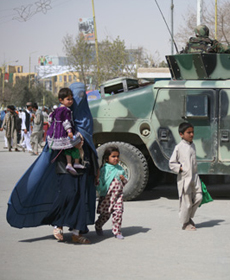
The U.S. intervention has never been and won't become a force for humanitarianism.
ANN FRIEDMAN | December 22, 2009
American Prospect
In the spring of 2008 I wrote a column, “Listening to Iraq,” in which I lamented the lack of access that most Americans had to the voices and opinions of the people most affected by the ongoing war. This made it difficult, I wrote, “for even the best-intentioned anti-war American to see Iraqis as partners, rather than as a political project.”
I was reminded of that column after Obama's speech announcing his Afghanistan strategy, In it, he declared, “For the Afghan people, a return to Taliban rule would condemn their country to brutal governance, international isolation, a paralyzed economy, and the denial of basic human rights to the Afghan people — especially women and girls.” But he made very clear that he does not see our involvement in Afghanistan as a humanitarian mission. As the American left debates, I'm struck by a desire to know what Afghan women, who have been living under the U.S. occupation for roughly eight years now, think would be best for their country.
The Afghan politician and activist Malalai Joya has warned that “Obama's military buildup will only bring more suffering and death to innocent civilians.” Another woman, who goes by the pseudonym Zoya, has appeared in various U.S. media calling for “withdrawal of the troops immediately.” She is a member of the Revolutionary Association of the Women of Afghanistan, a Kabul-based political group that has fought for human rights and social justice since 1977. And Sakena Yacoobi, who founded a network of underground schools for Afghan women and girls, says “most foreign troops are not primarily focused on protecting women and children. Their focus is on beating the enemy, which is very different, and ordinary citizens become collateral damage in the process.” At least Obama and Yacoobi are in agreement: This mission is not about human rights and democracy. It's about defeating an enemy.
Below the Fold: Balance of Spinney Commentary and Links to Relevant Book Reviews
Continue reading “Journal: US Intervention Outcomes for Women Et Al”

To Beat Al Qaeda, Look to the East
By SCOTT ATRAN December 13, 2009
Scott Atran, an anthropologist at the National Center for Scientific Research in Paris, John Jay College and the University of Michigan, is the author of the forthcoming ‘Listen to the Devil.'
Confidence is important, but we also have to recognize that the decision to commit 30,000 more troops to a counterinsurgency effort against a good segment of the Afghan population, with the focus on converting a deeply unpopular and corrupt regime into a unified, centralized state for the first time in that country's history, is far from a slam dunk. In the worst case, the surge may push General McChrystal's ”core goal of defeating Al Qaeda” further away.
What binds these groups together? First is friendship forged through fighting: the Indonesian volunteers who fought the Soviet Union in Afghanistan styled themselves the Afghan Alumni, and many kept in contact when they returned home after the war. The second is school ties and discipleship: many leading operatives in Southeast Asia come from a handful of religious schools affiliated with Jemaah Islamiyah. Out of some 30,000 religious schools in Indonesia, only about 50 have a deadly legacy of producing violent extremists. Third is family ties; as anyone who has watched the opening scene from ”The Godfather” knows, weddings can be terrific opportunities for networking and plotting.
Understanding these three aspects of terrorist networking has given law enforcement a leg up on the jihadists.
. . . . . . .
Continue reading “Journal: Anthropology 101–Not Being Listened To”
