Mini-Me: NCAA fines Penn State $60M, vacates wins from 1998-2011

Academia, Corruption, Cultural Intelligence, Culture, Ethics, Idiocy
Who? Mini-Me?

Huh?

NCAA fines Penn State $60M, vacates wins from 1998-2011

STATE COLLEGE, Pa. (AP) — The NCAA crippled Penn State football for years to come and practically tore Joe Paterno's name out of the record books Monday, erasing 14 years of victories and imposing an unprecedented $60 million fine and other punishment over the child sexual abuse scandal.

“Football will never again be placed ahead of educating, nurturing and protecting young people,” NCAA President Mark Emmert declared in announcing the penalties.

The governing body of college sports shredded what was left of the Hall of Fame coach's legacy – the sanctions cost Paterno 111 wins and his standing as the most successful coach in the history of big-time college football – while dealing a severe blow to the university's gold-plated gridiron program.

The NCAA ordered Penn State to sit out the postseason for four years, slashed the number of scholarships it can award and placed football on probation, all of which will make it difficult for the Nittany Lions to compete at the sport's highest level.

Raising the specter of an exodus of athletes, the NCAA said current or incoming football players at Penn State are free to immediately transfer and compete at another school.

For a university that always claimed to hold itself to a higher standard – for decades, Paterno preached “success with honor” – Monday's announcement completed a stunning fall from grace.

Read full article with video and photos.

Continue reading “Mini-Me: NCAA fines Penn State $60M, vacates wins from 1998-2011”

Patrick Meier: Crisis Tweets – Natural Language Processing to the Rescue?

Software
Patrick Meier

Crisis Tweets: Natural Language Processing to the Rescue?

My colleagues at the University of Colorado, Boulder, have been doing some very interesting applied research on automatically extracting “situational awareness” from tweets generated during crises. As is increasingly recognized by many in the humanitarian space, Twitter can at times be an important source of relevant information. The challenge is to make sense of a potentially massive number of crisis tweets in near real-time to turn this information into situational awareness.

Using Natural Language Processing (NLP) and Machine Learning (ML), Colorado colleagues have developed a “suite of classifiers to differentiate tweets across several dimensions: subjectivity, personal or impersonal style, and linguistic register (formal or informal style).” They suggest that tweets contributing to situational awareness are likely to be “written in a style that is objective, impersonal, and formal; therefore, the identification of subjectivity, personal style and formal register could provide useful features for extracting tweets that contain tactical information.” To explore this hypothesis, they studied the follow four crisis events: the North American Red River floods of 2009 and 2010, the 2009 Oklahoma grassfires, and the 2010 Haiti earthquake.

Read Full Post, Includes 9 Minute Video

Phi Beta Iota:  Humans will continue to outpace computers for the indefinite future.  Artificial Intelligence, of which Natural Language Processing is a sub-set, never fulfilled the expectations created for it, and to date all forms of proprietary technology remains retarded in relation to scalability, extendability, sustainabiliy, affordability, and agility.

See Also:

2012 The Open Source Everything Manifesto: Transparency, Truth, & Trust (Evolver Editions, June 2012)

2012 PREPRINT FOR COMMENT: The Craft of Intelligence

2010 INTELLIGENCE FOR EARTH: Clarity, Diversity, Integrity, & Sustainability

2010: Human Intelligence (HUMINT) Trilogy Updated

Michel Bauwens: Amplify Brooklyn – Designing A Sustainable Economy At The Community Level

Culture, Economics/True Cost, Knowledge, P2P / Panarchy
Michel Bauwens

Amplify Brooklyn: Designing A Sustainable Economy At The Community Level

EXTRACT:

This fall, graduate students in the Transdisciplinary Design MFA program at Parsons, in New York City, worked with Penin and her co-director, Eduardo Staszowski, to create Amplify, an exhibit currently on display at Brooklyn’s Arts at Renaissance, which demonstrates existing and potential design solutions to local issues related to everyday experience. The project’s aim was to re-think service design in terms of sustainability. Duane Bray, Sarah Soffer and Tom Eich from the design firm Ideo facilitated the Amplify workshop.

Read full article.

Jacques Ellul: On Technology and Human Morality

Culture, Economics/True Cost, P2P / Panarchy, SmartPlanet
Jacques Ellul

Jacques Ellul, technology doomsdayer before his time

“People see him as just a bringer of bad news, but the two most important things in his writing aren’t taken into account. One is the comprehensiveness of his explanation of the technological phenomenon. The second is his powerful moral concern. Those two aspects of Ellul’s thought are not as influential as I’d like them to be.”

“Technology becomes our fate only when we treat it as sacred,” says Darrell J. Fasching, a professor emeritus of religious studies at the University of South Florida. “And we tend to do that a lot.”

Via Manuel Pinto, Artur Alves

Read full article.

EXTRACT:

His central argument is that we’re mistaken in thinking of technology as simply a bunch of different machines. In truth, Ellul contended, technology should be seen as a unified entity, an overwhelming force that has already escaped our control. That force is turning the world around us into something cold and mechanical, and—whether we realize it or not—transforming human beings along with it.

Phi Beta Iota:  All of these authors overlook the role of corruption — the lack of integrity and intelligence among decision-makers allocating financial resources.  The fact is that technology is like complex financial instruments: a means of defrauding various parties for the benefit of the few.  This is one reason why Open Source Everything must apply to all technologies as well as all financial dealings.

See Also:

Jacques Ellul, The Technological Society (Vintage, 1967)

Jacques Ellul, Propaganda: The Formation of Men's Attitudes (Vintage, 1973)

Jacques Ellus, The Subversion of Christianity (Eerdmans, 1986)

Jacques Ellul, Reprint: Money and Power (Wipf & Stock, 2009)

Jerry Mander, In the Absence of the Sacred (Peter Smith, 1999)

Kirkpatrick Sale, Human Scale (New Catalyst, 2007)

John Ralston Saul, Voltaire's Bastards: The Dictatorship of Reason in the West (Vintage, 1993)

Robert Steele, THE OPEN SOURCE EVERYTHING MANIFESTO: Transparency, Truth & Trust (North Atlantic Books, Evolver Editions, 2012)

Clifford Stoll, Silicon Snake Oil: Second Thoughts on the Information Highway (Anchor, 1996)


Reference: Stand Up for a Free and Open Internet

Access, Autonomous Internet, Hardware, P2P / Panarchy, Software, Spectrum
Click on Image to Enlarge

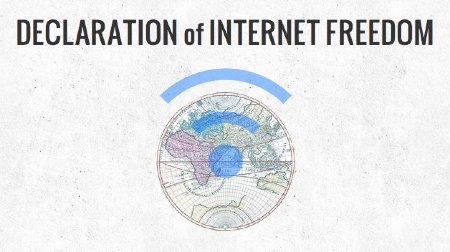
Last week, a group of activists and organizations came together to publish the Declaration of Internet Freedom, a set of principles that make up a vision for a free and open Internet. Groups behind the document include Free Press, Fight for the Future, Public Knowledge, and the Electronic Frontier Foundation, as well as others that fought against and helped defeat SOPA/PIPA earlier this year.

Since its launch, the Declaration has attracted a wide range of signees, including orgs like Amnesty International, the Harry Potter Alliance, and Mozilla; as well as individuals like artist/activist Ai Weiwei, musician Amanda Palmer, and Internet pioneer Vinton Cerf. And just yesterday, Rep. Darrell Issa became the first member of Congress to sign the document.

Read the handy infographic below and voice your support for an open Internet by joining thousands of others in signing the Declaration. Then use the EFF's action page to send a letter to your congressional representative asking her or him to join Issa in signing the Declaration. And if you've got ideas for additional principles or any general feedback about the document, you can contribute your thoughts and suggestions on Step2 and Reddit.

Read full post including Declaration of Internet Freedom.

Phi Beta Iota:  Another term of art is “Autonomous Internet.”  A broader term that includes this one is “Liberation Technology.”

See Also:

Autonomous Internet (139)

Liberation Technology (9)

Steven Lubar: Scholarly Research and Writing in the Digital Age

Advanced Cyber/IO, Knowledge
Steven Lubar

Scholarly Research and Writing in the Digital Age

EXTRACT:

Along the way, I kept track of my process, to help me think about a talk I’ll be giving in October. I send students off to write research papers, and so I should be reflexive about my own work, in order to better teach them how to do research. And I was curious to see how new digital tools would change the way I work, and especially if they would change the questions I might ask and answer in my research. The answers I found: Yes, I could ask and answer different questions, especially about museum visitors. Yes, a research plan is still necessary; serendipitous Googling is not enough. No, digital is not enough; it’s still necessary to visit libraries. And a good reminder: research is only the first part of writing a scholarly paper. It’s also about knowing the big picture, puzzling out connections and making sense of relationships, and most of all, creating meaning. That part hasn’t changed.

Discovery is perhaps the stage of scholarship that’s seen the largest change. Scholars of 19th century American history have a remarkable amount of material available to them online. Newspapers, books, journals, all of them word-searchable. These sources would have been all but impossible to use earlier – I might have read on microfilm the newspapers closest to the Navy Yard, for those days where I knew something had happened. But now it’s easy to simply check out a few hundred newspapers, or a few million books, with a few clicks.

This comes with some challenges.

Read full post.

Phi Beta Iota:  What is really remarkable is that despite wild spending by the secret world (now $80 billion a year) and huge spending by Google (generally $10 in stockholder income for every $1 in earnings–not a paying proposition in the long run), both machine processing and computer-aided tools for the analysis of all information in all languages all the time continue to STINK.  No one has been held accountable for mandating geospatial attributes for every datum in every discipline and domain; no one has been held accountable for failing to break down the barriers to information-sharing and sense-making across the eight communities (academic, civil society, commerce, government, law enforcement, media, military, and non-governmental/non-profit) that each have a separate piece of the total picture on anything.  We all knew the requirements in 1985-1989.  Still today no government and no corporation and no international organization has gotten their act together.  Proprietary does not scale, is not agile, does not work well with others, and is generally full of both security holes and end-user disrespect.  At the same time, NSA and other US Government authorities have been severely remiss–if not in outright betrayal of the public trust–in failing to heed the many warnings and specific recommendations of many of us (four of us in the below 1994 letter) with respect to getting cyber-security and cyber-education right from the early days.

See Also:

1989 Webb (US) CATALYST: Computer-Aided Tools for the Analysis of Science & Technology

1994 Sounding the Alarm on Cyber-Security

Worth a Look: 1989 All-Source Fusion Analytic Workstation–The Four Requirements Documents

Smart Planet: In the Philippines, turning plastic waste into fuel

05 Energy, Commercial Intelligence, Earth Intelligence, Knowledge

In the Philippines, turning plastic waste into fuel

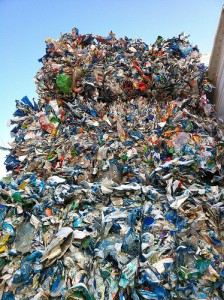
Plastic waste is a problem all over the world. And it is especially troubling in the Philippines where plastic waste piles up in Manila’s Payal landfill, unable to decompose. But one inventor thinks he might have found the answer to this chronic problem.

Jayme Navarro, founder of Poly-Green Technology and Resources is converting plastic waste into fuel through a process known as Pyrolysis.

ECO-Tech explains how it works:

“Pyrolysis is a fairly simple process, it starts by drying plastics to be processed. They are then shredded into smaller pieces, and heated in a thermal chamber. The melted plastic is continually heated until it boils and produce vapors. The vapor is passed into cooling pipes and distilled into a liquid, which is chemically identical to regular fuel.”

And one of the great benefits of converting plastic to fuel is that the fuel burns cleaner because of a low sulfur content. Navarro estimates that the fuel will be 10-20 percent cheaper because of the low production costs since the raw material is available in such large quantities.

The method has already been approved for industrial use and it is being tested for use in vehicles.

Reuters reporter Elly Park says: “While plastic fuel technology isn’t anything new, Navarro believes that an industrial scale version of his technology can not only help drivers on the road, but help the country dig itself out of its trash problem.”

Inventor turns plastic trash into liquid gold  [Reuters]

Filipino Inventor Turns Plastic Trash Into Liquid Gold  [ECO-Tech]

Photo via flickr/JMacPherson

See Also:

Paul Fernhout: Open Letter to the Intelligence Advanced Programs Research Agency (IARPA)

Video: Japanese Machine Making Fuel from Plastic, “Trash into Treasure”

noble gold