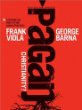
Smashes the False Foundations of Didactic Churches, February 13, 2008
Frank Viola
Didactic means “one way” and is a word used by scholars to describe conferences where there will be lectures instead of round tables. Generally they are sterile and annoying. Most churches today are like that, one-way, everyone sitting like rote students, a false sense of community that eschews integral consciousness.
This book joins The Complete Conversations with God (Boxed Set) as an extremely important work. I concluded long ago that the Catholic Church was a form of legalized organized crime picking the pockets of the many for the advantage of the few, and that certainly applies to most fundamentalist movements in the US, where “carpetbagger” is the first term I think of, followed by “cult” and “hypocrit.”
I really respect David Flower's review and his list of books, all unknown to me. Here I will list several others: the first two support this book's contention, the others touch on the good and the bad of religion and politics in the USA.
A Gift to Mankind–Cosmos Vision for Leaders, February 13, 2008
Carl Sagan
I have ten pages of notes on this book. It is a beautifully presented volume of lectures that includes slides and stunning color photographs in the body.
The forward by Ann Druyan, editor, has several noteworthy lines:
+ He believed that the little we do know about nature suggests that we know even less about God.
+ His argument was not with God but with those who believed that our understanding of the sacred has been completed.
+ We are spiritually and culturally paralyzed, unable to face the vastness, to embrace our lack of centrality and find our actual place in the fabric of nature.
+ [His] vision of a critically thoughtful public, awakened to science as a way of thinking, impelled him….
+ The working title for these lectures was “Ethos.”
The occasion of the lectures was a series on Natural Theology, which is defined as everything about the world not supplied by revelation.
Here are my flyleaf notes:
+ Coping with godliness versus superstition
+ Universe is mostly nothing/blackness; light is the rarity
+ Religion means “binding together” (consistent with those who seek to make religion more of a communitarian endeavor instead of supporting vast hierarchies of “leaders” living off the backs of the far-flung people)
+ 500 million years from now Earth will probably explode–worlds have lifetimes just as humans do.
+ Earth consists is one of a trillion bits in the universe, with 400 billion comprising our galaxy.
+ Churchs have sought to build a wall against science and be exempt from scientific examination.
+ Origin of earth can be conceptualized as a natural selection over millions of years, in which a single particle of dust, this one time, leads to a chain of collisions, electrical energy, and heat melting reactions that took millions of year to evolve to this point
+ Stability of atoms is a *spectacular* phenomenon.
+ Bio-chemical fossils have been recovered.
+ Sir William Higgins frightened the Earth in 1910 when gas-light analysis revealed that cyanide was present in distant stars some thought were on a collision course with earth.
+ Given millions of years the accidental or incidental spontaneous creation of amino acids is perfectly reasonable.
+ Densities in outer space are consistent with organic matter
+ Titan, specifically, has great lakes of liquid hydrocarbons (“chicken soup” for life) Date of this information from NASA: July 2006)
Search for extraterrestrial intelligence could be compared to the search for God. There are two calculations:
+ Tough formula: just one, and it is us.
+ Liberal formula: a million other planets with life, but the nearest one is 100 light years away
+ Mathematics would appear to be the common language for inter-galactic communication (see my online review of “Google 2.0: The Calculating Predator–their computational mathematics are “out of this world.”
+ UFO fraud is akin to the sale of religious relics
+ Scientology (declared a cult in Germany) has transmorgified from Dianetics
+ Spinoza and Einstein considered God to be the embodiment of all natural scientific principles
+ Religious “conversions” tend to “join” the existing prevalent community religion
+ Six arguments about the origins of the universe do not satisfy:
– Cosmological
– From Design
– Moral
– Ontological
– Consciousness
– Experience
+ Indigenous peoples recognize other levels of consciousness
+ Emotions may be bio-chemical attributes, and “religion” could be a molecule that produces social conformity
+ Book concludes with a chapter on “Crimes Against Creation” that is most t imely. The author worried about nuclear holocausts leading to firestorms (I would add, aggravated by the collapse of urban water systems). He speaks of a witches' brew of pyrotaxins, ultraviolet light, and time scale readiological fall-out (see also books such as
High Tech Trash: Digital Devices, Hidden Toxics, and Human Health
Pandora's Poison: Chlorine, Health, and a New Environmental Strategy
The Blue Death: Disease, Disaster, and the Water We Drink
Exposed: The Toxic Chemistry of Everyday Products and What's at Stake for American Power
+ Golden Rule matters!
+ The author saw a steady trend of individuals identifying with ever larger wholes to the point of “Whole Earth” [Co-Evolution Quarterly by Stewart Brand, Whole Earth Review by Howard Rheingold, Whole Earth ‘Lectronic Link or WELL in the 1970-1990 timeframe; today, the World Index of Social and Economic Responsibility led by Paul Hawken and Peggy Duvette, among others).
The Q&A section is a very fine segue to the book.
Q: How do you recognize truth?
A: It must be consistent of itself, not inconsistent with what is already proven, and we must really understand how badly we want to know or are biased toward accepting without question. Good science is reproducible; miracles are not.
Q: If universe expanding, what is it expanding into?
A: Additional dimensions beyond three.
Q: What is to be done to avoid self-immolation?
A: Demand and practice participatory democracy with a vengeance.
On this latter, see also:
The Tao of Democracy: Using Co-Intelligence to Create a World That Works for All
Society's Breakthrough!: Releasing Essential Wisdom and Virtue in All the People
All Rise: Somebodies, Nobodies, and the Politics of Dignity (BK Currents)
One from Many: VISA and the Rise of Chaordic Organization
Leadership and the New Science: Discovering Order in a Chaotic World
The Cultural Creatives: How 50 Million People Are Changing the World
Other books I would have linked if allowed:
Plan B 3.0: Mobilizing to Save Civilization, Third Edition
The Future of Life
The leadership of civilization building: Administrative and civilization theory, symbolic dialogue, and citizen skills for the 21st century
I put the book down regretting that I never had a chance to hear the author speak in person.
This book, the last that I read during a power outage lasting most of the day, really rocked me. Apart from the fact that the author has labored anonymously for three decades before being propelled into the public consciousness with his well-served Nobel Peace Prize (a prize that Prahalad should be considered for as well), everything in this book resonates with the path the 24-founders of Earth Intelligence Network have chosen.
The author not only lent to the poor, he lent to beggars at no interest with no schedule, and proved conclusively that the poor and beggars are “credit worthy” by virtue of “being alive.” He also pushed technology to rural areas.
By page xvii I have goosebumps and a glorious feeling that good stuff is happening faster and bigger than most realize.
The author notes early on that unfettered capitalism creates sccial problems rather than solving them. He suggests most compellingly that social business fills a gap left by government, foundations, and multilateral institutions.
The author recognizes, as Alvin Toffler and others have pointed out, that all of our institutions are failing. I recommend books I have listed and reviewed on how complex societies collapse. I would venture to say that the US Government, with 27 secessionist movements, is collapsing from a mix of political and economic corruption compounded by cultural arrogance, but most importantly, because the government is stuck in the top down elite driven secret information Weberian model, and the government has failed to empower all local communities and all individuals with bottom up resilient adaptable information sharing capabilities.
The bookm draws a stark contrast between the World Bank which measures loans given out, and the Grameen Bank, which measures outcomes at multiple levels including kids staying in school.
As I read about a social business, I envision every village as its own business.
The author addresses and dismisses Corporate Social Responsibility (CSR) as insufficient. He calls for proactive collaborative engagement with potential customers in the five billion poor, and I am instantly reminded of the Business Week cover story of 20 June 2005, on the power of mass volunteer collaboration.
The author focuses on women, mothers, and their children. This tallies with Michael O'Hanlon and Ralph Peters, both of whom regard the education of women as the single best investment bar none.
The author took several steps beyond his pioneering micros-cash loans. He created social networks of those being helped, and he froze payments or interst and did whatever necessary to get defaulters back on track without penalty. This guy is the Mother Teresa of micro-economics!
Today self-help groups of around 20 can apply to the National Bank for Agriculture and Rural Development for group loans.
His integrity is without peer. Interest over the life of the loan would never exceed the loan itself.
He prefers social business to charity because charity encourages corruption (in my own experience, 50% of every AID or contractor dollar goes toward corruption or fraud).
He observes that social business does not have conventional metrics, but it provides meaning and opportunity, and I observe in my own note, it lowers the “true costs” of virtually everything it touches.
Featured in this book, the middle half, is the French company Danone, and the joint venture to create a yogurt for the poor children, ultimately being delivered in a bio-degradable cup that converts into fertilizer.
The last chapter is on information technology for the poor. I personally envision free cell phones for each village, then for each neighborhood, and finally for each household, monetizing the transactions and the real-time knowledge.
The author concludes that we need new social value metrics and even a Social Dow Jones Index. This is the opposite of what I have been thinking about ever since Paul Hawkins taught me about “true costs.” Now that Scanback allows a person at the point of sale to photograph a bar code and send it to Amazon to get their price, the channel is open to send back water content (4000 liters in a designer shirt from Bangladesh cotton), fuel content, child labor hours, and tax avoidance status).
The last note is one I want to present to a Fortune 50 Assets Management firm. Danone is to be admired and respected for committing to a sccial business, and it found a solution that permitted it to engage without letting down its investors: it created a new fund explicitly advertised as 90% traditional and 10% social business, and it was over-subscribed instantly.
On page 25 are listed 25 distinct Gameen companies. On pages 58-59 are Sixteen Decisions that alone warrant the Nobel Peace Prize. What these sixteen decisions do for the beneficiaries of micro-cash loans is nothing less than a socially-inspired form of the Ten Commandments, focused on creating health people in a healthy family within a healthy community.
I am increasingly uncomfortable with the fact that all the books I am reading and reviewing are in English. I have read a few in English stemming out of India and elsewhere, and I am beginning to feel a very deep vacuum that needs to be filled. I envision 100 million volunteers using Telelanguage.com to educate the poor one cell call at a time, but I now also see an urgent need to translate and make available non-fiction literature in other languages, easily retrievable in micro-text for micro-cash.
This is a rather unusual book, one that takes a clever approach of seeking to understand Bush Junior in the context of a Shakespearian tragedy, and specifically, Henry V.
Here are my flyleaf notes–this is a totally worthy book by a real professional with insight.
+ Three myths of the House of Bush:
– Made it on my own
– Not really rich
– Running for office to serve the Nation
+ Seven Lessons from the House of Bush
– Treachery of the press
– Importance of moment
– Money before politics
– Primacy of manners
– NE moderates an endangered species
– Don't give up
– Trust only the family
+ The author opens early with his conclusion that George Junior is a Walker (the differences are explained), not a Bush and the rest of the book is a lovely explanation of a family tragedy in three acts:
– ACT I: the loser struggling to be like Dad and failing
– ACT II: success at being different (drunk, boorish, inept, but different)
– ACT III: descent into mesianism (what happens when a village idiot gets the illusion of power)
+ Early on I have a note: national and global catastrophe rooted in a broken family whose black sheep got promoted more than one rung too far. It must gall the second fiddle that his own mother does not like him and thought the Presidency should have gone to Jeb.
+ Despite my extensive reading on the last eight years of high crimes and misdemeanors, this book contains information I have not seen before. The author hits the reader early on with:
– Rove, Cheney, Rumsfeld, and Rice were “enablers” for George Juniors' idiocy (Powell in my view confused loyalty with integrity)
– The second term flame-out was avoidable–Bush had good intentions but Rove held sway
+ The author addresses Bush's faith as false, non-theological, more like “self-help Methodism,” using Alcoholics Anonymous meetings instead of church as a group activity.
+ There is a superb discussion of the juxtaposition of Bush's linguistic blunders combined with the manner in which he was gifted at using evangelical and conservative code words.
+ There is fine coverage of George Juniors meanness and overbearing humiliating toward all, Rove in particular, who accepted every humiliation, including the nickname “Turd Blossom.”
+ The author summarizes the scandals on Rove's watch: Plume, Katrina, Iraq, firing of prosecutors (I would also add, subversion of Congress in violation of Article one, see Breach of Trust and also Broken Branch).
+ We learn in passing that Rove was abandoned three times:
– By his father who ran away
– By his stepfather who ran away (one of the two was homosexual, I forget which)
– By his mother who committed suicide
+ It was Rove, the author tells us, who pushed privatization of social security. As I review this book there are ads on the radio that seek to communicate that 40% of America's shares are owned by normal people. What they do not tell you, which you can lean in John Bogle's book, The Battle for the Soul of Capitalism, is that we are no longer an ownership society, we have abdicated to financial management intermediaries, and they have skimmed one fifth of the value off for themselves, a select few.
+ According to the author it was Rove and not George Junior that pressed for a strategy of demonizing terrorism. The author says Rove destroyed the Bush II presidency with the “catastrophic blunder of politicizing the War on Terror.”
+ When the author finally gets around to covering Dick Cheney he casts him perfectly as “Lord Chief Justice” from Henry V, the sycophant who revels in pulling the strings behind the scenes. I have the line, my own interpretation of the author's words, “played Bush like a fiddle.”
+ The author asserts that Cheney was not transformed, as Brent Scowcroft believes, but rather finally found an opportunity to exercise his own judgment about the irrelevance of Congress and the need for a unilateral Presidency autonomous from oversight and able to take bold initiatives without consultation. [See One Percent Doctrine for a review of Cheney's mal;feasance going back to the Ford Presidency, in ursurping Presidential power].
+ The author, editor in chief of Slate, observes that the press really missed this about Cheney, his intent focus on expanding Presidential power and dismissing Article 1 of the Constitution.
+ Addington receives concise but chilling coverage.
+ Pages 170-171 are a priceless summary of how Cheney
– Managed Bush's mind
– Framed choices
– Accelerated Bush's neurotic shoot from the hip uninformed decision making (while ensuring behind that Cheney's decision was preset or, if necessary, counter-manding the President behind his back after the fact, alleging to others not in a position to question, that President had changed his mind).
+ The author discovered in Lynn Cheney's “Executive Privilege” (evidently no longer carried by Amazon) a telling fictional tale all too real.
+ The section I found most interesting outlined the six phases of Bush Doctrine:
– 1.0 Unipolar Realism (we make reality in our own image)
– 2.0 With us or Against Us
– 3.0 Preemptive attack
– 4.0 Democracy in the Middle East
– 5.0 Freedom Everywhere
– 6.0 No doctrine at all
+ The author surprises me with one defense of Cheney that I consider credible: Cheney truly wanted to vaccinate the entire nation against smallpox because he truly believed the threat existed. I am reminded of Daniel Elsberg who in Secrets: A Memoir of Vietnam and the Pentagon Papers recounts how he warned Henry Kissinger that reliance on Top Secret Codeword information would “make him like a moron, unable to listen to those who actually know.”
+ The author tells us that Bush II reads books many of them “but does not know how to think historically.” I am reminded of my youngest son, 12 years old, a brilliant wide receiver and first baseman, who at this point can read a book and not remember a thing from the plot.
+ The author ends with a devastating comparison of Winston Churchill, who did outgrow Lord Randolph and make his mark, and George Junior who “in the end, … failed to be his own man or displace his father.” Naturally there is the humiliating irony of proving that his father was right not to have gone on to Baghdad.
I just shake my head wondering how the American people have been so silent. Here are a few other books that round out the catastrophic decrepitude of the Bush-Cheney regime:
Some time a go I wrote a piece on 9/11, “who's to blame,” and it boiled down to this: We the People are to blame, for having dropped out of the democracy and abdicated our civic responsibilities. Cheney's high crimes and misdemeanors, not least of which was letting 9/11 happen as FDR let Pearl Harbor happen, Congress abdicating its Article 1 responsibilities, the mainstream media refusing $100,000 fully paid ads against the war; a piss-ant like Wolfowitz being able to get away with questioning Shinseki's experience, insight, and honor–all of these are secondary causes and I would hasten to include the “failure of generalship,” flag officer who, like Colin Powell, forgot their Oath of Office and confused loyalty with integrity. The prime cause is that we gave our government over to what I now consider to be four organized crime families: the Clintons, the Bushes, the Democratic Party, and the Republican Party.
As McCaffrey said on CNN last night (13 Feb 08), “anyone who votes for an incumbent in 2008 should lose their American citizenship.” Tongue in cheek? Perhaps. Relevant and actionable? Absolutely. It's time to abolish this government and start over.
If the SecDef and DNI Could Read One Book, This is the One, February 12, 2008
A. J. Rossmiller
DNI Mike McConnell is a good man trapped in a very bad pyramidal system that is inherently duplicitous. He is presiding over what retiring Defense Senior Intelligence Leader Rick MacKenzie calls, in this book, “the underlying insanity of our intelligence agencies.”
As the author of the original strike, On Intelligence: Spies and Secrecy in an Open World, honored with a foreword by Senator David Boren, former chairman of the Senate Select Committee on Intelligence, and several other books moving the ball forward in the public (since our government is broken, not just the intelligence community) I must confess that the author of this book pursues a path that is inherently attractive to me. I have a bias for the truth, and a bias against the $60 billion a year in insane waste that Mike McConnell is presiding over.
Out of the ten books that arrived today, this is the one I could not put down. Below are my summative highlights, and then other books that support this author.
For a first time author and a young man at that, my first flyleaf note reads, underlined with exclamation marks: ABLY WRITTEN! By a MATURE Person!
There is no index nor bibliography in this book. I absorbed it at face value, as a first-person narrative of a patriot who joined the intelligence community for the right reasons, and left the sinking ship after honorably pointing out the flaws to his bosses, who remain typical not invested here lifers (this is generally the case across the IC).
+ Analysts segregated, no inter-regional, issue, or agency integration and interaction.
+ High turnover (for the last decade more analysts quit FBI every month than can be recruited–the best and the brightest do NOT like idiot bosses). This results in an inexperienced middle management as the dead-beats move up.
+ Products rarely reached the intended audience, and products finally reaching Secretary of Defense and the Joint Chiefs of Staff never ever resembled what actually started out as an honest pessimistic assessment.
+ Months of indiscriminate editiing resulted in drastic differences. I can attest from experience and the literature that CIA is just as ineffectual).
+ Many patriotic intelligence analysts as well as career military felt that the Administration and the flag officers took their eye off the ball, invading Iraq and creating infuriated nationalists, instead of focusing on a handful of terrorists.
+ Supervisors lied regularly to everyone.
+ Iraq was dust, mosquitos, heat, and constant organizational chaos and reorganization with virtually no real production that was actionable. The one exception was the “track and whack” group in which the author was fortunate to serve.
+ DIA failed to coordinate with the in-country Combined Intelligence Operations Center (CIOC) before it sent its single most significant contingent to Iraq. For that one right there I would hope Director of DIA figured out who embarrassed his agency and counseled the individual.
* Institutional knowledge (retained knowledge that outlives turnover) is virtually non-existent.
+ The tactical units in the field could not handle Top Secret or Top Secret communications and computing technology. I have this image in my head of an elephant trying to blow his nose down a straw to a gnat.
+ “Disaster continued to be perpetuated by failed leadership and the absence of a coherent intelligence or military strategy.”
+ Inter-agency choas in Iraq.
+ DIA complained about its analysts in Iraq working too hard because their overtime came out of its budget. This reminds of the message from CIA complaining about my asking to be reimbursed for hotel rooms when I had to go underground in El Salvador after an explicit by-name assassination threat from the Colonels running the country (they confused my effort5s to penetrate the extreme left with sympathy for the extreme left–I did not have it then, I certainly do now). The message said that since I was receiving a housing allowance, I could not have the hotel rooms approved. I had a very very good Chief of Station, a real talent, and as I like to recall the story, he sent back a one-liner: “What part of assassination do you not understand?” The DC-based officers tend to be pasty-faced overwight prima donnas with no real commitment to those in the field. This is true across all agencies, and especially FBI and DEA.
+ The author has the grace to include a snapshot of a more typical person in Iraq, a military reservist whose life has been essentially ruined by the cavalier manner in which Cheney and Rumsfeld decided to lie to the public, invade Iraq, let the contractors steal billions without doing the reconstruction, and now he comes back to a recession with no job.
+ The author says that many in Iraq, realizing they could neither complain nor repair their lot, “checked out mentally.” This breaks my heart.
+ A very important part of his book discusses how units sent to capture targets would often come back with 50 people they snapped up in the general area, each of them presumed guilty, each sent to “Abu G” for three months. The author is morally shaken by this, as I have been shaken by Mike Hayden's two impeachable offenses (warrantless wiretapping and rendition plus torture).
+ The author posits that Iraq is not an insurgency, but rather a unique mix of a failed state (remember, Rumsfeld would not allow the troops necessary to keep good order while reconstruction proceeded apace), criminal opportunism, especially kidnapping for ransom, a few fanatics, and a majority of outraged anti-occupation nationalists in three flavors (Sunni, Shi'ite, Kurd).
+ While in Iraq, occasionally commuting by helicopter to the Green Zone, an oasis in the desert, the author comments that US leaders, both in DC and in Iraq itself, were totally oblivious to the “turmoil and dissatisfaction in daily Iraqi life.” I am reminded of the exposes of how Blackwater and others have indiscriminately killed civilians, rammed cars driven by old men off the road, and so on.
+ DIA's Office of Iraq Analysis “had a veneer of control, under which minor anarchy raged.”
+ The DIA Way: Kiss Up, Kick Down (as the author experienced it–those I know in the JMITC, PGIP, and now the NDIC are a breed apart in a most positive way).
+ Idiocy of DoD priorities–too many flat screen TV's, not enough desktop computer terminals and screens.
+ In Iraq, US officers and media both seduced by English-speaking Iraqis, and totally oblivious to the deeper nuances available in indigenous language about domestic views, concerns, and links.
+ In the Pentagon, personally witnessed the politicization of analysis that continues to this day. Senior officers including the Navy J-2 Admiral now heading to CENTCOM J-2 as I understand it, always deleting pessimism and squelching reports on how badly reconstruction was going.
+ The real star in this book–but I totally respect this author and his good judgment in leaving the ship of fools–is DISL Rick MacKenzie. SecDef Gates and DNI McConnell would do well to read pages 176-177 of this book. For the rest of you, here are the highlights from MacKenzie's parting note to all that began with the underlying insanity quote above:
– Unified honest warning works, edited disparate warning is idiocy
– Human behavior is predictable, yet we like to count things and ignore the human factors
– We have no clue how alien we are to other cultures
– The indicators are never wrong. If we are true to the evidence (we are not) we will be right more often than not.
– Analysis is not the same as synthesis, diagnosis, or prognosis (nor would I add, is propaganda, deception, active lies to the public, or fabrication)
– Intelligence analysis is a profession in its own right. I am reminded of Jack Davis (search for <analytic tradecraft>.
The author concludes his book by dismissing most of what the US Intelligence Community accesses, and states that he has found useful truths in non-traditional online media, which he calls a “true meritocracy.”
I put this book down enormously impressed with this author's intelligence, balance, gifted writing, relevant observation, and total honesty. This is precisely the kind of patriotic committed person we are recruiting, and sadly, he is one of the few with the courage to leave. Those he left behind, absent a remarkable turning of the secret world right-side up and right-side in (search for <Forbes Reinventing Intelligence>) will, if they do not leave now, become the very bitter, narrow, inept, egotistical fools they now report to.
WOW. See also (I am limited to ten links, see my own books and the lists of hundreds of intelligence books I have reviewed, most of which support both my original 1988-2000 reclama, and this author's current reclama. NOTHING HAS CHANGED–WE'VE JUST POURED GASOLINE ON THE FIRE.
These books are intelligence books. I have an entire other list on political and falg officer malfeasance, high crimes, and misdemeanors. the first two books on the list below was not widely disseminated, but precisely matche the author's book, only for the CIA.
The last book, after summarizing all that NSA is trying to do, spending tens of billions of dollars very foolishly, ends by hoping the might one day achieve the ultimate computing device, weighing virtually nothing, powered by a tiny battery, able to make petaflops of calculations per nanosecond: “the human brain.”
Our government, and our secret intelligence community, are so totally screwewd up as to defy belief. I certainly would like to have a chance to restore the honor and intelligence of the secret world, but the chances of either (me or them) happening is right up there with the Second Coming. Our Nation will go down in flames because our government is clinically insane. See Running on Empty for why 2008 needs to break the backs of the two branches of legalized organized crime in this country, namely the Republican and Democratic parties. INDEPENDENCE!
Better Information Than Available Online or From Government, February 12, 2008
Alan Korwin and Steve Maniscalco
Edit of 13 Feb 08 to add “rush & crush” comment, and links including those recommended by Mr. D. in comment.
For those of us that believe in the Constitutional right of all citizens to own and bear arms (the National Guard is NOT a militia–individuals, not groups, have this inalienable Constitutional right), and who feel that the combination of random fatal violoence is accelerating, along with fatal crime, carrying a side arm makes sense. Carrying it concealed makes even more sense, to avoid attention or upsetting the soccer moms (plus weapons cannot be on school grounds except in the car).
I picked this book up today while on a trip, and finally sat down with it tonight. Here are highlights:
1) Opens with a tremendous single-page list of 13 kinds of pending laws intended to restrict citizen rights AND a great list of the harder to do more sensible things, 15 in all, that government *should* be doing. Being made aware of this pending legislation is important. The NRA does not do this good a job.
2) Landlords cannot limit rights.
3) Right to transport (unloaded in container, to include in locked baggage on airlines) is very broad, while right to carry, loaded, is very narrow.
4) Concealed or open carry cannot come within 100 fett of any site serving alcohol.
5) For natural reasons, 98% of those who own and carry a handgun are reluctant to register that fact with the government at any level.
6) Deadly Force section is the most important part of the book and essential reading for anyone unfamiliar with the term. I taught deadly force to Battlaion Landing Team 3/4 in the Fleet Marine Force, but learned even more from my Chief of Station in El Salvador. He handed me my Browning 9mm and said “Use this when you absolutely don't give a damn about being fired.” Lovely. This book sets out the three principals: Retreat, Attempt Peace, draw and fire only if lethal force against you is imminent. It emphasizes that you can protect a third person but only if they face lethal force.
7) Excellent sections on related laws (e.g. do NOT “brandish” a weapon) and federal laws.
8) Covers gun safety and child safety.
9) Ends with a list and discussion of 19 noble uses of firearms.
Lots of appendices.
A righteous worthy book, very glad to have it.
TEACHING OUR CHILDREN
After the Virginia Tech mass murder, I realized we have become a nation of sheep. Not only do our children need to become fit, they need to learn the modern day equivalent of “duck & cover,” which I call “rush & crush.” From 6th grade on, children should have a bi-annual drill and be taught two things:
1) See a gun sound the alarm with “GUN GUN GUN”
2) Without further prompting, all those closest to the person with the “gun” should throw books chairs and then “rush and crush” while the teacher sounds the school alarm and other kids use their hidden cell phones to call 911. This will invariably limit the dead to 1 at most and wounded to 2-4 at most. This is a proven “swarm” defense across the animal kingdom, and now that we are back closer to animals than civilized human beings, our children need to learn this.
Two afterthoughts:
1) In this era of idiot lawyers where border patrolmen go to jail for shooting a drug dealer entering the country illegally, it makes sense to wipe down your rounds and police up your expended cartriges. I personally do not like the illegal “shock” rounds” because I worry about them jamming. I am very accurate and the limited edition Walther PPK is a glorious piece of engineering.
2) Situational awareness and avoidance combined with use of the cell phone to call police remains the single best defense for any citizen, armed or unarmed. If you get drunk (in which case you should not be in carrying) and get mugged, great, its Darwinian culling of the herd. Ninety nine out of one hundred times, the cell phone and retreat are the best answer.
Love the Other Review, Here Are Links that Support, February 11, 2008
David De Vos
I am really beginning to like the Christian family-focused DVDs. As the other reviewer has summarized this movie perfectly, I am going to just say this one leaped into my hand as I was waiting for my youngest to pick a game at Blockbuster and it was toally satisfying.

 Smashes the False Foundations of Didactic Churches, February 13, 2008