Review: Biomimicry–Innovation Inspired by Nature

5 Star, Environment (Solutions), Nature, Diet, Memetics, Design, Technology (Bio-Mimicry, Clean)

BIomimicryBook End for Zero Waste, Brilliant Introduction, September 23, 2008

Janine M. Benyus

I was introduced to this concept at BIONEERS, an annual event with satellite nodes convenient to all, and was just blown away. This book is a superb introduction to the common sense recognition that nature has over all the billions of years, figured out how to not only do stuff with energy efficiency, but also with a zero waste footprint.

Check out World Index for Social and Environmental Responsibility (WISER) for many other leads.

Other books that I recommend outside the standard ones that Amazon points to:
1491: New Revelations of the Americas Before Columbus
The Age of Missing Information
In the Absence of the Sacred: The Failure of Technology and the Survival of the Indian Nations
Getting to Zero Waste
High Tech Trash: Digital Devices, Hidden Toxics, and Human Health
High Noon: Twenty Global Problems, Twenty Years to Solve Them
The Future of Life

Review: Global Reach–The Power of the Multinational Corporations

5 Star, Capitalism (Good & Bad)

Seminal Work, Foundation for Studying the Roots of Global Class War, October 11, 2008

Richard J.  Barnet and Ronald E. Muller

This was one of the more important books I studied during my first graduate endeavor, and it summed up my earlier undergraduate studies of the multinational corporation and home as well as host country issues with this relatively new post-industrial era construct.

Today we can appreciate the foresight, the wisdom, and the correct value judgements that this earnest author sought to share with us. Where we failed was in attending to his warnings, and allowing these corporations to relegate their human charges to commodity status. From this ensued the fiction of “Free Trade,” and the Global Class War that has broken the back of the American middle class and the upper third of the blue collar workers that are our spine–a spine that has been broken ever since Ronald Reagan made the fundamental mistake of using the military against the Air Traffic Controllers Union.

There are many works that I could link to here, but I will limit myself to a handful:
The Manufacture Of Evil: Ethics, Evolution, and the Industrial System
The Corporation: The Pathological Pursuit of Profit and Power
The Global Class War: How America's Bipartisan Elite Lost Our Future – and What It Will Take to Win It Back

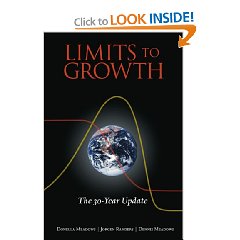
Review: The Limits to Growth

5 Star, Decision-Making & Decision-Support, Environment (Solutions), Priorities
Limits to Growth
Amazon Page 1

Amazon Page 2

Fundamental Reference from 1970's When Government Betrayal of the Public Trust Began,

October 11, 2008

Donella  Meadows, Jorgen Randers, Denniss Meadows

Although there are those who remain in denial about the foresight and wisdom of this book, today we are left in no doubt: there *are* limits to growth, and those who refuse to accept such realities accelerate the demise of our planet while also ignoring the depradations upon the public of corporations, religions, crime families and networks, and the “states” whose officials they all bribe and subvert.

The good news is that an entire literature has developed from this one little book, and there is a growing public awareness–as well as growing financial and corporate awareness–of the urgency of harmonizing our human behavior with the larger Earth system of which we are a part.

On the dark side:
Pandora's Poison: Chlorine, Health, and a New Environmental Strategy
The Blue Death: Disease, Disaster, and the Water We Drink
High Tech Trash: Digital Devices, Hidden Toxics, and Human Health
High Noon 20 Global Problems, 20 Years to Solve Them

A handful of current references that can trace their heritage back to this book, which is still worth reading today:
Ecological Economics: Principles And Applications
Biomimicry: Innovation Inspired by Nature
Natural Capitalism: Creating the Next Industrial Revolution
Green to Gold: How Smart Companies Use Environmental Strategy to Innovate, Create Value, and Build Competitive Advantage
Cradle to Cradle: Remaking the Way We Make Things

Vote on Review 1
Vote on Review 2

Review: The Modern State

5 Star, Power (Pathologies & Utilization), Public Administration

Modern StateSeminal Work of Lasting Value, Still the Best Overall, October 11, 2008

R. M. Maciver

I am reliving my first graduate degree as I develop a new book, and when the occasion warrants, coming back into Amazon to comment on especially wonderous books. This is one of them.

MacIver has still not, to my knowledge, been equaled. Here is my summary of his book written in 1975, and still valid.

A pleasure to read, MacIver is the most useful focal point for the study of the modern state. An introduction defines the state as an association characterized by a limiting concept of sovereignty and the rule of law.

The first of four books deals with the emergence of the state; its origins, early empire, the emergence of citizenship (including the impact of the cities on associations and on the stratification and organization of society), a nd the formation of the country-state through feudalism and nationality.

Book two discusses the powers and functions of the state; the limits of political control, the residence of authority, might and sovereignty, law and order, and the relations betwseen political government and economic order. An excellent descriptive chart is offered that divides the functions of the state in its internal aspect into order, protection, and conservation & development. Within each category, the role of the state vis-a-vis the physical habits and social structure of the society from which it stems is seen to imply related and elaborative activities.

Book three explores the forms and institutions of the state, the articulation of governmental powers, and the party system.

The fourth and final book, dealing with theories and interpretations of the state, outlines very quickly the evolution of these theories, moving on to focus on two major issues in political thought: the issue of individualism and collectivism, and the attack on sovereignty.

In concluding, MacIver offers a very acceptable and timely reinterpretation of the state as an association among other associations–as an organ of the community and thus an organ whose power must be limited in relation to its functions, which in turn must be constrained by the state's inherent impulse, despite its dependency on its public, to encompass and dominate all that falls within its assigned territory.

MacIver remains utterly brilliant and so very relevant to our condition.

See also:
1776
What Kind of Nation: Thomas Jefferson, John Marshall, and the Epic Struggle to Create a United States
The Thirteen American Arguments: Enduring Debates That Define and Inspire Our Country
The Revolution: A Manifesto
Crashing the Party: Taking on the Corporate Government in an Age of Surrender
Running on Empty: How the Democratic and Republican Parties Are Bankrupting Our Future and What Americans Can Do About It
The Paradox of American Democracy: Elites, Special Interests, and the Betrayal of the Public Trust
The Broken Branch: How Congress Is Failing America and How to Get It Back on Track (Institutions of American Democracy)
Breach of Trust: How Washington Turns Outsiders Into Insiders
War is a Racket: The Antiwar Classic by America's Most Decorated Soldier

Review: Never Surrender–A Soldier’s Journey to the Crossroads of Faith and Freedom

5 Star, Biography & Memoirs, Values, Ethics, Sustainable Evolution, War & Face of Battle

Never SurrenderHelpful, Illuminating, and Inspiring, October 12, 2008

Jerry Boykin

I ordered this biography on a whim, as one of a dozen books on irregular warfare that I am using to review the thoughts of others before I publish my own book. When the three boxes from Amazon arrived, this book was buried under others, but was immediately the most attractive for the week-end.

Several important insights are available from this book:

1) Charlie Beckwith, whose book Delta Force: The Army's Elite Counterterrorist Unit I really enjoyed, especially the part where he refused to leave a British field hospital for an American one, learned from the SAS the most important lesson it had to teach, and brought it to DELTA: to be *truly* unconventional, to be *truly* irregular, you must be UNMILITARY. From this page (69) I simply relaxed and enjoyed a great account. I got what I was looking for, sooner than expected.

2) The 12-hour long march from point to point is a time-tested method of screening for individuals who have inherent resolve that cannot be trained for. I quote from page 78: “The Army can train a man to spy, shoot, blow things up, and kill with his bare hands. But it cannot instill in a man the series of two-sided personality coins that cash out as a successful operative: patience and aggression, precision and audacity, the ability to lead or fall in line. Above all, the Army cannot instill resolve beyond physical and mental limits.”

3) In the above context, faith is helpful, and faith cannot be taken for granted. Early on I enjoyed the author's explanation of how he reconciled faith with a profession that wages death (for life), finding that every war is a spiritual battle. The author explicitly identifies America as God's land of faith and tolerance, and I agree with him.

4) On page 130, he concludes that some men are evil and simply need to be killed. I agree with that completely. In the 1990's when I first started advocating the need to shift away from the Soviet Union and toward Third World terrorists and criminals, I used the phrase, “one man, one bullet.” We still cannot do that today, while the Navy and the Air Force continue to buy fewer really big things for more and more money.

I enjoyed every minute with this book. This is not a “shoot 'em book.” This is, as the subtitle communicates, the story of an extraordinary individual, a man born and trained to be the best possible fighter, who found faith and kept faith with God and America. He is “the way it ought to be.”

Here are some side notes.

Rumsfeld created the Undersecretary of Defense for Intelligence because he was furious that his Special Forces had to be “led” into Afghanistan by the CIA (see my review of Jawbreaker: The Attack on bin Laden and al-Qaeda: A Personal Account by the CIA's Key Field Commander.

George Bush Junior betrayed all of us in crucifying and disavowing General Boykin in the face of media lies and exaggerations for which the author was fully exonerated by two Inspector General endeavors.

Media–the out of control largely ignorant media–is the best weapon that terrorists and others who hate America can use. I agree with that, and I am especially concerned at the ignorance of both our current presidential candidates, neither one of whom can talk substance in the context of a balanced budget–and they get away with it because the media has no idea what the substance of governance is (see the free online book, also on Amazon, Election 2008: Lipstick on the Pig (Substance of Governance; Legitimate Grievances; Candidates on the Issues; Balanced Budget 101; Call to Arms: Fund We Not Them; Annotated Bibliography).

9/11 struck the author as the opening salvo in a long battle for our own soul. I agree with the soul part, but the battle started when we decided to run the world for 50 years, very badly, while ignoring the spread of violent Islam funded by Saudi Arabia. See these four books:
Sleeping with the Devil: How Washington Sold Our Soul for Saudi Crude
The Looming Tower: Al Qaeda and the Road to 9/11 (Vintage)
The Fifty-Year Wound: How America's Cold War Victory Has Shaped Our World
Wilson's Ghost: Reducing the Risk of Conflict, Killing, and Catastrophe in the 21st Century

Other tid-bits:
+ 1 of three officers to make cut in creating DELTA. Peter Schoomaker was another.
+ DELTA pool was 118 of whom 25 finished the Long Walk, of whom 19 were selected (in the first class)
+ Boykin's dad was one of five brothers who served in “The Good War,” three in the Army, two in the Navy.
+ He was 6 feet tall and weighed 180 lbs in the eighth grade.
+ Played guitar and wound up playing at World's Fair in 1965 (the thought, “well-rounded” came into my head–not a thug stereotype)
+ Virginia Tech Corps of Cadets
+ Drawn to brotherhood of infantry, inspired by Viet-Nam stories.
+ One of his coaches taught him that faith and reality could go together
+ Once married, his first child drove him to the Dean's List
+ “I really wanted to learn everything the Army had to teach.”
+ Found faith for real in the Army, it filled a void.
+ He LIKED Ham and Lima Beans in C-Rats. That alone makes him strange in an amusing sort of way. I always thought of that C-Ration as one step down from bread and water.
+ He had his failures, in both school and the Army, but they drove him to excel and honors came his way when he bore down.
+ Aide de Camp tour in Korea got him to Viet-Nam for three months, and gave him a strategic understanding of the Army
+ Lost the general's dog, ended up running him down. Very funny.
+ Was one of the originals as paratroopers migrated into air assault.
+ Almost shut out of DELTA by the shrink for “excessive faith in God,” but he connected with Beckwith in the final interview and got in, the clear message being that the faith was not misplaced.
+ Excellent discussion of the time value of instinctive shooting (with the necessary training) over aimed fire–life of a hostage, the first takes one second, the second takes two seconds, time for the hostage to be killed.
+ Beckwith understood the killing nature of bureaucracy
+ I have a note, this book is the anti-thesis to Colin's Powell's biography, My American Journey and a shorter different book-end to Hackworth's About Face: Odyssey of an American Warrior

The author takes us through a number of operations in a manner that does not compromise any tradecraft and is not tedious. I appreciated very much the light once over on Tehran (the students thought they would have to get out in three days, they under-estimated the timidity of the US under President Carter), Sudan, Graneda which was not a surprise and for which CIA had no intelligence of substance for the fighters, Panama, Somalia, and then Bosnia.

Sixteen pages of photos are in the middle of the book, all appropriate and helpful. There is no index.

I thought to end this review with several of the phrases from the Bible that the author quoted in the book. I bought Leadership Lessons of Jesus: A Timeless Model for Today's Leaders because it was on sale in the uniform store at MacDill, and now that I have read this book, believe that our Irregulars of the future will be well-served by being required to understand faith, and to memorize portions of the Bible, the Koran, and other Holy Scriptures (just think of the impact as shown in Lawrence of Arabia, when his completing a reading instantly won over King Faisal and sidelined the conventional colonel).

“I am the light of the world. Whoever follows me will never walk in darkness, but will have the light of life.” John 9.4-5

“He gives power to the faint, and to him who has no might he increases strength. Even youths shall faint and be weary, and young men shall fall exhausted; but they who wait for the LORD shall renew their strength; they shall mount up with wings like eagles; they shall run and not be weary; they shall walk and not faint.” Isaiah 40

“For they that wait upon the Lord shall renew their strength. They shall mount up on wings of eagles, they shall run and not be weary and they shall walk and not faint.” Isaiah 40.31, faxed from around the world as he struggled to survive a 50 caliber bullet shattering a radio into his body.

Amazon won't let me have more than ten links, but this one, by Navy Capt Doug Johnston, is worth a close look: Faith-Based Diplomacy. There is an intersection of UNMILITARY, faith, and Irregular War: Waging Peace that no one in power seems to understand.


Review: On the Meaning of Life

5 Star, Philosophy

Meaning of LifeWOW! A Jewel Pops Out of Amazon's Recommendation System, October 14, 2008

Will Durant

EDIT of 30 May 2009 to add flyleaf notes.

I was utterly THRILLED to see this book by Will Durant, published in 2005, pop up out of Amazon's recommendation system. Now I'm hooked.

The book opens with suicide statistics to point out the ultimate sacrifice or loss when hope is not to be found. One million in the world, 81,000 in the USA, 84.5 per day, 1 every 17.1 minutes. I have had 18 professional and one personal suicide in my life, What an important opening.

Finished, it surprises and delights with the common sense selections.

Key insights, remembering that this book is an edited collection of many people responding in one page to the QUESTION from Durant, who sent out 100 letters. First published in 1932, all the answers are grounded in the real world.

1) Uncertainty fosters greed.

2) Corruption of a society does not preclude the emergence of great minds that can catalyze further progress.

3) 1000 citivilizations have died in the course of history.

4) Citing Aristotle, all things have been discovered and forgotten manytimes over. Man–imperfect man–is the constant.

5) Utopia would be birth control, enfranchisement of all, emancipation of all–all of this is undone by crime, corruption, and war, none of which are necessary

Four quotes I feel should be here to encourage purchase of the book:

a) “We are driven to conclude that the greatest mistake in human history was the discovery of ‘truth.' It has not made us free, except from delusions that comforted us and restraints that preserved us.” Page 14

b) “Where such a faith [that gives hope], after supporting men for centuries, begins to weaken, like narrows down from a spiritual drama to a biological episode, it sacrifices the dignity conferred by a destiny endless in time, and shrinks to a strange interlude between a ridiculous birth and an annihilating death.” Page 17

c. “We discovered birth control, and now it sterlizes the intelligent, multiplies the ignorant, debases love with promuscuity, frustrates the educator, empowers the demagogue, and deteriorates the race.” Page 29

d. “The greatest questions of our time is not communism vs. the West, it is whether men can bear to live without God.” Page 34

All of the above are Durant's words. Then the book goes forward with two pages for each of those responding, one a graphic etching, the other their text.

The Lessons of History
The Landscape of History: How Historians Map the Past
Integral Consciousness and the Future of Evolution
How to Change the World: Social Entrepreneurs and the Power of New Ideas, Updated Edition
The leadership of civilization building: Administrative and civilization theory, symbolic dialogue, and citizen skills for the 21st century
Consilience: The Unity of Knowledge
The Future of Life
DVD: What the Bleep Do We Know!?

Review: Modern irregular warfare–In defense policy and as a military phenomenon

5 Star, Insurgency & Revolution

Beautiful Piece of Work, October 15, 2008

Friedrich August Heydte

I ended up buying this book without much to go on *other than* the not inconsequential fact that at least one War College student relied very heavily on it for their paper on irregular warfare. The book is dedicated to Maxwell Taylor and Jacques Massu, and has a foreword from Lyndon LaRouche that slams Zbigniew Brzezinski as an appeaser and compromiser with respect to Middle Eastern terrorism, so right away my appetite is whetted.

The publisher or seller should have done this, but to encourage others to add this book to their reflections, here are the *top-level* divisions in the table of contents:

I Foundations
1. The Essence of Irregular Warfare
2. Irregular Warfare and Revolution
3. Irregular Warfare and International Law

II Irregular Warfare and Grand Strategy
1. General Strategic-Political Problems
2. Nuclear War and Irregular War as Alternatives in the Unconventional Conduct of War
3. The Threat of Nuclear and Irregular War in the Process of War Prevention

III War of Blurred Contours
1. The Problem of Space
2. The Problem of Time
3. Movement, Terrain, and Population

IV Preparation of Irregular Warfare
1. The Conspiracy
2. Subversion
3. Armament

V Covert Combat
1. The Nature of Covert Combat
2. Leadership Problems
3. Terrorism and Sabotage in Covert Combatg
4. Assassinations and Raids in Covert Combat

VI Transition to Open Combat
1. Covert Combat and Open Combat
2. Unsolved Problems of the Transition to Open Combat

This book was published in 1986. The bibliography is very deep. There is no index.

I suspect it will be reprinted now that the adults are paying attention to Irregular Warfare. My impression continues to be confirmed that we need a completely new craft of intelligence for irregular warfare, and that we need to more clearly understand the spectrum of irregular warfare from black assassinations to white peace operations “one cell call at a time.”

Other books I recommend with this one:
Asymmetric Warfare: Threat and Response in the 21st Century
Counterinsurgency and the Global War on Terror: Military Culture and Irregular War (Stanford Security Studies)
Guerrilla Warfare: Irregular Warfare in the Twentieth Century (Stackpole Military History Series)
The U.S. Army/Marine Corps Counterinsurgency Field Manual
Never Surrender: A Soldier's Journey to the Crossroads of Faith and Freedom
Seven Pillars of Wisdom: A Triumph
Uncomfortable Wars Revisited

noble gold