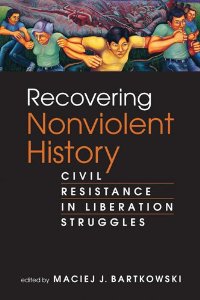
On November 29, 2013 colleagues from the International Center on Nonviolent Conflict (ICNC) learnt about Howard Clark’s passing.
Amazon Page
He left us much too early and too suddenly. And we lost not only a close, dear friend that could cheer and energize people around him but also an effective collaborator and a scholar-practitioner with a deep knowledge about and a sophisticated understanding of the field of nonviolent conflict.
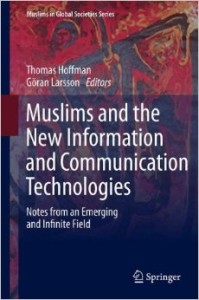
Forthcoming (2014) According to some global estimates, one in ten internet users is a Muslim. This volume offers an ethnography of ICT in Muslim communities. The contributors to this volume also demonstrate a new kind of moderation with regard to more sweeping and avant-gardistic claims, which have characterized the study of ICT previously. This moderation has been combined with a keen attention to the empirical material but also deliberations on new quantitative and qualitative approaches to ICT, Muslims and Islam, for instance the digital challenges and changes wrought on the Qur’an, Islam’s sacred scripture. As such this volume will also be relevant for people interested in the study of ICT and the blooming field of digital humanities.
Amazon Page
Available now (2011). “Muslims and the New Medias” explores how the introduction of the latest information and communication technologies are mirroring changes and developments within society, as well as the Middle East's relationship to the West. Examining how reformist and conservative Muslim ‘ulama' have discussed the printing press, photography, the broadcasting media (radio and television), the cinema, the telephone and the Internet, case studies provide a contextual background to the historical, social and cultural situations that have influenced theological discussions; focusing on how the ‘ulama' have debated the ‘usefulness' or ‘dangers' of the information and communication media. By including both historical and contemporary examples, this book exposes historical trajectories as well as different (and often contested) positions in the Islamic debate about the new media.
I am writing to share with you my new article, “Russia, Iran and China in Latin America,” just published by the American Foreign Policy Committee in their e-journal “Defense Dossier.” The work comparatively examines the activities of the three extra-regional actors in Latin America and the Caribbean, including ways in which commercial and governmental initiatives by each compliment (and occasionally conflict or compete with) each other. I emphasize that each actor presents a different type of challenge to US interests in the region, on a different time-scale.
What is it about the libertarian infatuation with bitcoins? Ron Paul announced in early December that the bitcoin could “destroy the dollar.” He seemed to be gloating. In Chile, a collection of “anarchists, libertarians, and Ron Paul supporters” have founded a libertarian utopia they have named “Galt's Gulch,” which will accept payment in bitcoins. Sensibly, the “farm workers and suppliers” who service this community “still want to get paid in pesos.”
Is it an innate libertarian quirkiness that drives this fascination with bitcoins? A kind of universal libertarian contrariness? Or is there something else about bitcoins and libertarianism that makes for this mix?
Sanctions enforced by the UN on Iraq since the Gulf War have killed more people than the two atomic bombs dropped on Japan in 1945, including over half a million children – many of whom weren’t even born when the Gulf War began.\