The subcommittee failed in that regard: Merton Miller, associate director of investigations at the Office of Personnel, said he had no information on Snowden’s specific case. OPM Inspector General Patrick McFarland said he did have information on Snowden, but couldn’t reveal it to the committee just yet.
That’s not to say that the committee lacked revelation. Six witnesses and three lawmakers revealed a security clearance system so broken that it would be comical if a 29-year-old wasn’t hiding in Hong Kong and leaking American secrets to the press.
That’s not to say that the committee lacked revelation. Six witnesses and three lawmakers revealed a security clearance system so broken that it would be comical if a 29-year-old wasn’t hiding in Hong Kong and to the press.
Exclusive: British spy agency collects and stores vast quantities of global email messages, Facebook posts, internet histories and calls, and shares them with NSA, latest documents from Edward Snowden reveal
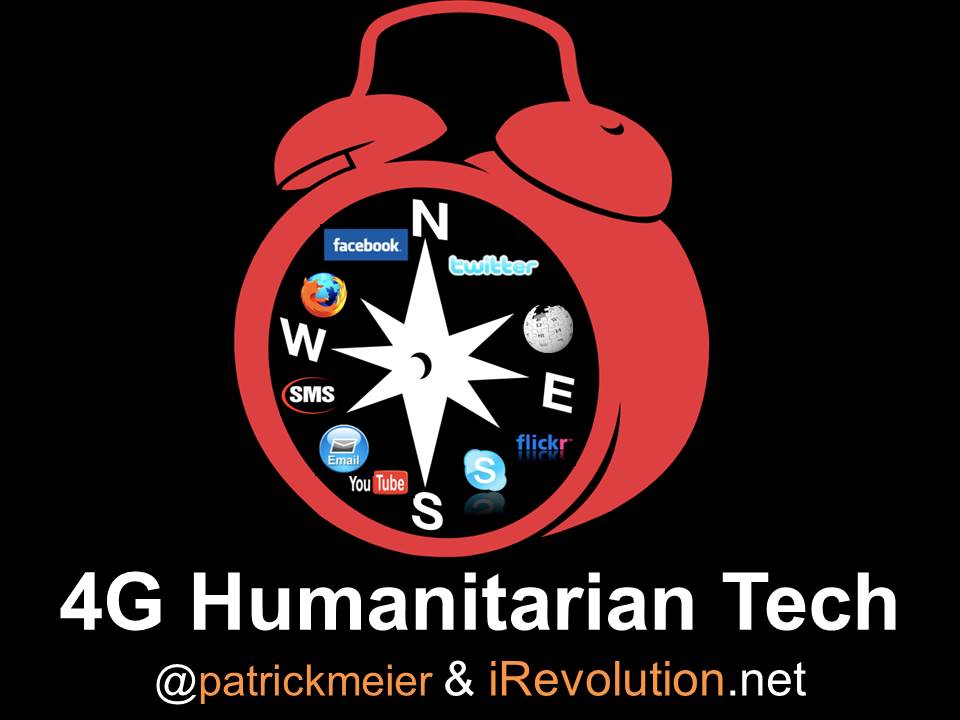
ROBERT STEELE: I had the pleasure of listening to Dr. Patrick Meier speak at the National Defense University (NDU) this past Thursday. He is based in Qatar because the US Government is not very good at spotting, assessing, recruiting, and respecting world-class individual talents. Patrick is a global asset. What he knows about humanitarian technology is priceless. Below is Patrick's “long” briefing, 99 slides, with words in Notes format.
During the Q&A one of the NDU staff asked Dr. Meier if he had considered asking NSA for help [I don't make this stuff up.] In the ensuing discussion what was really clear to me is that the the pioneers in humanitarian technology not only do not need anything NSA has to offer, but they are far advanced — vastly advanced — beyond anything the US secret intelligence community is capable of doing. CLARIFICATION BY DR. MEIER: Point is we don't need half as advanced tech/methods to do what we currently need to do, much of this commercially available already and slowly coming to open source world as well.
Among the highlights for me personally:
01 Every image taken by a cell phone is capable of having the geospatial coordinates and the time and date stamped within the image. This feature is turned off on most cell phones. We need to find a way for individuals to be able to easily activate the feature. If we can ever get The Virgin Truth off the ground, I'd like to see the OpenBTS cell phones given out free pre-set to this function — its value in relation to early warning on crop or animal disease as well as very rapid situational awareness when many images are coming is, cannot be exaggerated.
02 When humanitarian technologist talk about geo-tagging, they are talking about hash-tags and words added by the sender they are NOT talking about embedded geospatial code. Some in the audience did not appear to understand this distinction, at least one clearly did.
03 Some — at least as represented in this room by the most talkative among a small handful — are spectacularly ignorant about what NSA cannot and does not do, and about the limitations of big data (legacy) versus big data (real time). They are particularly limited in understanding that one human brain is vastly more powerful than any single NSA computer, and that a thousand or ten thousand or a hundred thousand human minds, organized voluntarily and coherently
There are very few people that I consider spectacularly gifted and relevant to the creation of a World Brain and Global Game. Medard Gabel is one of them. Patrick Meier is another.
The climate crisis demands our immediate attention. Climate change could devastate thousands of at-risk communities beyond repair and leave the face of the earth scarred. We cannot be alarmist enough about continued climate change and the threat it poses to life on this planet. This is the first time in the history of this planet that a species altered global climate to such a degree. The future of life on this planet is entering a period of extreme risk and few are offering rational solutions.
Leftists and environmentalists are correct to confront this issue with great urgency. Climate change grows exponentially as powerful elites continue to pursue a course dominated by the consumption of fossil fuels. Social movements continue to challenge the power of states throughout the globe to continue this destructive course. These movements are large, powerful, and often diverse. They face a very strong opponent, however, and have yet to really land a blow against the powerful capitalist elites that seek to profit from climate change rather than prevent it.
The article titled How an Entirely New, Autistic Way of Thinking Powers Silicon Valley on Wired discusses the possibility of a new way of thinking. “Pattern thinkers”, those who think in patterns, whether consciously or unconsciously, are separated from “picture thinkers”, who are more aware of aesthetics. The article cites such famous examples from history as Van Gogh, whose paintings of the stormy night sky matches the formula later discovered for turbulence in liquid and Jackson Pollock, whose abstract painting style involved flinging streaks of paint onto massive canvases which were later found to be coherent fractal patterns. The article explains,
“Michael Shermer, a psychologist, historian of science, and professional skeptic – he founded Skepticmagazine — called this property of the human mind patternicity. He defined patternicity as “the tendency to find meaningful patterns in both meaningful and meaningless data.” …The three kinds of minds — visual, verbal, pattern thinkers — naturally complement one another. When I recall collaborations in which I’ve successfully participated, I can see how different kinds of thinkers worked together to create a product that was greater than the sum of its parts.”
The article argues that it is finding the balance of these three types that has made for the great innovations, such as Pixar– and the lack of balance that has spelled out disaster for other projects, (the article cites the IPhone 4 antennae). We are not sure if this is a positive or a negative approach.
Former CIA Director Michael Hayden told Meet the Press’David Gregory on Sunday morning that security and transparency were a zero-sum game.
Mike Hayden
“For part of my life, when I was running the NSA program, I thought lawful, effective, and appropriate were enough,” Hayden said. “By the time I got to CIA I discovered I had a fourth requirement, and that’s politically sustainable. By the time I got to the CIA I was of the belief that I would probably have to shave points off of operational effectiveness to inform enough people that we had the political sustainability and the comfort of the American population concerning what it was we were doing. Living in this kind of democracy, we’re going to have to be a little less effective in order to be a little more transparent to get to do anything to defend the American people.”
Hayden’s comments came in response to journalist Jim Risen’s critiques of lack of transparency in the intelligence community, to the point that low-ranking intelligence officials had little recourse when they spotted something amiss.