Collaboration, Peer production, Peer networks, Crowdsourcing….the more I read about these topics the more I understand the enormous opportunities for social development and governance that are already out there. But at the same time, there are some new challenges to address.
For every new concept introduced in Government 3.0 I have the same reaction. First, I am all confused about it. Second, I start to understand it, but at the same time it always looks kind of utopian or not really applicable in the government field. And finally, I find some practical examples and ideas that allow me to think that these concepts are in fact both interesting and feasible.
I posted Massive Fertilizer Explosion In West, Texas around 10:21 local time for the plant. That was a rush job, this is going to be a little more organized, and more technically sound.
First, West Texas does not have a fertilizer plant, they have a fertilizer storage facility. This is a small town farmer's cooperative. I'm from Iowa, this looks funny to me – very large fertilizer tank, but two small grain bins? It's like this because this location is close to grain export facilities near the mouth of the Mississippi.
Insane as it may sound, some of the smart money is betting that DHS is making a major drone play and trying to find a way to claim that drones everywhere will help them detect and stop IEDs.
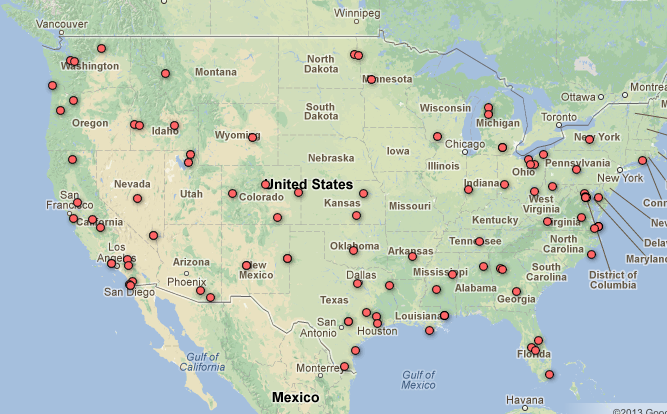
The Federal Aviation Administration has finally released a new drone authorization list. This list, released in response to EFF’s Freedom of Information Act (FOIA) lawsuit, includes law enforcement agencies and universities across the country, and—for the first time—an Indian tribal agency. In all, the list includes more than 20 new entities over the FAA’s original list, bringing to 81 the total number of public entities that have applied for FAA drone authorizations through October 2012.
Some of these new drone license applicants include:
The State Department
National Institute of Standards and Technology (NIST)
Barona Band of Mission Indians Risk Management Office (near San Diego, California)
Canyon County Sheriff’s Office (Idaho)
Clackamas County Sheriff’s Office (Northwest Oregon)
Grand Forks Sheriff’s Department (North Dakota)
King County Sheriff’s Office (covering Seattle, Washington)
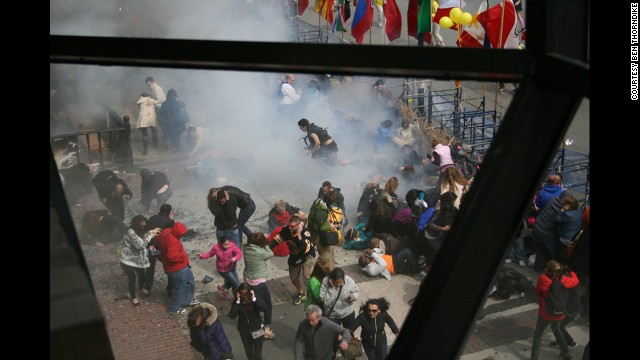
Probably for the first time ever or at least in recent history, it appears the mainstream media has openly considered the Boston bombings were false flag attacks, as specified in this story:
“Bin Laden's repeated statements that he deplored the 9/11 attacks, considered them un-Islamic, and suspected that American supporters of Israel were behind them failed to penetrate the corporate media bubble. When the FBI definitively stated that Bin Laden was “not wanted” for 9/11 because there was “no hard evidence” of his involvement, the media blacked out the story. But after the Boston bombings of April 16th, 2013, even the corporate monopoly media could no longer ignore the possibility of a false-flag attack. Yahoo News asked “Who's behind the Boston Marathon bombings?” and offered 4 theories: (1) Islamic jihadists, (2) Right-wing militia types, (3) the government, and (4) a criminally-insane lone wolf. Numbers (1), (2), and (4), of course, are the usual suspects. But including (3) “the government” on the suspects list is unprecedented for a mainstream news story reporting on a domestic terror incident.
Click on Image to Expand
The false-flag meme's growing prominence was underlined at Massachusetts governor Deval Patrick's press conference after the bombings. The first question for Governor Patrick came from Infowars correspondent Dan Bidondi, who asked whether the bombings were “a false-flag staged event..to take away our civil liberties.” Patrick, of course, answered “no.” Even the Atlantic Monthly, a neocon-lite magazine associated with names like Goldberg and Hitchens, felt compelled to publish a story headlined: “What Is a ‘False Flag' Attack, and What Does Boston Have to Do with This?” Amazingly, the Atlantic article stated that yes, there is historical precedent for viewing the Boston bombing as a false-flag event. The author, Philip Bump, even admitted: “If the Boston attack had been a ‘false flag' attack, Gov. Patrick would have responded ‘no' anyway.”
PASADENA, Calif., April 17 (UPI) — Renowned theoretical physicist Stephen Hawking, speaking in California, said the next breakthrough in cosmology will come from the universe's dark side.
“The missing link in cosmology is the nature of dark matter and dark energy,” Hawking said Tuesday while delivering a lecture on the origin of the universe at the California Institute of Technology in Pasadena.
He cited data from telescope observations indicating “normal matter is only 5 percent of the energy density of the known universe; 27 percent is dark matter, 68 percent is dark energy,” the Los Angeles Times reported.
Powerful and effective heuristics are the only way to quickly communicate the complex understandings required to save humanity, because they facilitate quick feedback. They break through information logjams. They reduce information overload. The various elite powers on the planet use heuristics in the form of propaganda to mislead the people and drive them like cattle toward a predetermined objective. But they have a great advantage over us. It's easier to confuse than enlighten. It's easier to destroy than to build. It's easier to get people to misunderstand complexity than to get them to understand it.
So unless we become clever at heuristics, we are outnumbered and outgunned. And we need to be cognizant of any model that can help us dilate the conduits of feedback to the point where our big picture understandings can spread like lightening to the general public. There are many ways to do this, mostly by commandeering well-understood terms and putting them to new uses.
While I was watching the Boston Marathon bombing coverage I heard them talk about victims who were at one point in critical condition but who had been reevaluated to serious condition. And it made me want to look up the precise definitions of these terms. That's when I saw that they could have usefulness describing all kinds of complex social dynamics. After all, that's what systems theory is all about. The five terms are: undetermined, good, fair, serious, and critical. You can find definitions here at wikipedia:
Briefly, they are: waiting assessment; stable within normal limits; indicators are favorable; indicators are questionable; and indicators are unfavorable. These concepts can be applied at every level and context of social dynamics because they are terms that describe systems. And as Donella H. Meadows stressed, the whole point of systems theory is to cut through all the jargon of the multiplicity of specialties. The point is to make things as simple as possible without making them too simple. Simplify but don't oversimplify.
“The Boston bomb squad clearly had advance notice of the presence of the bombs at the marathon, and they also had advance notice of the location of the bomb at the Kennedy Presidential Library.