SchwartzReport: When Corruption Rules — Three Examples

01 Agriculture, 03 Economy, 06 Family, 07 Health, 09 Justice, 11 Society, 12 Water, Commerce, Corruption, Government, Ineptitude
0Shares

schwartz reportIn the endless blather by the Right about the debt, which is meaningless in the short-term, but which has captured the media, the issues covered in this report rarely get attention. They should. This is the real crisis.

Solve the Real Problems – Poverty Retirement and Health Insecurity – and the Economy Will Recover
KEVIN ZEESE and MARGARET FLOWERS – Truthout.org

When we confront the crises of poverty retirement and health insecurity, we discover that Social Security and Medicare are not the problems; they are the solutions.

schwartz reportWe have endless money for war, and we subsidize Big Oil to the tune of tens of billions of dollars, even as their profits soar to empyrean levels. Yet the basic infrastructure of the country is slowly coming apart in front of us, as this report shows. Millions of jobs could be created if we took our future seriously. But we don't.

America’s Maritime Infrastructure: Crying Out for Dollars
The Economist (U.K.)

NEW ORLEANS — THE Industrial Canal Lock in New Orleans connects two of America’s highest-tonnage waterways: the Mississippi River-which handles more than 6,000 ocean vessels, 150,000 barges and 500m tonnes of cargo each year, as well as much of its grain, corn and soyabean production-and the Gulf Intracoastal Waterway, which runs from refinery-rich south-eastern Texas to Florida. Ships pass from one to the other via a lock that was built in 1921, and is 600 usable feet long, or half the length of a modern lock. Its replacement was authorised in 1956. Construction on the replacement was authorised in 1998, and then stalled by lawsuits. The most optimistic predictions of the Army Corps of Engineers, which maintains America’s inland waterways, see the new lock being completed in 2030.

schwartz reportSuperbugs, superweeds. There is an inherent problem with an approach to nature that is predicated on dominance as opposed to cooperation. Whether it is antibiotics or herbicides that approach never gets all the “bugs” in a hospital, or the weeds in a farm field. The result: the survivors mutate and become resistant, so strong antibiotics, and stronger poisons are required in a future round until, eventually, the d! rugs and poisons no matter how strong just stop working. That's where we are in our hospitals, and now where we are in our fields. You'd think this progression would be obvious. But the corporate greed for short-term profit just overwhelms good sense.

Nearly Half of All US Farms Now Have Superweeds
TOM PHILPOTT – Mother Jones

But of course there's another way. In a 2012 study I'll never tire of citing, Iowa State University researchers found that if farmers simply diversified their crop rotations, which typically consist of corn one year and soy the next, year after year, to include a “small grain” crop (e.g. oats) as well as offseason cover crops, weeds (including Roundup-resistant ones) can be suppressed with dramatically less fertilizer use-a factor of between 6 and 10 less. And much less herbicide means much less poison entering streams-“potential aquatic toxicity was 200 times less in the longer rotations” than in the regular corn-soy regime, the study authors note. So, despite what the seed giants and the conventional weed specialists insist, there are other ways to respond to the accelerating scourge of “superweeds” than throwing more-and ever-more toxic-chemicals at them.

Theophillis Goodyear: Updating McLuhan — The Message Is Now the Medium

Cultural Intelligence, IO Impotency
0Shares
Theophillis Goodyear

Marshall McLuhan coined the phrase “the medium is the message” to draw attention to the  heretofore underestimated importance of media. Trains can serve as a simple illustration of what he meant. It wasn't the cargo in the trains that was of prime significance to society. It was the fact of trains.

But now things have changed. Trains were the arteries of change at one time. But those arteries have grown in number and diameter. Now it's not just trains but TV, radio, internet, smart phones, and too many other examples of media to mention.

Media has become a jungle of arteries that are so thick that individuals can't negotiate them or penetrate them. We are hamstrung by media. And these media transmit useless mediocrity at best and toxic folly at worst.

Now media isn't just the message; media has become the aorta of survival. So now the idea that “the medium is the message” has become obsolete. Now the message that media transmits is all important!

So as innovative as Marshall McLuhan was as a thinker, this is something that I doubt he could understand to the degree you and I can understand it.

Of course I probably wouldn't understand it at all if not for Marshall McLuhan.

Chuck Spinney: From Palestine to Syria to Jordan — The True Cost of Western Ignorance & Arrogance

08 Wild Cards, Corruption, Government, Ineptitude
0Shares
Chuck Spinney
Chuck Spinney

Below is a two-part series of reports by Nicolas Pelham on the increasingly precarious situation in Jordan.

The proximate causes of Jordan's growing potential for instability and revolution derive from the spillover effects of the Syrian Civil War.  But these effects are amplifying deeper demographic tensions that were already causing serious problems.  As Pelham show, these deeper tensions are rooted in instabilities caused by (1) the growing demographic imbalances between native Jordanians (mostly tribal Bedouins — now a minority in their own country) and majority of Jordanians of Palestinian origin including almost two million who are still classified as refugees (of which almost 340,000 remain housed in impoverished refugee camps left over from the 1948 and 1967 Arab-Israeli wars), (2) the general spillover of expectations created by the Arab Spring, and (3) King Abdullah's reluctance to embrace the growing pressure for democratic reforms.  Now, waves of refugees from Syria are hyping Jordan's incipient crisis and making Jordan more vulnerable to radical Sunni Islamists trying to destabilize the existing order.  Ironically, some of the ‘Syrian' refugees entering Jordan are Palestinians who have been forced to leave squalid Palestinian refugee camps in Syria (which may be a result of a strategic decision made by the embattled Assad regime in increase pressure on its neighbors who are supporting the Syrian insurgents).   Large numbers of Syria refugees are also flooding into Turkey and Lebanon.

The last thing the Middle East needs is another set of permanent concentration camps.  The attached articles provide a useful background on a growing problem that is yet another instability related to the West's failure to seriously address the Palestinian Question, a connection, I might add, Pelham studiously ignores.

Part I: Jordan’s Syria Problem

Nicolas Pelham

EXTRACT

As Syria’s civil war worsens, Jordanian officials say they fear a far larger exodus to come. The collapse of the single power station supplying 10 million Syrians in the south, they warn, could precipitate a mass rush to the border. Fighting has already enveloped the Yarmouk refugee camp in Damascus’ southern suburbs, home to 150,000 Palestinians and a million Syrians. Syrian airstrikes on rebel positions have made refugees of the camp’s population yet again, killing twenty-five of them inside a mosque where they had sought refuge .Tens of thousands who had fled the camp returned after an agreement between rival factions of Palestinians in Syria. But on January 7, said Palestinians in Yarmouk, shelling and sniper fire killed five people on the main road through the camp. Palestinians are fleeing again.

For Jordan’s indigenous East Bankers, the prospect of another wave of Palestinian refugees, following the hundreds of thousands of Palestinians who arrived in previous decades, threatens to continue the process that over six decades has eroded their own status and turned them into a minority in their own country. Determined to keep out the Palestinians even after the bombardment of Daraa and Yarmouk camps, Jordan has allowed in only 2,000 of them, refusing entry to all the rest, including the widow’s husband, a rebel commander, who was sent back to his death in Syria after the rest of his Syrian unit was allowed in.

Continue reading “Chuck Spinney: From Palestine to Syria to Jordan — The True Cost of Western Ignorance & Arrogance”

Patrick Meier: Map or Be Mapped — Psycho-Social Political-Economic Power in a Map

Geospatial
0Shares
Patrick Meier
Patrick Meier

Map or Be Mapped: Otherwise You Don’t Exist

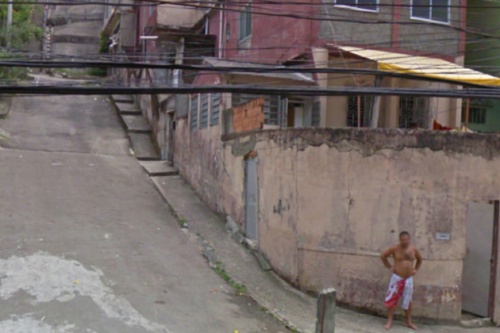
“There are hardly any street signs here. There are no official zip codes. No addresses. Just word of mouth” (1). Such is the fate of Brazil’s Mare shanty-town and that of most shantytowns around the world where the spoken word is king (and not necessarily benevolent). “The sprawling complex of slums, along with the rest of Rio de Janerio’s favelas, has hung in a sort of ‘legal invisibility’ since 1937, when a city ordinance ruled that however unsightly, favelas should be kept off maps because they were merely ‘temporary’” (2).

shantytown

The socio-economic consequences were far-reaching. For decades, this infor-mality meant that “entire neighborhoods did not receive mail. It had also blocked people from giving required information on job applications, getting a bank account or telling the police or fire department where to go in an emergency call. Favela residents had to pick up their mail from their neighborhood associations, and entire slums housing a small town’s worth of residents had to use the zip code of the closest officially recognized street” (3).

All this is starting to change thanks to a grassroots initiative that is surveying Mare’s 16 favelas, home to some 130,000 people. This community-driven project has appropriated the same survey methodology used by the Brazilian government’s Institute of Geography and Statistics. The collected data includes “not only street names but the history of the original smaller favelas that make up the community” (4). This data is then “formatted into pocket guides and distributed gratis to residents. These guides also offer background on certain streets’ namesakes, but leave some blank so that residents can fill them in as Mare […] continues shifting out from the shadows of liminal space to a city with distinct identities” (5). And so, “residents of Rio’s famed favelas are undergoing their first real and ‘fundamental step toward citizenship’” (6).

These bottom-up, counter-mapping efforts are inherently political—call it guerrilla mapping. Traditionally, maps have represented “not just the per-spective of the cartographer herself, but of much larger institutions—of corporations, organizations, and governments” (7). The scale was fixed at one and only one scale, that of the State. Today, informal communities can take matters into their own hands and put themselves on the map; at the scale of their choosing. But companies like Google still have the power to make these communities vanish. In Brazil, Google said it “would tweak the site’s [Google Maps'] design, namely its text size and district labeling to show favela names only after users zoomed in on those areas.”

Continue reading “Patrick Meier: Map or Be Mapped — Psycho-Social Political-Economic Power in a Map”

Michel Bauwens: DIY Currencies for DIY Communities

Money, P2P / Panarchy
0Shares
Michel Bauwens
Michel Bauwens

Trend 7: DIY Currencies For DIY Communities”>DIY Currencies For DIY Communities

The economic downturn of recent years has led to a decline in confidence in the financial markets. The renewed focus on local communities, ‘DIY’ and alternative ways of city-making go hand-in-hand with the rise of the peer-to-peer economy. Increasing numbers of people start to take matters into their own hands. If money fails, why not introduce your own currency?

In one of our trend reports of last year we mentioned the peer-to-peer economy. The global economic situation stimulates us to rethink what we already have and how we can use it in a more profitable way. Thanks to the Web, marketplaces for peer-to-peer services have grown immensely — think of initiatives such as AirBnB, Deskwanted and Zipcar. Peer-to-peer culture has become one of the assets of community regeneration as the majority of offline peer-to-peer activity takes place in local, mostly urban settings. Over the last years, more and more communities have realized that also money can be organized peer-to-peer, which has resulted in the increase of so-called Complementary Currencies, currencies that lie outside the realm of legal tender and are issued into circulation by groups or organizations other than governments or banks.

Read illustrated article.

See Also:

  1. Trend 1: Spotify The City
  2. Trend 2: Secret Urbanism And New Exclusivity
  3. Trend 3: The Reinvention Of The Post Box
  4. Trend 4: The Factory Moves Back Into Our Houses
  5. Trend 5: Local Urban Culture Goes Global
  6. Trend 6: Online Stores Revitalize Shopping Streets
  7. Trend 7: DIY Currencies For DIY Communities
  8. Trend 8: Urban Farming Becomes Serious Business
  9. Trend 9: Want To Claim Your City? There’s An App For That
  10. Trend 10: The Rise Of Indie Architecture