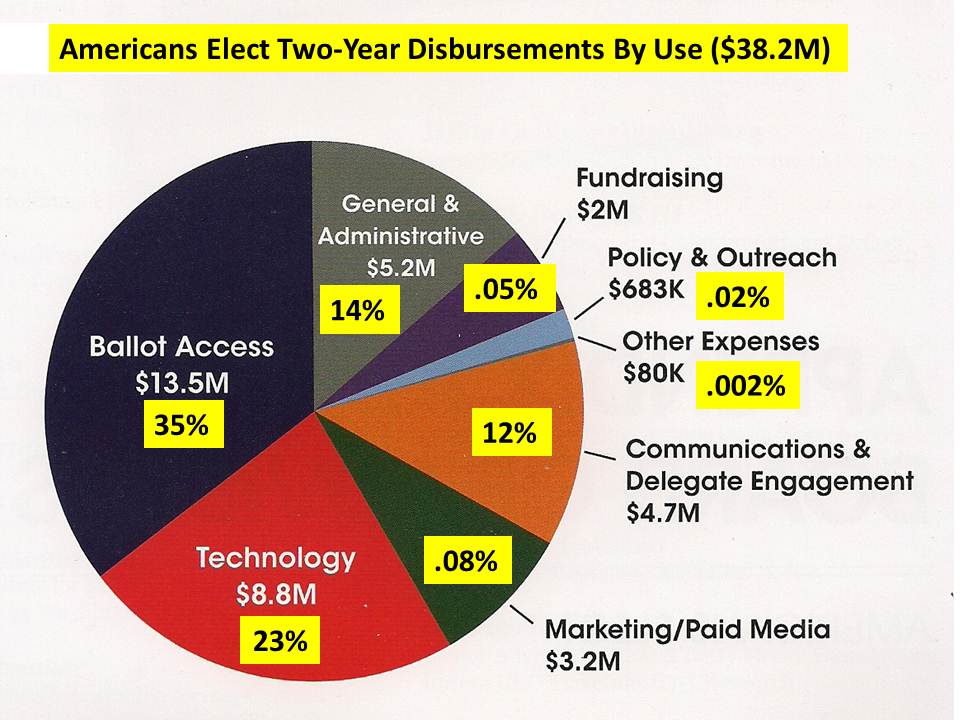
Source: Mission Report Summary of Operations March 2, 2010 – May 17, 2012 (Americans Elect, 20 August 2012), page 37. Percentages added.
Continue reading “Graphic: Americans Elect Closes Down, Mission Accomplished”

The truth at any cost lowers all other costs — curated by former US spy Robert David Steele.
Source: Mission Report Summary of Operations March 2, 2010 – May 17, 2012 (Americans Elect, 20 August 2012), page 37. Percentages added.
Continue reading “Graphic: Americans Elect Closes Down, Mission Accomplished”

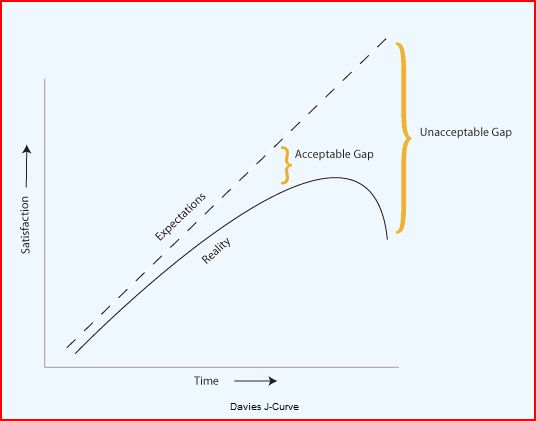
When Growth Outpaces Happiness
CHINA’s new leaders, who will be anointed next month at the Communist Party’s 18th National Congress in Beijing, might want to rethink the Faustian bargain their predecessors embraced some 20 years ago: namely, that social stability could be bought by rapid economic growth.
As the recent riots at a Foxconn factory in northern China demonstrate, growth alone, even at sustained, spectacular rates, has not produced the kind of life satisfaction crucial to a stable society — an experience that shows how critically important good jobs and a strong social safety net are to people’s happiness.
Starting in 1990, as China moved to a free-market economy, real per-capita consumption and gross domestic product doubled, then doubled again. Most households now have at least one color TV. Refrigerators and washing machines — rare before 1990 — are common in cities.
Yet there is no evidence that the Chinese people are, on average, any happier, according to an analysis of survey data that colleagues and I conducted. If anything, they are less satisfied than in 1990, and the burden of decreasing satisfaction has fallen hardest on the bottom third of the population in wealth. Satisfaction among Chinese in even the upper third has risen only moderately.

Below is a brief but excellent overview of the tragic Syrian civil war. The US has allowed itself to become allied with the Sunni Jihadis, some of whom are connected to Al Qaeda. Much of what Seale writes below is a summary of a recent report Syrian Jihadis (published by the Swedish Institute of International Affairs). The report's author Aron Lund explains how the Syrian rebellion is mutating into an an Islamist colouring, among other things.
Patrick Seale, Agence Global, 28 September 2010
The pitiless, vengeful, blood-thirsty battle now being waged in Syria is not something new or unexpected. Nor is it a mere by-product of the Arab Spring, although events in Tunisia and Egypt have undoubtedly contributed to creating an insurrectionary atmosphere in the whole region. Rather, the Syrian uprising, as it has gradually evolved over the past eighteen months, should be seen as only the latest, if by far the most violent, episode in the long war between Islamists and Ba‘thists, which dates back to the founding of the secular Ba‘th Party in the 1940s. The struggle between them is by now little short of a death-feud.
This is not to suggest that the present rebellion is driven only by religious motives and sectarian hate. Although these are real enough, other grievances have piled up over the past decades: the ravages of youth unemployment; the brutality of Syria’s security services; the domination of key centres of economic, military and political life by the minority Alawi community; the blatant consumerism of a privileged class, grown rich on state patronage, in sharp contrast with the hardship suffered by the mass of the population, including in particular the inhabitants of the ‘poverty belt’ around Damascus, Aleppo and other cities. These deprived suburbs are largely the result of inward migration from the long-neglected countryside, which in the past decade has suffered catastrophic losses from a drought of unprecedented severity.
Continue reading “Chuck Spinney: US Support for Jihadists in Syria”

When it costs more to be poor – Fed and government shifting inflation onto rent, medical care, and food. QE3 to widen the gap between the poor and the wealthy.
Inflation has been picking up since the recession ended in 2009. The problem with the CPI increasing year over year with no rise in household incomes is that the standard of living for most Americans erodes every year that incomes do not keep up. Household incomes are back to levels last seen in the mid-1990s while the cost of necessities has gone up. This brings us to our article today that examines the nuts and bolts of what constitutes the Consumer Price Index (CPI). The CPI attempts to measure the changes in price for consumer goods and services. Overall it did a very poor job of measuring the housing bubble because of the owner’s equivalent of rent metric.
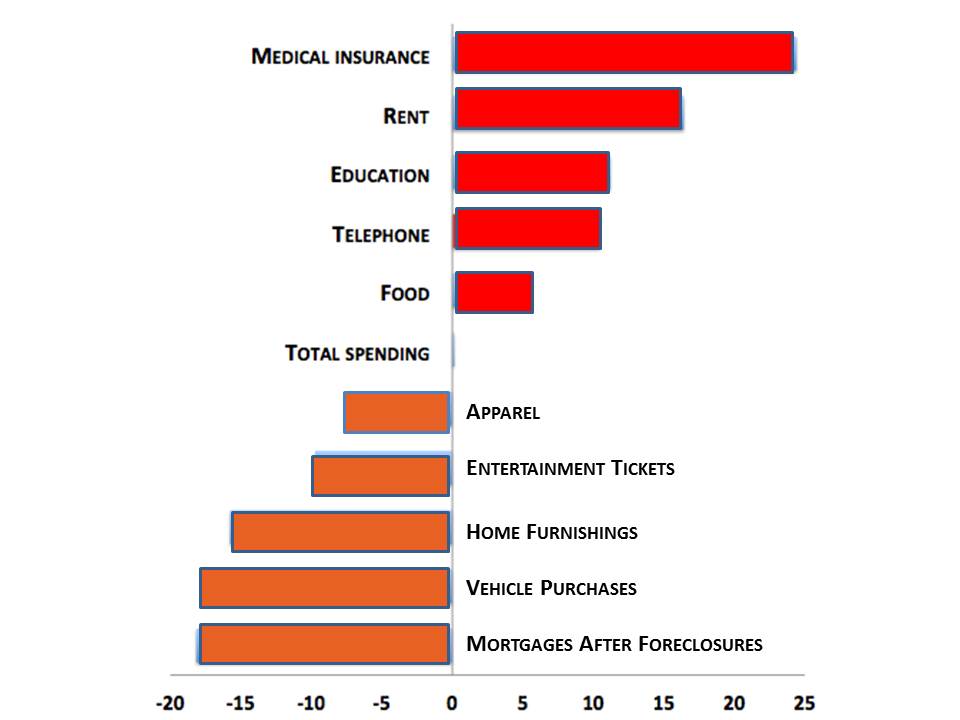
Today, it is understating inflation because of the excess spending on “wants” that occurred in the 2000s has now shifted to spending on “needs” but is being dragged down by the amount of family spending on needed goods. We will dig deep into this data but suffice it to say that the Fed is creating inflation in items most Americans actually need to live their daily lives and the burden on the poor is actually increasing.

The financial and banking industries are on high alert tonight as a massive cyberattack continues, with potentially millions of customers of Bank of America, PNC and Wells Fargo finding themselves blocked from banking online.
“There is an elevated level of threat,” said Doug Johnson, a vice president and senior adviser of the American Bankers Association. “The threat level is now high.”
“This is twice as large as any flood we have ever seen,” said Dick Clarke, an ABC News consultant and former cybersecurity czar.
Sources told ABC News that the so-called denial of service attacks had been caused by hackers from the Middle East who had secretly transmitted signals commandeering thousands of computers worldwide.
Hackers, Possibly From Middle East, Block U.S. Banks' Websites
A group of purported hackers in the Middle East has claimed credit for problems at the websites of both banks, citing the online video mocking the founder of Islam. One security source called that statement “a cover” for the Iranian government’s operations.
The attack is described by one source, a former U.S. official familiar with the attacks, as being “significant and ongoing” and looking to cause “functional and significant damage.” Also, one source suggested the attacks were in response to U.S. sanctions on Iranian banks.
Senior U.S. officials acknowledge that Iranian attacks have been the subject of intense interest by U.S. intelligence for several weeks. Last week, the Joint Chiefs of Staff’s Intelligence Directorate, known as J-2, confirmed continuing Iranian cyber attacks against U.S. financial institutions in a report described as “highly classified.”
Officials see Iran, not outrage over film, behind cyber attacks on US banks