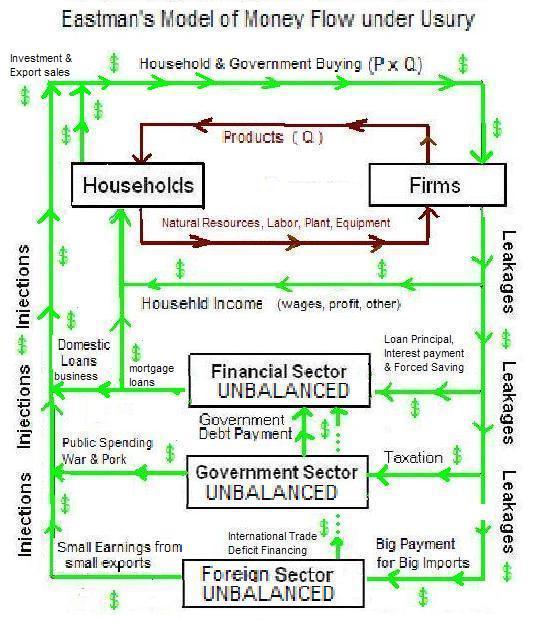
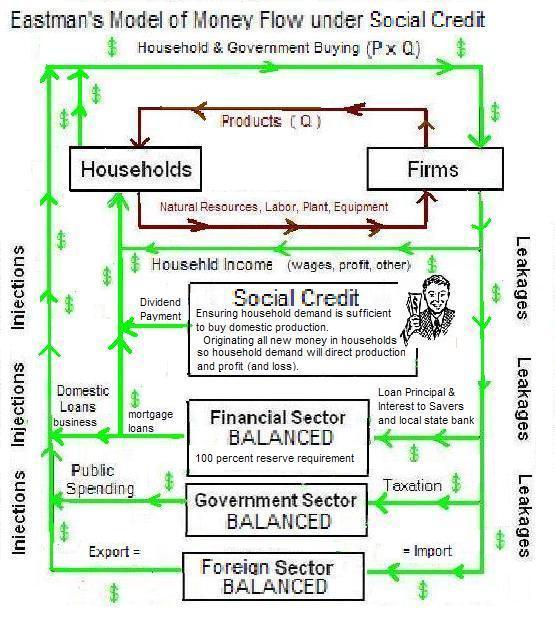
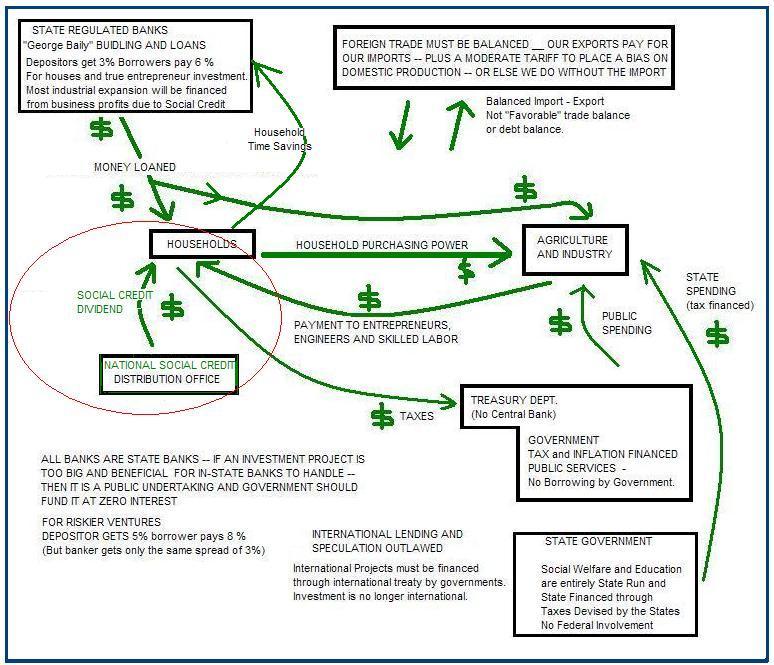
Graphic: Theft Six – Eastman Model of Toxic Usury
Budgets & Funding, Corruption
The truth at any cost lowers all other costs — curated by former US spy Robert David Steele.
Syria-Iran: The Iranian news agency reported Ayatollah Khamenei on Tuesday criticized the US for interfering in Syria's internal affairs, but said Iran would accept political reforms in Damascus. Khamenei said, “Iran's stance towards Syria is to support any reforms that benefit the people of this country and oppose the interference of America and its allies in Syrian domestic issues.
Special Comment: The NightWatch hypothesis is that a consortium of interests has coalesced to deliver a strategic setback to Iran, not over nuclear issues, but in Syria. In this hypothesis, the nuclear issue is less immediately significant for Iran than the probability that the Alawite government in Damascus is nearing its end.
The Syrian government, which is an ally of Iran, has been key in facilitating Iranian communications with and support to its proxies, Hezbollah in Lebanon and Hamas in the Gaza Strip and the West Bank. If the Sunni Arab opposition take power in Damascus, Iran's connection to the Mediterranean would be broken. Iran's apparent objective of achieving an outlet in the Mediterranean through friendly, Shiite states would be thwarted.
The Sunni Arab interests that back the Arab League and are arrayed against the al Asad government in Damascus seem to have decided that the westward expansion of the Shiite heresy and the proliferation of pro-Iranian states and groups in traditional Arab regions must stop at the western border of Iraq. Their bridgehead in Syria must be eliminated by the installation of a Sunni government in Damascus in order to consolidate the Sunni Arab community, or ummah.
The implications for Iran and its proxies are worth considering. For example, if Iran cannot protect its most loyal allies in Damascus, then its aspirations to regional leadership are not credible, regardless of its nuclear program. The fragility of the Syrian security situation also presents Iranian leaders with the choice of escalating Iran's direct intervention in Arab affairs to try to save the al Asad government or accepting the loss of Syria, including the disruption of the supply route to Lebanese Hezbollah and Hamas.
Expect more Iranian support for Damascus and more Iranian Islamic Republican Guard Corps personnel to show up in Syria and in southern Lebanon. The Iranians do not appear ready to abandon Syria yet. If increased Iranian support for Syria does not become apparent, that would mean that Iran has accepted that it cannot prevent the strategic setback resulting from the loss of Syria to the Sunni Arabs. One important unknown is how the Baghdad government might be pressured into supporting Iranian strategic goals.
The international media focuses primarily on the Iranian nuclear program, the UN and the sanctions regime against Iran. In this analysis, the international attention on Iran's nuclear program provides cover and time for Iranian leaders to decide what to do about Syria. Both crises threaten to dim Iran's vision of itself as the regional power in the Middle East.
Ceci est une histoire vraie: Au début des années 1990, Robert Steele a rencontré le colonel en charge de l'OSINT pour le général Heinrich. Il a dit qu'il avait du mal à faire à quiconque de prendre OSINT au sérieux. Steele a suggéré qu'il crée un compartiment nouveau mot de passe, et mettre le mot que seuls les dix premiers de personnes en France ont été autorisés à lire les informations – et ce serait OSINT. Il ne souriait pas. Il regarda Steele avec beaucoup de sérieux et dit: «C'est une solution très français».
Ce dont le monde a besoin maintenant, et la France pourrait faire cela avec l'Espagne et d'autres, est un centre multinational d'échange d'informations et le sens des décisions qui couvre la Caucasius, l'Afrique du Nord, l'Arabie, et la Turquie. Ce serait un centre d'OSINT et réseau capable de mobiliser, exploiter et partager toutes les informations pertinentes dans toutes les langues sur toutes les questions d'intérêt vital pour le commerce et la sécurité.

Open Access to Scientific Information
By Adrian Janes
Source: House of Commons Library (UK)
Overview:
Open Access (OA) to scientific publications could provide more effective dissemination of research and thus increase its impact.
The costs and benefits of different models of providing OA to publications need to be considered if a comprehensive shift to OA is to be financially sustainable.
OA to research data could enable others to validate findings and re-use data to advance knowledge and promote innovation.
Sharing data openly requires effective data management and archiving. It also presents challenges relating to protecting intellectual property and privacy.
Expanding access to scientific information requires researchers, librarians, higher education institutions, funding agencies and publishers, to continue to work together.
+ Direct link to document from this page (PDF; 351 KB)
See Also:
1992 E3i: Ethics, Ecology, Evolution, & intelligence (An Alternative Paradigm)
Last Friday (January 27) the US Bureau of Economic Analysis announced its advance estimate that in the last quarter of 2011 the economy grew at an annual rate of 2.8% in real inflation-adjusted terms, an increase from the annual rate of growth in the third quarter.
Good news, right?
Wrong. If you want to know what is really happening, you must turn to John Williams at shadowstats.com.
What the presstitute media did not tell us is that almost the entire gain In GDP growth was due to “involuntary inventory build-up,” that is, more goods were produced than were sold.
Net of the unsold goods, the annualized real growth rate was eight-tenths of one percent.
And even that tiny growth rate is an exaggeration, because it is deflated with a measure of inflation that understates inflation. The US government’s measure of inflation no longer measures a constant standard of living. Instead, the government’s inflation measure relies on substitution of cheaper goods for those that rise in price. In other words, the government holds the measure of inflation down by measuring a declining standard of living. This permits our rulers to divert cost-of-living-adjustments that should be paid to Social Security recipients to wars of aggression, police state, and banker bailouts.
When the methodology that measures a constant standard of living is used to deflate nominal GDP, the result is a shrinking US economy. It becomes clear that the US economy has had no recovery and has now been in deep recession for four years despite the proclamation by the National Bureau of Economic Research of a recovery based on the rigged official numbers.
See Also:
No. 414: Hyperinflation Special Report 2012
• U.S. Hyperinflationary Great Depression Moves Ever Closer
• U.S. Government and the Federal Reserve Effectively Have Destroyed Global Confidence in the U.S. Dollar
• Systemic-Solvency and Economic Crises Have Not Abated
• Precursors to Ultimate Dollar Disaster Are in Place; 2014 Remains the Outside Timing for Same
