Where in the world will conflict flare in the new year? This special, expanded edition of ISN Insights examines three hotzones beyond the headlines: Pakistan, Tajikistan and the Northern Caucasus.
This special ISN Insights package contains the following content, easily navigated along the tab structure above – or via the hyperlinks below:
A 2011 Pakistani political forecast by Gregory Copley, President of the International Strategic Studies Association, who predicts a watershed year ahead for the Islamic Republic.
A look forward to the potential for further proliferation of terrorist activity in the North Caucasus – and how Russia should address it by Simon Saradzhyan, research fellow at the Harvard Kennedy School's Belfer Center.
A close examination of Tajikistan's make-or-break year ahead by John CK Daly, non-resident fellow at the Johns Hopkins Central Asia-Caucasus Institute.
The term “learning styles” refers to the concept that individuals differ in regard to what mode of instruction or study is most effective for them. Proponents of learning-style assessment contend that optimal instruction requires diagnosing individuals' learning style and tailoring instruction accordingly. Assessments of learning style typically ask people to evaluate what sort of information presentation they prefer (e.g., words versus pictures versus speech) and/or what kind of mental activity they find most engaging or congenial (e.g., analysis versus listening), although assessment instruments are extremely diverse. The most common—but not the only—hypothesis about the instructional relevance of learning styles is the meshing hypothesis, according to which instruction is best provided in a format that matches the preferences of the learner (e.g., for a “visual learner,” emphasizing visual presentation of information).
Phi Beta Iota: Advanced Information Operations (IO) will see the blending of Cognitive Science with Collective Intelligence inside the IO Cube. While the World Brain and Global are the final outcome, Advanced IO concepts and doctrine are possible now–they merely require the robust integration of intelligence and integrity in tandem, leading to the identification and pursuit of the right things–and recognize that information is a substitute for time, space, capital, labor, and violence. Sun Tzu meets John Boyd. Arugah.
“There are diplomatic tensions because we are fighting a full-on undeclared war on the territory of a country with which we are an ally, using covert agents as the commanding officers”.
So what’s new? Didn’t we fight a full-on undeclared war on the territory of Laos from about 1961 to 1973? Wasn’t Laos an ally while trying to maintain the fig-leaf of neutrality? Wasn’t the United States government using ‘covert agents as commanding officers’?
What is rarely recognized is that even if the US can emerge from a weak economy within a few years, the economic foundation that existed before the cataclysm of 2007 and 2008 may not be adequate to restore the widely shared prosperity the US needs. For more than three decades, economic growth had been largely dependent on rapidly rising levels of debt and on two major speculative bubbles, first in high technology and dot-com stocks in the late 1990s, then in housing in the 2000s. What will now replace them?
Income inequality widened sharply in these years and average wages stagnated for the many while record high fortunes were made by the few. The financial security and access to adequate health care and education for children that had defined the middle class since World War II have eroded rapidly. Meanwhile, investments in infrastructure such as transportation, as well as clean energy and education, have been badly neglected. All this raises doubts about America’s future economic vitality whether or not it balances its budget, and it does so at a time when international competition from Asia and the Southern Hemisphere will pose serious challenges during this century. How will Americans live a decade from now?
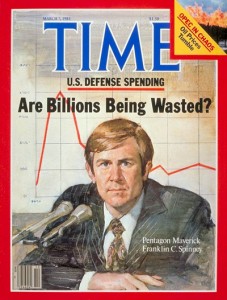
CHUCK SPINNEY: The budget/tax compromise just agreed to by President Obama and the Republicans blew a hole in the out-year deficits by continuing for two years the Bush 2001 tax cuts to the wealthy in the hope that a stimulative effect will trickle down to grow the economy before the 2012 election. That the economy grew sluggishly after 2001, that federal deficits exploded after 2001, that the economy continued to hemorrhage manufacturing jobs after 2001, that income inequality continued to increase after 2001, that middle class wages continued to stagnate after 2001, and that the first decade of the 21st Century ended in the worst economic crisis since the 1930s do not seem to affected the political calculus in 2010 to increase these tax cuts to 2012.
Two noted professors on opposite sides of the cultural wars come together and engage in “cooperative argumentation.” One, a “Jewish, atheist libertarian” and the other a “mixed blood American Indian” bring to the table two radically different worldviews to bear on the role of colleges and universities in studying social and ecological justice. The result is an entertaining and enlightening journey that reveals surprising connections and previously misunderstood rationales that may be at the root of a world too polarized to function sanely.
Center for Strategic & International Studies Dec 21, 2010
One possible improvement to the IAEA’s monitoring and verification regime would be enhancing the IAEA’s use of intelligence by formalizing cooperation with a multilateral security organization such as the North Atlantic Treaty Organization (NATO). Working through NATO, which has established procedures and infrastructure for sharing and disseminating classified information, would avoid many problems that occur in bilateral intelligence-sharing.
Phi Beta Iota: NATO does not have any intelligence collection or processing capabilities of its own; it is completely dependent on what its members choose to provide it–and as with intelligence provided to the UN (e.g. IAEA), this is generally impoverished if not blatantly misleading. The only viable solution for multinational intelligence is the establishment of a Multinational Decision Support Centre (MDSC) with Regional MDSC, all reliant primarily on Open Source Intelligence (OSINT), but all also having full-spectrum Human Intelligence (HUMINT) capabilities as well as Advanced Information Operations (IO) capabilities. The Americans must learn that in Epoch B, must must surrender control in order to gain command of the truth.
ANSWER: Actually he did under “Challenge Seven” on inter-agency co-operation. In general his observations on inter-agency co-operation complement what you have often noted over the years. In this chapter he also has a scathing section called “The Impact of New Intelligence Hierarchy” in which he notes “serious limitations” of the DNI, but more interestingly argues that what really need to be reformed are intelligence processes and culture. He also dislikes the phrase ‘information sharing' because it implies that information is proprietary to specific agencies rather than belonging to the government as a whole. He also notes that the Intellgience Community “sometimes seem to have never learned that the Cold War is over.”
Finally he notes that what is really needed in the IC is “real time sharing and fusion of information of all kinds at all levels” rather than mindless protection of information that is of short term value.
It strikes me as very strange that someone like Cordesman who has been Mr. Inside for thirty years would come to roughly the same conclusions as Robert Steele, himself one of the most independent (and perceptive) thinkers on intellgience and information operations issues that I know.
I read Cordsman's treatment of Intellgience issues as evidence that the so-called IC is pretty close to becoming entirely irrelevant.


 Political hotzones 2011?