Review: The Thirteen American Arguments–Enduring Debates That Define and Inspire Our Country

5 Star, America (Founders, Current Situation), Democracy, Philosophy
0Shares
13 Arguments
Amazon Page

Alexis de Tocqueville 2.0–Extraordinary Analytic Review, April 22, 2008

Howard Fineman

The publisher should have done a better job of loading information, such as the complete table of contents, using the Amazon Advantage features that I myself use when offering a book on Amazon.

Introduction: For the Sake of Argument
1. Who Is a Person?
2. Who is an American?
3. The Role of Faith
4. The Limits of Individualism
5. What Can We Know and Say?
6. Who Judges the Law?
7. Debt and Dollar
8. Local versus National Authority
9. Presidential Power
10. The Terms of Trade
11. War and Diplomacy
12. The Environment
13. A Fair, “More Perfect” Union
Conclusion

Some strategic reactions:

+ Conceived in 2005, executed since then, an incredible labor of love

+ As I went through I kept thinking “wow, what a mix of historical unraveling and comparison, current trials & tribulation, and philosophical commentary.” This is Tocqueville 2.0, nothing less.

+ I read a lot, so my admiration for the chapters was mostly a reflection of how skillfully I thought this master author and thinker had mined and then hammered into elegant shape a plentitude of sources and perspectives.

The message of the book is revealed on page 243, and I quote:

“We need to calm down, get engaged, and look for leadership. We have been here before: the seeming gridlock; the sudden, uncharacteristic loss of faith in the future; the sense that we cannot produce leaders capable of dealing with real problems. Facing despair and danger, we have always found in our storehouse of conflicting paradoxical traditions a way forward.”

The author's bottom line from earlier in the book: never-ending argument is who we are, how we are. It defines us, this never-ending back and forth. His idealistic view is that we cannot afford to NOT be part of the argument, but this does deny the reality that prior to this election cycle, fully half the eligible population refused to engage.

Frequently throughout the book I am struck by the currency of the author's citations and reflections–this is not a book written two years ago and a year in the editing. The author clearly reads and thinks broadly, and it shows.

Some nuggets that grabbed me:

+ New England (revere nature), Virginia (exploit nature), and the Middle Colonies (live within nature) existed as three completely distinct models for 180 years before the convention in Philadelphia. These three models play through each of the arguments.

+ The author irks me slightly when he says early on that the system for choosing presidents is not be best because we have turned it over to primacy voters. Later in the book he recovers with reference to The Broken Branch: How Congress Is Failing America and How to Get It Back on Track (Institutions of American Democracy)

+ NAFTA hollowed out the midwest and many other locations across the USA, and Bill Clinton is as much to blame as anyone. It's led to Mexico importing half what they export to us.

+ Gore could have lost from any of 100 factors, not just Ralph Nader, but the author's favorite is the photo of Gore drinking champagne at 11 in the morning with the Chinese promoting free trade. The UAW acted on that.

+ Somewhere in the middle I have the note, great paper, great spacing, great font. This is an elegantly structured book and it honors the Tocqueville 2.0 status that I for one accord to this author's historical and current reflections.

+ On page 197 he cites Bush as reluctant to answer the question about who his advisors are, but then Bush mentions Wolfowitz, and raises his eyebrows to add significance. THAT was our early warning. See Obama – The Postmodern Coup: Making of a Manchurian Candidate for a similar warning on Zbigniew Brzezinski's last chance to be Dr. Strangelove on Russia.

+ Interestingly, although Dick Cheney appears in the index sufficient times, it is mostly with reference to undermining the environment and capturing energy at any cost [for every three dollars we pay at the pump, Exxon externalizes $12 in costs to us and all future generations].

+ On page 214 the three models come in very nicely on the subject of the environment:

– VIRGINIA: deplete the land, move West

– PENNSYLVANIA: “city in a garden,” the “middle landscape”

– NEW ENGLAND: untouched nature, against industrialization (of course this was very early on when Emerson and Thoreau were active.

The author notes that the reigning over-all idea in early America was that nature was our Eden to consume and to subdue.

Toward the end there are two fascinating insights:

+ John McCain used to rail at how the Bushes could muster money just by having “daddy” call everyone he ever gave an Ambassadorship to. The author provides some very powerful insights into John McCain, both the good (an earnest reformer) and the bad (perpetually angry).

+ John Edwards is not part of the system, both Hillary Clinton and Barack Obama *are* the system–perhaps one explanation he has not endorsed either.

I note: McCain-Edwards? Probably a bridge too far, but wouldn't that be something! It's certainly a ticket I would support, leaving Senator Clinton to be Majority Leader in the Senate. . If McCain can learn to say the word “transpartisan,” and mean it, he just might be the best break-out reformist President.]

The author ends with a quote from Bill Clinton in 1993, to wit:

“There is nothing wrong with America that cannot be cured by what is right with America.”

I agree with that, but only if all Americans pay attention, get into this fight for the soul of the Republic, and demand substance from all three candidates: a transpartisan sunshine cabinet appointed immediately; a balanced budget online for discussion by 4 July 2008; and opening the final presidential debates to candidates from the top five parties in America.

Before I list other books, I want to make one other very important point: the “advisors” to all three candidates are, as a general rule, completely out of touch with reality. What the candidates SHOULD be doing is leading national conversations on the ten threats, twelve policies, and eight challengers, and then converting those conversations, backed up by real budget numbers, into a national consensus. LOSE THE ADVISORS, lead the arguments among us, of, by, and for We the People. THAT is how you lead this country.

Kudos to the author of this great book for timeliness, relevance, and elegance.

Here are eight other books I recommend as we begin demanding substance:
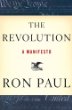
The Revolution: A Manifesto
Don't Start the Revolution Without Me!
What Kind of Nation: Thomas Jefferson, John Marshall, and the Epic Struggle to Create a United States
The Tao of Democracy: Using Co-Intelligence to Create a World That Works for All
Society's Breakthrough!: Releasing Essential Wisdom and Virtue in All the People
The World Cafe: Shaping Our Futures Through Conversations That Matter
The Cultural Creatives: How 50 Million People Are Changing the World
Collective Intelligence: Creating a Prosperous World at Peace

Vote on Review

Review: The Revolution–A Manifesto

5 Star, Culture, DVD - Light, Democracy, Diplomacy, Philosophy, Values, Ethics, Sustainable Evolution
0Shares
Revolution Paul
Amazon Page

Ron Paul + Jesse Ventura = Critical Mass, April 21, 2008

Ron Paul

Ron Paul excels at the Constitutional fundamentals: individual liberty, sound money, and non-interventionist foreign policies. Although I am dismayed by his unwillingess to play well with others (Ralph Nader has the same problem, Jesse Ventura does not), and he does not have a strategy for governance as much as a laundry list of non-negotiable starting points, he is still, for me as an estranged moderate Republican, an inspiration for breaking with the two-party spoils system.

This is an eloquent book in which he draws with extreme care from the thoughts of others, always attributed in the text, and provides a series of arguments that do not call for the impeachment of George Bush and Dick Cheney, but certainly do call for the impeachment of the complicit Congress. Three books in particular support his angry denunciation of how Congress–both Republican and Democratic–has allowed the Executive to attack our civil liberties, sustain executive warmaking never intended by the Founding Fathers, and precipitated an unprecedented financial crisis. Congress standing still for “signing statements” [and I would add, for morons like Gonzalez that give all Latinos a bad name], is the last straw.

See:
Running On Empty: How The Democratic and Republican Parties Are Bankrupting Our Future and What Americans Can Do About It
The Broken Branch: How Congress Is Failing America and How to Get It Back on Track (Institutions of American Democracy)
Breach of Trust: How Washington Turns Outsiders Into Insiders

He cites Michael Scheuer with admiration, and as I am one of the very few to notice this in my reviews of Scheuer's books, I am delighted that he validates Scheuer's basic view, to wit, Bin Laden and terrorism against America are motivated by *our* presence in Saudi Arabia, our foreign behavior, our unilateral militarism, virtual colonialism, and so on.

He suggests that it was the Clinton Administration that first set the course on Iraq, being too willing to listen to lobbyists for Israel. Of course it was Cheney and Rumsfeld that gave Sadaam Hussein the WMD as–as the joke goes–kept the receipts.

He is very specific on Iran not being a nuclear threat to the USA (and in other writing, e.g. our weekly GLOBAL CHALLENGES report from the Earth Intelligence Network, we note that all the oil states are going nuclear as fast as they can).

He labels the neoconservatives as false conservatives.

At this point in my notes I have written “This is an original work rife with learned quotations from other scholars and practitioners.”

He is starkly upset by how the Bush-Cheney regime has destroyed the US dollar, not just with Iraq, the The Three Trillion Dollar War: The True Cost of the Iraq Conflict but with our global presence that Chalmers Johnson has addressed so ably in The Sorrows of Empire: Militarism, Secrecy, and the End of the Republic (The American Empire Project).

Halfway through the volume he takes issue with those who call for a “living” Constitution, and pointedly says that this would equate to a dead and worthless Constitution. Later in the book, but it goes beautifully here, he writes that the Constitution was intended to restrain government, not citizens.

He is also against the draft and income taxes, both of which suggest people are property of government and can therefore be forced into labor. As he states, “young people are not raw material” for the government to play with.

He cites former Comptroller General David Walker with admiration. Walker told Congress in the summer of 2007 that the USA is insolvent, and they ignored him. Today Walker runs the Peter Peterson Foundation and his mission is to educate citizens on their own governments high crimes and misdemeanors in the economic and financial arena.

He shares my view that the Federal Reserve should not exist and manufactures credit out of thin air, one reason we will see more credit bubbles.

He ends by pointing out that the Patriot Act not only violates all our liberties, but was unnecessary because the USG had all the information it needed in advance of 9-11 was was in his words, inept. I disagree. I am fairly certain Dick Cheney received nine different warnings, including from Pakistan and Israel, and he arranged an exercise so he could control the government and let it happen. I think Larry Silverstein, with Bush family assistance, planted controlled demolitions to get rid of his asbestos problem at tax payer expense, and I think Rudy Guliani should be indicted for his role in “scooping and dumping” fire fighter bodies in his rush to destroy the crime scene. See, among many other excellent books and videos, 9/11 Synthetic Terror: Made in USA, First Edition

He favors the legalization of marijuana and is opposed to attention deficit and other drugs being prescribed to children without adequate testing. I put the book down wishing that Gary Hart, Dennis Kucinich, Ralph Nader, Ross Perot, Michael Bloomberg, Jesse Ventura, and Ron Paul could have formed a new party, the Constitutional Party, and cleaned house. I have lost all respect for Bill Bradley–he sold out to the Trilateral Commission and greed (as did Al Gore). See Obama – The Postmodern Coup: Making of a Manchurian Candidate

John McCain is walking a tightrope. In my view, if McCain can form a Transpartisan Cabinet now–even if only a transitional one–and get David Walker and Ron Paul to lead the group in creating a balanced budget that wipes out the national debt and begins pulling back from all our overseas bases, especially the secret ones that are not worth the outrageous $60 billion a year we pay for the 4% we can steal and not process), then I think it is possible some good may come from this election. Otherwise, it is just four more years, and we MUST create a new political party.

IMHO.

See also:
Vice: Dick Cheney and the Hijacking of the American Presidency
Don't Start the Revolution Without Me!
The Tao of Democracy: Using Co-Intelligence to Create a World That Works for All

Vote on Review

Review: Acts of God–The Unnatural History of Natural Disaster in America

5 Star, Complexity & Catastrophe, Congress (Failure, Reform), Disaster Relief, Environment (Problems), Executive (Partisan Failure, Reform), Nature, Diet, Memetics, Design
0Shares
Amazon Page

Nature is the What, Culture is the Who–Lovely Analytic Account, April 21, 2008

Ted Steinberg

I am starting to think about a 2009 book on CULTURAL INTELLIGENCE: Faith, Ideology, and the Five Minds (the later from Five Minds for the Future and I am constantly enchanted when I run across a vital reference to how culture is the disaster, not nature.

This book is a magnificent epistle on the folly of mankind and the duplicity of government, business and the media. The author of totally brilliant as he gently sets forth the myth that we are not responsible for acts of God when in fact we are the perpetrators of complex human, social, economic, and political fabrications and decisions that invariably:

1. Screw over the poor and those of color

2. Amortize high risks taken by the rich across the entire taxpayer base

3. Conceal, lie, deceive as to the actual premediated decisions that occasioned the disaster turning into a catastrophe.

I am reminded of that excellent work, Catastrophe & Culture: The Anthropology of Disaster (School of American Research Advanced Seminar Series).

Here is “the” quote from the author, on page xxii:

“The official response to natural disaster is profoundly dysfunctional in the sense that it has both contributed to a continuing cycle of death and destruction and also normalized the injustices of class and race.”

The middle of the book is a detailed but not at all tedious account of California, Florida, and the Mississippi flood plain. In all three cases calamity was treated as a cultural script to execute:

1. A political agenda on the poor

2. Conceal and deceive outsiders to keep investment coming in

3. Further land speculation, with insurance company as well as state government complicity

I am reminded of the two books, Fog Facts: Searching for Truth in the Land of Spin and The Cheating Culture: Why More Americans Are Doing Wrong to Get Ahead. Our country has lost its moral compass across all of its institutions. This is not new, the price is simply higher now.

The account of how a railroad magnate built a railway from Jacksonville to Miami (which was 200 feet of sand at first) and then on to Key West, with the taxpayer footing the bill, the state government giving away the land, and the speculation leading inevitably to enormous disaster and death, is riveting. Or at least captivating.

He lambasts the federal government for venturing into the political economy of risk, for trying to control weather from the 1950's, and for “writing off” the poor in their mobile homes. Land in hazardous terrain subject to flooding is cheaper, mobile homes are cheaper, the poor cannot afford to evacuate, this strikes me as something only a genocidal maniac would love: “natural eugenics,” only a little connivance needed.

The author tells us that through the 1970's the federal government stunk at both forecasting and warning, in part because of poor budgeting for the National Weather Service, in part because of privatization, in part because of ineptness (e.g. not repairing critical buoys).

He states, and this did not begin with Katrina, but goes back 40 years, that the Federal response to disasters has been consistently pathetic. One explanation is that the Federal Emergency Management Agency has consistently been a dumping ground for political hacks, with nine times more losers than in other agencies.

He explicitly blasts Bush-Cheney for lies in relation to Katrina, which was accurately forecast. Every POLITICAL level of government, from the chicken mayor to the complacent governor to the dumb-s..t FEMA director to the village idiot President failed us.

The books ends by skewering both Clinton and Bush for 16 years of deregulation of all industries having anything to do with public safety, allowing them to increase their profits by increasing the risks and costs to the unsuspecting buyers upon whom they were enabled to prey.

Not a pretty story, but I for one am starting to see the pattern of government and corporate deception, and that is why I have committed the last twenty years of my working life to creating public intelligence in the public interest.

I cannot remember all my past weather and climate books, but here are a few more links:
The Atlas of Climate Change: Mapping the World's Greatest Challenge (Atlas Of… (University of California Press))
The Weather Makers : How Man Is Changing the Climate and What It Means for Life on Earth
Catastrophe: An Investigation into the Origins of Modern Civilization

See also:
Group Genius: The Creative Power of Collaboration
The New Craft of Intelligence: Personal, Public, & Political–Citizen's Action Handbook for Fighting Terrorism, Genocide, Disease, Toxic Bombs, & Corruption
The Next Catastrophe: Reducing Our Vulnerabilities to Natural, Industrial, and Terrorist Disasters

Vote on Review

Review DVD: Who Am I This Time?

5 Star, Culture, DVD - Light, Reviews (DVD Only)
0Shares
Who Am I
Amazon Page

Evokes the Best of America in a Time of Mass Insanity, April 21, 2008

Susan Sarandon

I bought three copies of this, having seen it many years ago.

One copy for a newly married couple that discovered themselves in theater.

One copy for the daughter of a colleague with a big brain and great shyness that is dispelled in amateur theatricals.

The last copy for me, for my permanent collection. Along with DVDs such as I list below, this is an utter classic without a single false note. Indeed, the editorial descriptions above are better than usual. You will not regret this for an instant.

Other perennials with me are:
Dances with Wolves – Extended Cut (Two-Disc Collector's Edition)
The Last Samurai (Two-Disc Special Edition)
De-Lovely
Pretty Woman (10th Anniversary Edition)
Henry V
The Snow Walker
Bonhoeffer
The Bourne Ultimatum (Widescreen Edition)
Smiley's People

Vote on Review

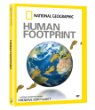
Review DVD: National Geographic–Human Footprint

4 Star, Environment (Problems), Reviews (DVD Only)
0Shares

DVD Human FootprintBrilliant, Tedious, Needs a Study Guide or Booklet, April 20, 2008

Elizabeth Vargas

The intelligence that went into creating this movie, and the artistic creabtivity and sheer industry in amassing visual depictions of what goes into making and using things, is absolutely top of the line world class.

Unfortunately, viewed in one sitting this movie becomes tedius and also suffers from throwing out so many numbers that none of them are memorable. I suspect the following terms were uttered sometime during the movie, but the fact that I cannot remember for sure is troubling:

Virtual Water
Carbon Footprint
True Cost

This DVD, if used in a classroom, should be broken up into at least five sessions, no more than three chapters at a time.

I actually think this would be better as a book, the movie aspect is too fleeting for the best possible absorbtion and retention.

Chapters cover:
Human Presence
Diapers and Milk
Meat, Eggs, and Carbs
Sweets, Fruits, and Vegetables
Plastics and Metals
Cleansing and Beauty Products
Water and Solid Waste
Clothing and Textiles
ASlcohol
Housing, Furnishing, and Apppliances
Entertainment Consumption
Transportation
Consumption of Natural Resources
Cell Phones
Shrinking Wildlife

National Geographic: Six Degrees Could Change the World is the better of two, all things considered. This movie I would like to see National Geographic re-issue with a little booklet of facts for each chapter, and also a website in which the complete true costs for all items discussed are presented, and volunteers shown how to do the research to post “true costs” for any given product or service.

I see real value in National Geographic becoming the hub for “true cost” information, something they could easily do in partnership with the World Index of Social and Environmental Responsibility (WISER).

Only one big negative: the DVD pupports to be about the average person but is actually about the average within the billion rich that have an aggregate annual income of one trillion. It teaches us nothing at all about the five billion at the base of the pyramid who have an aggregate income of four trillion. I'd like to see National Geographic rethink its plans, and ultimately come out with short videos on each of the ten high-level threats to Humanity, each of the twelve core policy areas, and each of the eight demographic definers of the future. Somewhere in there they could teach citizens to demand responsible transpartisan policies and balanced transparent budgets.

Books that I recommend include:
Pandora's Poison: Chlorine, Health, and a New Environmental Strategy
The Blue Death: Disease, Disaster, and the Water We Drink
Water: The Fate of Our Most Precious Resource
Blessed Unrest: How the Largest Social Movement in History Is Restoring Grace, Justice, and Beau
The Clock of the Long Now: Time and Responsibility
The Cultural Creatives: How 50 Million People Are Changing the World
Collective Intelligence: Creating a Prosperous World at Peace
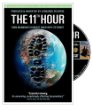
Review DVD: The 11th Hour

5 Star, Environment (Problems), Nature, Diet, Memetics, Design, Reviews (DVD Only)
0Shares
11th Hour
Amazon Page

Very Best Combination of Brains, Images, and Words, April 20, 2008

Leonardo DiCaprio

Unlike National Geographic: Six Degrees Could Change the World and National Geographic: Human Footprint, both of which I recommend, this DVD is a very elegant narrative that blends top ecological activists including Stephen Hawking and Paul Hawkins, speaking for a minute or two each, with historical audio-visuals that have been selected with enormous intelligence and integrity.

If you buy only one film, this is the one, but the issue is so very important I would recommend that each of three families buy one of these, and then start passing them around the neighborhood.

The movie opens with a theme of the planet being sick–two complex systems, one human, one all else, are interacting in pathological ways. Man, in being able to think about the future, while also ignoring the limits to growth and maintaining the fiction of being separate from nature, is committing species suicide.

Mankind used to live on current sunlight, which can only sustain up to one billion people. It was the industrial and agricultural era that began to draw down on “stored sunlight” in the form of petroleum and natural gas that set off a race to grow that led to climate change and especially global warming. 20% of the polar ice is gone; catastrophic weather is 50% more often or 50% more powerful. The amplification effect of human misbehavior is creating more and more loss. See The Manufacture of Evil: Ethics, Evolution and the Industrial System; To Govern Evolution: Further Adventures of the Political Animal; and Voltaire's Bastards: The Dictatorship of Reason in the West

I have a note to myself, this is stark elegant poetry.

The oceans are discussed in terms of our taking out too much (e.g. over-fishing) and putting in too much (toxins and non-biodegradable matter), and at the same time, toxins get concentrated in the food chain and come right back to us. See Blue Frontier : Saving America's Living Seas

Water that is poisoned ultimately poisons the human species. See
The Blue Death: Disease, Disaster, and the Water We Drink

Toward the end we get to the cruz of the matter, that corporate greed and control has gone global, and the legal systems, the political systems, are hostage to that greed. The Earth–nature–has been commoditized, as have humans (never mind the corruption that allows corporations to loot foreign commonwealths at the same time that Exxon externalizes $12 in “true costs” to future generations for each gallon of gas it sells).

One speaker is very capable in pointing out that this is neither a technology crisis nor even an ecological crisis, but rather a crisis of political policy and a process that has broken down completely. The government “bridge” between the commonwealth and the people, and the economy, has falled down. In the next sentence the problem is defined as our CULTURE, with everything else being a symptom. This was for me a defining moment within this DVD. It's not about evil–Exxon does what we let them–it's about what we choose to do or not do as a culture.

Probably citing E. O. Wilson, but without reference to him (he should have appeared in this movie, see his book The Future of Life, one speaker notes that the value of what nature does for us (e.g. bee pollination of crops) has been estimated at 35 trillion dollars a year–vastly more than the 18 trillion that comprises the global economy.

The DVD concludes with an excellent combination of individual statements on how this IS the ecological era, we can reimagine our lives, if we just retrofit all buildings to make them energy efficient it would create 3 million jobs in the US and free us from dependence on foreign oil. We can live with one tenth of the resources we consume now.

[Coincidentally, this was the week that TIME Magazine went green, and while I was watching the movie I was also finishing up Jesse Ventur's book Don't Start the Revolution Without Me! in which he recounts his realization that simply unplugging all the TVs in America when not in use would end US energy shortages.]

Di Caprio closes, and I write in my notes: eloquent, inspriing, statesmanlike, learned. He–and all those associated with this project–have it it out of the park. This is a deeply impressive contribution to the public dialog on our future as a species and as a planet.

See also my varied lists. There are a number of books in the cradle to cradle, sustainable design, green to gold, natural capitalism genre, the one that captures the spirit of this DVD and complements it is, in my view, Paul Hawkin's Blessed Unrest: How the Largest Social Movement in History Is Restoring Grace, Justice, and Beau, which he describes as the Earth's immune system kicking in.

Vote on Review

Who’s Who in Collective Intelligence: Sara Nora Ross

Alpha Q-U, Collective Intelligence
0Shares
Sara Nora Ross
Sara Nora Ross

Sara Ross, Ph.D., holds an interdisciplinary doctorate in Psychology and Political Development. She specializes in investigating and applying knowledge of universal patterns to analyzeĀ and address real-world problems in all their detailed complexity. She is the founder of ARINA (www.global-arina.org), which is both the home of TIP and the publisher of Integral Review: A Transdisciplinary and Transcultural Journal for New Thought, Research, and Praxis (http://integral-review.org).

Meta-intelligence for analysis, decisions, policy, and action:

The Integral Process for working on complex issues

The Book
The Book