

Berto Jongman: Nature is Priceless — Economy is a Sub-Set of Nature, NOT the Other Way Round

Cultural Intelligence, Earth Intelligence
Berto Jongman
Berto Jongman

Can you put a price on the beauty of the natural world?

Those who reduce nature to a column of figures play to an agenda that ignores its inherent value – and seeks to destroy it

George Monbiot

The Guardian, Monday 21 April 2014

George Orwell warned that “the logical end of mechanical progress is to reduce the human being to something resembling a brain in a bottle“. This is a story of how it happens.

On the outskirts of Sheffield there is a wood which, some 800 years ago, was used by the monks of Kirkstead Abbey to produce charcoal for smelting iron. For local people, Smithy Wood is freighted with stories. Among the trees you can imagine your way into another world. The application to plant a motorway service station in the middle of it, wiping out half the wood and fragmenting the rest, might have been unthinkable a few months ago. No longer.

When the environment secretary, Owen Paterson, first began talking about biodiversity offsetting – replacing habitats you trash with new ones created elsewhere – his officials made it clear that it would not apply to ancient woodland. But in January Paterson said he was prepared to drop this restriction as long as more trees were planted than destroyed.

His officials quickly explained that such a trade-off would be “highly unlikely” and was “very hypothetical“. But the company that wants to build the service station wasn't slow to see the possibilities. It is offering to replace Smithy Wood with “60,000 trees … planted on 16 hectares of local land close to the site“. Who cares whether a tree is a hunched and fissured coppiced oak, worked by people for centuries, or a sapling planted beside a slip-road with a rabbit guard around it?

As Ronald Reagan remarked, when contemplating the destruction of California's giant redwoods, “a tree is a tree”. Who, for that matter, would care if the old masters in the National Gallery were replaced by the prints being sold in its shop? In swapping our ancient places for generic clusters of chainstores and generic lines of saplings, the offsetters would also destroy our stories.

Continue reading “Berto Jongman: Nature is Priceless — Economy is a Sub-Set of Nature, NOT the Other Way Round”

Greg Newby on Cognitive Space & Exosomatic Memory

Advanced Cyber/IO, Collective Intelligence, Cultural Intelligence
Dr. Greg Newby
Dr. Greg Newby

Why I'm an information scientist

  • I believe that information is one of the most powerful phenomena. The ability to access and utilize information can help to overcome obstacles and solve problems. I want to make information more readily available to all people.There are many ways of providing access to information:
    • Through better information systems, including information retrieval systems. Thus, IR is one of my main research areas.
    • By providing the means of accessing information. Computer & information literacy training is therefore a big part of my curriculum interests at UNC. I also worked to bring about better information access via Prairienet (a community computing system) and iBiblio.
    • By actually creating information availability — authoring Web pages and articles and providing unrestricted access. I also work with Project Gutenberg to provide free electronic books (over 100 new [generally pre-1923] books per month).

Major themes in my research

Continue reading “Greg Newby on Cognitive Space & Exosomatic Memory”

Philip Roscoe: YouTube (21:46) True Cost of Economics – Is Economics a [Very Immature Dangerous] Way of Thinking?

Cultural Intelligence, Earth Intelligence, YouTube

The True Cost of Economics

Leading management thinker Philip Roscoe argues that economics is not a science, it's a way of thinking – one that, over the course of the 20th century, has come to dominate the decision-making of both individuals and governments. Every day we make choices – where to live, what to eat, how to educate our children and care for our parents – in which the influence of economics invariably promotes self-interest over social obligations. But all of today's big problems require collective action, so a way of thinking shaped by economic principles is a huge obstacle to change. Can we begin to think differently?

Berto Jongman: Pedophiles Raping and Snuffing Toddlers Online, Using Bitcoin, Police and Politicians Useless

06 Family, 07 Other Atrocities, 11 Society, Civil Society, Corruption, Cultural Intelligence, Government, Ineptitude, Law Enforcement
Berto Jongman
Berto Jongman

Disturbing new internet child abuse sees toddlers raped and burned live on webcam as paedophiles use Bitcoin to stop being traced, warns police chief

  • Rob Wainwright, director of Europol, warned of depraved new trend
  • Paedophiles pay for sick online ‘shows' using untraceable Bitcoin
  • Mr Wainwright warned that police and politicians struggle to keep up

Kieran Corcoran

MailOnline (UK), 21 April 2014

Read full story.

RELATED (Global Atrocity Epidemic):

Maple Leaf Gardens pedophile Gordon Stuckless pleads guilty to 100 more counts

Continue reading “Berto Jongman: Pedophiles Raping and Snuffing Toddlers Online, Using Bitcoin, Police and Politicians Useless”

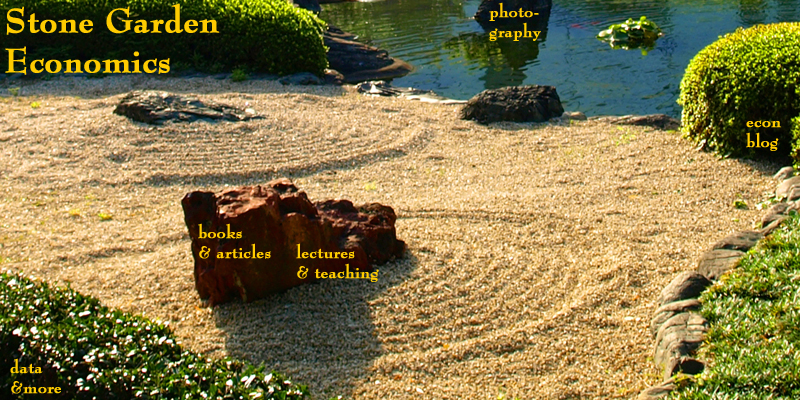
Worth a Look: Stone Garden Economics

Cultural Intelligence, Peace Intelligence
Click on Image to Enlarge

Featuring the work of Jurgen Brauer, pioneer of Peace Economics

Articles, Books, Data, Lectures, Photography, Teaching

“Perhaps the essence of the Liberal outlook could be summed up in a new decalogue, not intended to replace the old one but only to supplement it. The Ten Commandments that, as a teacher, I should wish to promulgate, might be set forth as follows:

1. Do not feel absolutely certain of anything.
2. Do not think it worth while to proceed by concealing evidence, for the evidence is sure to come to light.
3. Never try to discourage thinking for you are sure to succeed.
4. When you meet with opposition, even if it should be from your husband or your children, endeavor to overcome it by argument and not by authority, for a victory dependent upon authority is unreal and illusory.
5. Have no respect for the authority of others, for there are always contrary authorities to be found.
6. Do not use power to suppress opinions you think pernicious, for if you do the opinions will suppress you.
7. Do not fear to be eccentric in opinion, for every opinion now accepted was once eccentric.
8. Find more pleasure in intelligent dissent than in passive agreement, for, if you value intelligence as you should, the former implies a deeper agreement than the latter.
9. Be scrupulously truthful, even if the truth is inconvenient, for it is more inconvenient when you try to conceal it.
10. Do not feel envious of the happiness of those who live in a fool's paradise, for only a fool will think that it is happiness.”

Excerpt from Bertrand Russell, “The Best Answer to Fanaticism: Liberalism.” New York Times Magazine, 16 December 1951.

Worth a Look: The Economics of Peace & Security Journal

Cultural Intelligence, Peace Intelligence

The Economics of Peace and Security Journal

Welcome to The Economics of Peace and Security Journal (EPSJ), a publication of Economists for Peace and Security (EPS). Issues are published in April and October. Click the About item in the menu bar to learn more about EPSJ, including our scholarly scope & aims and our history. Please Subscribe to read the two most recent issues of EPSJ. Subscriptions fees are US$25 for EPS members, US$50 for non-member individuals, and US$150 for institutions. All articles and issues become open-access 12 months after initial publication. To enjoy open-access reading, readers nonetheless are required to Register. Registration assists us with documenting the use of the journal. For reproduction and reprint permissions, please contact us at managingeditor@epsjournal.org.uk. EPSJ is indexed with the Journal of Economic Literature (JEL), Research Papers in Economics (RePEc), and is listed in Cabell's Directories. From 2006 to 2013, RePEc alone shows 26,000 abstract views and 7,000 article downloads. All articles are peer-reviewed.

J Brauer & J P Dunne
Editors, EPSJ

Chuck Spinney: US Broken OODA Loops on Ukraine

Cultural Intelligence
Chuck Spinney
Chuck Spinney

The United States is careening toward a New Cold War in its conflict with Russia over the crisis in Ukraine. But a recent poll showed that most Americans can not even locate Ukraine on a map, much less understand the history behind the issues at stake. Moreover, the same poll found that the less they Americans know about Ukraine, the more likely they are to favor U.S. intervention. On the other hand, West Europeans — especially Germans — take a more nuanced view of this crisis.

Clearly, we are faced with a problem of the arrogance of ignorance being driven by defective OODA loops. Since all conflict embodies conflicting OODA Loops, readers interested in improving their own loops can begin to do so by Orienting themselves to differing perspectives on the Ukraine crisis.

One particularly useful source for a variety of differing perspectives is the trove of information assembled daily by Johnson's Russia List (JRL).

Attached herewith is a typical example of the kind of information found on JRL (in this case, written from a Russian point of view).

Chuck Spinney

The Blaster

Donbass’ Roots of Violent Division: Geography, History, Culture

Continue reading “Chuck Spinney: US Broken OODA Loops on Ukraine”

noble gold
