
Mini-Me: American Patriot on World War III as a Global CIVIL War, Attack at End of Olympics, Iceland Got It Right….US False Flag Predictions…

Cultural Intelligence
Who? Mini-Me?

Huh?

Dr Meno's Predictions for the Olympics, WW 3, Which will include the Multitude of Civil Wars. Obama canceling the elections, AND he kicks in all of his EXECUTIVE SECRET ORDERS, and Martial law is ordered, after a Domestic False Flag Terrorist attacks.
Follow the Money. An Attack at the beginning of the Olympics will be real terrorist. AND that didn't happen. An Attack at the end of the Olympics will be a false flag attack, Because the corporations want to make their Money first.

“IT IS TIME TO QUIT BEING THE UNITED STATES, AND START BECOMING THE STATES UNITED” , dr Meno

www.thefiscalrevolution.com
www.fiscalfugitives.com
www.radiopacsur.com

related video, First prediction of WW3, http://youtu.be/C1od4aXgaQc

See Also:

2012 Testing the Two-Party Tyranny and Open Source Everything – The Battle for the Soul of the Republic

Election 2008: Lipstick on the Pig (Substance of Governance; Legitimate Grievances; Candidates on the Issues; Balanced Budget 101; Call to Arms: Fund We Not Them; Annotated Bibliography)

Reference: Legitimate Grievances by Robert Steele

Worth a Look: Book Reviews on Self-Determination & Secession
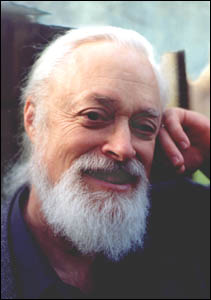
Tom Atlee: Diversity Matters

Cultural Intelligence
Tom Atlee

Diversity is as big as the universe

Diversity is difference. It is a natural phenomenon, intimately related to uniqueness and identity. There is a rich world of discovery awaiting us when we are ready to fully encounter our diversity. But first we have to lift our heads above the bustle around us and look at the big picture.

As important as it is to have women executives and people of other races in our neighborhoods, diversity is way, way bigger than that.

Our use of the word “diversity” primarily to address issues of racism, classism, sexism, and other  oppressive isms has blinded us to the fact that diversity is a vast fact of life, deeply embedded not only in humanity but in natural systems and in the very fabric of the unniverse.

Diversity, like fire and genius, can be problematic. And like fire and genius, diversity has creative power we can use to make life better.

Co-intelligence is largely about using diversity creatively. Understanding diversity is an important part of working consciously with co-intelligence.

This article is an exploration of how big diversity actually is…

Diversity is a fundamental property of the universe, along with matter, energy, space, time, relationship, unity, and many other phenomena that are present everywhere. Everything that you see (or don't see) that is different from anything else — and every difference between them — is an aspect of diversity.

So diversity exists. Everywhere. It is a fact of life.

But there's more to it than that.

Continue reading “Tom Atlee: Diversity Matters”

16-17 August 2012 London The Global Summit (Occupyish)

#OSE Open Source Everything, Advanced Cyber/IO, Cultural Intelligence, Liberation Technology, Mobile
The Global Summit 2012
In the new global economy, innovation happens in diverse sectors.
The Global Summit is where it all comes together.
As the Olympics come to a close (on August 12), we’ll begin linking social innovators with the teams and technologies they need to create rippling social and economic impact. Be part of it!

The Global Summit 2012 Biennial Meeting :: Aug 16 & 17, 2012

*Main Venue Address:  200 Aldersgate, St. Paul’s, London EC1A 4HD

*Benefit soiree August 15 held off-site (private location TBA).

Time & Dates:

  • Daily Registration, AM Tea & Danish – 8-9am
  • Thursday August 16th – Program Begins (Sharp Start) 9am – 9pm
  • Friday August 17th – Program 9am – 6pm

Delegate registration includes:

  • 2 days of hands on solutions in action with other thought-leaders
  • 2 Full Meals (Sustainable Vegan Cuisine) per day August 16 & 17
  • 3 breaks per day, with tea and snacks
  • Special Workshops and networking events
  • Access to collaboration & networking software
  • Full training in 7 Stages to Sustainability (at Summit and online)

Summit Home Page

Chuck Spinney: Invented People Plan War Over Temple on the Mount

Corruption, Cultural Intelligence, Government, Military
Chuck Spinney

I can not judge this source … I do not know anything about the publication — the article is fascinating.  In 2008, I visited Temple Mount and saw the Israeli archaeology project, which literally abuts the al Aqsa Mosque.  Totally sealed off and makes it inconvenient for Palestinians to visit mosque.  If they decide to rebuild temple, they will have to destroy mosque — I need not tell what that means.

Surely, Israelis understand that means going to the mattresses with the entire Arab world (including Christian Arabs because they depend on religious tolerance which is more prevalent among moslems than jew in that part of world).  In fact, rebuilding the temple could unite Shi'ites and Sunnis.  Netanyahu, for all his rhetoric, is more cautious about starting wars — look at his track record — he is a master of bluffing.  Olmert and perhaps Barak are more dangerous.

The problem of course, is controlling the right wing crazies in Israel, and IDF is definitely getting more religious.  The really tragic irony in all this is the most Israelis come from or are descended from eastern Europeans (Netanyahu is of Lithuanian descent), and in all probability, the vast bulk of E. European Jewry is descended from Kazars who converted from paganism to Judiaism 400-800 years AFTER the temple was destroyed.  The true descendants of the Jews who suffered the Roman persecution are probably the Palestinians who converted to Islam.  A distinguished Israeli historian at U. of Tel Aviv, Schlomo Sand, has written a stunning history of the Jewish “diaspora” that concluded most was the result of conversion not migration.  The name of the book is The Invention of Jewish People.  I really recommend it.

Chuck

Israel – Temple Mount War Moves Begin as Iran Back Up

Continue reading “Chuck Spinney: Invented People Plan War Over Temple on the Mount”

Michel Bauwens: Peer-to-peer production and the coming of the commons | Red Pepper

03 Economy, Advanced Cyber/IO, Civil Society, Commerce, Commercial Intelligence, Cultural Intelligence, Economics/True Cost, Ethics, Government, Hacking
Michel Bauwens

Peer-to-peer production and the coming of the commons | Red Pepper

Michel Bauwens examines how collaborative, commons-based production is emerging to challenge capitalism. Below, Hilary Wainwright responds

Capitalism in its present form is facing limits, especially resource limits, and in spite of the rapid growth of the BRICS (Brazil, Russia, India, China and South Africa) economies, is undergoing a process of decomposition. The question is whether the new proto-mode can generate the institutional capacity and the alliances able to break the political power of the old order.

Continue reading “Michel Bauwens: Peer-to-peer production and the coming of the commons | Red Pepper”

Alex Reid: On the Necessitiy of Digital Humanities

Cultural Intelligence, Culture, Knowledge, P2P / Panarchy, Politics

on the necessity of digital humanities centers | Digital Research for Humanities | Scoop.it

on the necessity of digital humanities centers

In The Chronicle, Williman Pannapacker writes about the importance of receiving digital humanities training.

In The Chronicle, Williman Pannapacker writes about the importance of receiving digital humanities training, which he summarizes in a tweet: no dh, no interview. At the end of this piece he backs away from this provocation, writing “even though I've been excited about the digital humanities since my first visit to the summer institute, I want to urge job candidates: Don't become a DH'er out of fear that you won't get a position if you don't.” And I would certainly agree with that, though it always comes back to this matter of defintion. Even in the narrowest of defintions of DH, the field is beginning to spin out a range of sub-specializations. Pannapacker compares the current interest in DH to the focus on “theory” in the nineties, but mostly as a cautionary tale. Indeed DH has had an ambivalent (at best) relationship with theory, which makes sense in a way as two competing methods, which might become complementary (and may be complementary in some scholars' work) but are largely seen as incongruous at this point. Of course the primary difference between DH and other humanities methods is the infrastructure required to support the endeavor. As Pannapacker points out:

Continue reading “Alex Reid: On the Necessitiy of Digital Humanities”

Tom Atlee: Expanding our capacity for “unitary democracy”

Civil Society, Cultural Intelligence, Ethics, Government
Tom Atlee

Expanding our capacity for “unitary democracy”

Below are highlights from Jane Mansbridge's IN CONTEXT article “Unitary & Adversary: The Two Forms of Democracy”, which was itself an excerpt from her book BEYOND ADVERSARY DEMOCRACY (1983) which has had a significant impact on my thinking.

I often use Mansbridge's distinction between (1) “unitary democracy” based on consensus arising from conversations about common interests shared by people who know each other and (2) “adversary democracy” based on majority votes among competing interest groups who may think they have little reason to take each other seriously.

Mansbridge clearly believes that adversary democracy must necessarily predominate in large complex societies where people don't know each other. However, she also believes its toxic effects should be ameliorated by the practice of unitary democracy at local levels and in official governing bodies, as well as through more cooperative forms of economics.

I think the landscape of democratic possibilities she was observing in the 1960s and 70s has been transformed by modern social technologies – conflict resolution, group process, organizational development, networked communications, journalism, multi-media storytelling and, especially, social microcosm design. These technologies are making it possible to bring unitary democracy to more issues and greater scales than ever before.

When I say “social microcosm design”, I'm referring to our ability to select groups of 10-1000 people whose diversity accurately reflects the diversity of a whole population or community. We are increasingly able to convene such “fair cross-section minipublics” in face-to-face conversation. Once we do that, we can apply powerful group processes – advanced forms of dialogue, deliberation, choice creating, etc. – to this smaller group in ways that evoke, reflect and activate the highest collective intelligence and wisdom of the population from which they were drawn.

Continue reading “Tom Atlee: Expanding our capacity for “unitary democracy””

noble gold