Reflections: After the attempted tolls on bank savings in Cyprus for saving the Euro, a new kind of tolls can be heard in the distance for the currency. The fundamental trust in the currency as a store of value has been broken, according to multiple signs across Europe. Even with the Cypriot parliament backpedaling frantically, the situation appears snowballing – there could be a bank run in two weeks.
. . . . . . . . .
In the past days with the Cypriot bailout measure, these first signs of a currency collapse scenario have materialized. People are now actively seeking to trade off their Euros, no longer trusting them as a store of value. When this has happened in the past to currencies, they have not survived.
North Korea: On 21 March at 0930 local time, the Korean Central Broadcasting Station made the following unscheduled announcement:
“We inform all soldiers and residents!
“This is an air raid warning. This is an air raid warning. This is an air raid warning. Military units and units of all levels must quickly take measures to prevent damage from the enemy's air strikes.”
“This is an air raid warning. This is an air raid warning. This is an air raid warning. Military units and units of all levels must quickly take measures to prevent damage from the enemy's air strikes. This is the Korean People's Army Broadcasting Station.”
At 1028 local time the Korean Central Broadcasting Station carried a second unscheduled announcement:
“This is the Korean People's Army Broadcasting Station. We inform all residents and soldiers: The air raid warning is lifted. The air raid warning is lifted. The air raid warning is lifted.
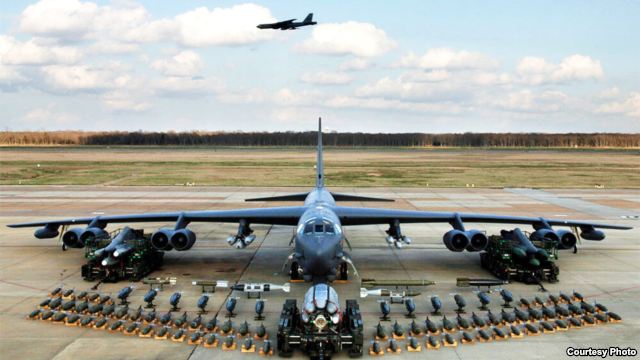
Comment: According to defectors queried by the Daily NK, this was the first use of the public radio system for broadcasting an air raid warning. It was a test because it was too brief to be a civil defense evacuation drill. In large cities they take up to a full day. This is significant because air raid warnings are never broadcast. This was probably a no-notice drill in response to the US announcement about B-52s operating over South Korea.
Air raid warnings were more common in the 1990s, but all were sent via the “Third Broadcast” which is a cable radio system, only accessible in North Korea. The Korean People's Army Broadcasting Station only has been known to use the Third Broadcast.
The use of a nationwide radio broadcast implies the North's leaders expect they will need such a system at a time when people would be away from their homes, in fields, on the street or in public conveyances. They expect the population to respond swiftly according to plan without advance warning. That is uncommonly realistic preparation. The B-52 announcement had effect.
North Korean drones. The Korean Central News Agency reported on 20 March that North Korea launched a drone attack on a simulated South Korean target. The press item touted that Kim Jong Un personally supervised the operation. The drone strike successfully shot down a target mimicking a South Korean cruise missile.
Comment: It is not clear just what transpired in the exercise, whether a drone actually flew. However, South Korean news sources in February 2012 reported North Korea had acquired older US drones, MQM-107D Streaker target drones built by Raytheon, from a Middle Eastern country. South Korea's Yonhap reported they possibly came from Syria. Photos of the drone are available on the Internet.
The North Koreans are extremely good at tinkering with older systems and finding value in materials that would end up on the cutting room floor in the US. Their entire missile program evolved from tinkering with obsolescent systems. They certainly have the science to boost the performance and capabilities of a target drone.
The North Korean news report disclosed information about the status of a fairly new weapons project. They are aware of the threat from Allied cruise missiles and have been working to counter them and probably build their own for over a year.
Did you know that there are more possible moves in a game of chess then there are atoms in the entire universe and seconds that have elapsed since the big bang? In fact, chess can be a virtually endless game. If that’s the case then how do chess masters emerge? What’s the point of trying to study something if the moves are endless? Any good chess player will tell you that one of the keys to success is the ability to recognize patterns and situations to help you identify what the best next move is.
Inequality has been rising in most countries around the world, but it has played out in different ways across countries and regions. The United States, it is increasingly recognized, has the sad distinction of being the most unequal advanced country, though the income gap has also widened to a lesser extent, in Britain, Japan, Canada and Germany. Of course, the situation is even worse in Russia, and some developing countries in Latin America and Africa. But this is a club of which we should not be proud to be a member.
Some big countries — Brazil, Indonesia and Argentina — have become more equal in recent years, and other countries, like Spain, were on that trajectory until the economic crisis of 2007-8.
In July 2011, J. William Leonard, a former director of the Information Security Oversight Office (ISOO), took the extraordinary step of filing a formal complaint with the Office he once led charging that a document used to indict former NSA official Thomas Drake under the Espionage Act had been wrongly classified in violation of the executive order on classification. (“Complaint Seeks Punishment for Classification of Documents” by Scott Shane, New York Times, August 2, 2011; “Ex-federal official calls U.S. classification system ‘dysfunctional'” by Ellen Nakashima, Washington Post, July 21, 2012)
Last December, in a newly disclosed response, John P. Fitzpatrick, the current ISOO director, concluded that Mr. Leonard's complaint did not warrant the sanctions that Mr. Leonard had urged. Neither the original classification of the NSA document, titled “What a Wonderful Success,” nor its continued classification “rise to the level of willful acts in violation of the Order,” Mr. Fitzpatrick wrote in his December 26, 2012 response.
With that, the matter was officially closed. But the divergent views underlying the complaint remain unresolved and continue to fester.
“I have devoted over 34 years to Federal service in the national security arena, to include the last 5 years of my service being responsible for Executive branch-wide oversight of the classification system,” Mr. Leonard wrote in his 2011 complaint. “During that time I have seen many equally egregious examples of the inappropriate assignment of classification controls to information that does not meet the standards for classification; however, I have never seen a more willful example.”