NIGHTWATCH Extract: Anchors Aweigh in Bay of Bengal

Earth Intelligence, IO Mapping, IO Multinational, Military, Peace Intelligence

India: The Chandigarh Tribune reported the results of last Wednesday's bi-annual naval conference, at which Minister of Defence Antony spoke. Antony said the government approved the construction of two new naval bases in the Bay of Bengal, opposite the Malacca Strait and Sri Lanka. At present, the only Indian naval base in Bay of Bengal is the huge naval establishment at Vishakapatnam, the headquarters of the Eastern Naval Command.

The northernmost base will be built at Paradip in Orissa State, closer to Bangladesh and opposite the Malacca Strait. The southernmost base is at Tuticorin in Tamil Nadu State, opposite Sri Lanka.

The Tribune commentator assessed that the two new bases are a counter to China's increased naval presence in the Bay of Bengal, including in Burma and Bangladesh. The Navy has smaller stations in the eastern Indian Ocean, but no full-size bases capable of providing all logistics support, supplies, replenishment, repair and maintenance. A third base for nuclear powered submarines also will be built at a separate location in the Bay of Bengal. The bases will take at least three  years to build.

Comment: Chinese naval interest in the eastern Indian Ocean is spurring the expansion of India's naval infrastructure. China has announced its intention to build a deep sea port at Sonadia near Cox Bazar, Bangladesh. It is also building ports in Burma/Myanmar. All are in the Bay of Bengal.

Most major Indian naval infrastructure construction has been focused against the threat from Pakistan. The new bases represent a shift in Indian strategic thinking — to counter the threat from Chinese poaching in the Indian Ocean, without reducing vigilance against Pakistan. A new naval base in western India was announced in April 2010.

Phi Beta Iota: The maritime environment may well displace the space environment in the 21st Century, as offshore cities and factories come into being (including water desalination plants away from the brown water), and a portion of the population takes to permanent ocean-going residence.  As with outer space, the “Outlaw Sea” are not charted in the sense that most vessels do not have transponders and there is rotten “situational awareness” overall including close-in.  We we re-writing the 450-ship Navy piece today, we would place even more emphasis on getting the 75-ship Expediter into existence, and we would create a surface and air breather arm to the Ocean Surveillance Information System (OSIS) as a new command with global reach and very tight multinational information-sharing and sense-making networks centered at each of the regional multinational decision-support centres that China may fund if the USA does not get its act together.  Whoever owns and operators those regional centers is going to be in the cat-bird seat–they will completely displace the unaffordable ineffective secret C4I grid that DoD and the US IC have now.

See Also:
Search: maritime piracy charts + RECAP

Worth a Look: Book Reviews on Water

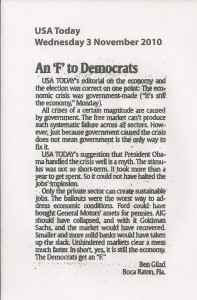
Journal: F for Democrats by Ben Gilad

03 Economy, 07 Other Atrocities, 11 Society, Budgets & Funding, Commerce, Commercial Intelligence, Corporations, Cultural Intelligence, Government, Money, Banks & Concentrated Wealth, Policy, Power Behind-the-Scenes/Special Interests
Click on Image for PDF

Phi Beta Iota: Ben Gilad, one of the top commercial intelligence analysts around, has a point, but he forgets that the modern looting of the USA began in 1981 and reached a cresendo with the Phil Gramm (R-TX) deregulation of the financial “services” industry.   For the most recent and most superb story on the axis of crime from Wall Street to the two political parties sharing the power of the public purse, see Matt Taibbi's book, Griftopia–Bubble Machines, Vampire Squids, and the Long Con That Is Breaking America.

Journal: “Queer Kissing Flash Mob” to Confront Pope

11 Society, Civil Society, Cultural Intelligence
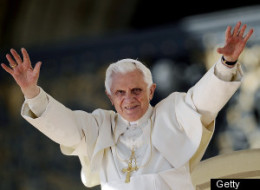
Pope Benedict XVI

Barcelona is known as one of Spain's most vibrant cities, but when Pope Benedict XVI touches down there Sunday, he'll be greeted with something extra colorful: a massive “queer kissing flashmob.”

According to the event's Facebook page, organizers have invited same-sex couples from all over Spain to congregate in front of the city's cathedral Nov. 7 and start kissing as soon as the pope emerges from the building at 10 a.m. Organizers say that though the event will last for a mere two minutes, over 300 people are planning to attend.

Read full article online at Huffington Post….

Journal: Bottom-Up Counter-Terrorism…At No Cost!

09 Terrorism, Civil Society, Collective Intelligence, InfoOps (IO), Intelligence (government), Law Enforcement, Methods & Process

Police, Public Vigilance Foiled 80 Percent of Terror Plots

Homeland Security Today

by Anthony L. Kimery  Tuesday, 02 November 2010

Citizens, state and local law enforcement play vital role in uncovering attacks More than 80 percent of foiled terrorist plots between 1999 and 2009 resulted from observations by citizens or law enforcement officials or from law enforcement investigations, according to a new report by the Institute for Homeland Security Solutions (IHSS) that reviewed open-source information on 86 foiled and successful terrorist plots against US targets from 1999 to 2009.

“Since 2001, the Intelligence Community has sought better ways to detect and prevent domestic terrorist plots, said Kevin Strom, senior research scientist and the report's lead author. “What this report reveals is the vital role played by citizens as well as state and local U.S. law enforcement agencies in uncovering such planned attacks.”

Years ago, Robert David Steele, a noted veteran intelligence officer, told HSToday.us that “fifty percent of the ‘dots’ that prevent the next 9/11 will come from bottom-up [local] level observation” and unconventional intelligence from “private sector parties.”

Read rest of article….

Journal: Labor Strikes in Europe

03 Economy, 11 Society, Civil Society, Commerce, Commercial Intelligence, Cultural Intelligence

Chuck Spinney Recommends...

Squeezing the Working Class

What's Happening in Europe?

By VINCENT NAVARRO

Counterpunch

Europe is seeing some of the largest demonstrations since World War II, with labor agitation being the major trademark. The reasons for this labor unrest are easy to see. Let’s look at several facts, starting with unemployment. Europe has always had lower unemployment than the United States. No longer. Since 1982, unemployment (as an average of the EU-15) has been higher in the European Union than in the United States. Actually, unemployment had already started to rise in Europe by the late 1970s, coinciding with the first steps by the EU-15 countries to construct what they later called the European Union. One consequence of forming this Union was higher unemployment, and from that time, unemployment has increased, eventually exceeding that in the United States.

Read complete article….

Journal: Voting, Markets, and Conversations

11 Society, Civil Society, Cultural Intelligence

Jon Lebkowsky Home

Data, Markets, and Power

There’s an election Tuesday, and you’re probably going to vote – whether your vote is meaningful or not. Some call voting a “ritual,” which is not at all to say that it’s not meaningful – rituals do have meaning. But the word is that it’s a symbolic rather than functional, practical event. The actual eddies and currents of power feel little or no impact from your single vote.

Where can you have a real impact? Doc Searls and colleagues working through Project VRM and the Internet Identity Workshop are catalyzing a redefinition of the computer-mediated vendor/consumer relationship, with the potential to transform power relationships in markets rather than in the political sphere. However market experiences dominate so much of our daily commitment of attention and thinking, a redefinition of marketplace relationships could be a redefinition of relationship and power more broadly. If we assume symmetry in vendor/consumer relationshiops, we will also assume that the relationship of an elected official to her constituents will be more symmetrical.

I’m reading Doc Searls’ “The Data Bubble II,” which includes a lot of homework – links to other articles and posts I might read to get deeper into the subjects of online identity and relationship as they pertain to marketing and the redefinition of vendor/consumer relationships. Doc quotes John Battelle, who discusses how emerging conversational media inspired an economic model he calls conversational marketing, “simply the tip of a very large iceberg, representative of a sea change in how all businesses converse with their constituents – be they customers, partners, or employees.” Battelle calls it “The Conversation Economy,” for which Doc says “we’re going to need individuals who are independent and self-empowered.”

Back to voting: the vote is symbolic of your share as a citizen within a power structure that is supposedly of, for, and by the people, though it’s increasingly obvious that votes and voters are manipulable and nodes within power structures are corruptible. In arguing for a more participatory or democratic set of structures, it’s important to know that supposed majorities are also corruptible and can be crazy as hell. We need structures that empower and that also include checks and balances on those empowered. We want to build sanity into the architecture of power, and ease dependence on the ethics and logic of mere mortals. If we build such structures for markets, they will have an impact on governance as well.

(Also interesting: Doc refers to David Siegel on “The Social Networking Bubble.” Siegel says “We’ve overstated and overemphasized the utility of social networking and are now in a marketer’s ‘greater fool’ territory.”)

Phi Beta Iota: Jim Turner coined the term “buycott.”  Thomas Jefferson and James Madison understood that an informed public was a nation's best defense against enemies both domestic and foreign.  Brother Lebrowsky was a contributing editor to Extreme Democracy, and lives on the bleeding edge where democracy, information, and public minds converge.

Journal: To Vote or Not to Vote, That Is The Question…

Cultural Intelligence

Seth Godin Home

Voting, misunderstood

This year, fewer than 40% of voting age Americans will actually vote.

A serious glitch in self-marketing, I think.

If you don't vote because you're trying to teach politicians a lesson, you're tragically misguided in your strategy. The very politicians you're trying to send a message to don't want you to vote. Since 1960, voting turnouts in mid-term elections are down significantly, and there's one reason: because of TV advertising.

Political TV advertising is designed to do only one thing: suppress the turnout of the opponent's supporters. If the TV ads can turn you off enough not to vote (“they're all bums”) then their strategy has succeeded.

The astonishing thing is that voters haven't figured this out. As the scumminess and nastiness of campaigning and governing has escalated and the flakiness of candidates appears to have escalated as well, we've largely abdicated the high ground and permitted selfish partisans on both sides to hijack the system.

Voting is free. It's fairly fast. It doesn't make you responsible for the outcome, but it sure has an impact on what we have to live with going forward. The only thing that would make it better is free snacks.

Even if you're disgusted, vote. Vote for your least unfavorite choice. But go vote.

Phi Beta Iota: In the Presidential election year, 54.6% or so voted, meaning that the majority within that number that barely elected the incumbent President represented 30% of the eligible voters.  Incumbents are now the clear majority non-party in the USA, but because of decades of “bi-partisan” criminal conspiracy against the public, open ballot access, instant run-off, and liberal absentee ballot use by the poor that cannot juggle work, buses, and voting, have been denied–there are nine specific things that must be done in the way of Electoral Reform.  That is the public challenge between now and 2012.