Afghans say poverty, not Taliban, main cause of war
Jonathon Burch – Wed Nov 18
“ Half our people have been driven mad–always in fear.”
KABUL (Reuters) – Most Afghans see not Taliban militants but poverty, unemployment and government corruption as the main causes of war in their country, according to a report by a leading aid group released on Wednesday.
After three decades of war, Afghanistan remains one of the poorest and least developed countries in the world. It is also one of the most corrupt. Unemployment stands at 40 percent and more than half the country live below the poverty line.
Full Story Online
Retired military officers cash in as well-paid consultants
WASHINGTON — Six months after Marine Lt. Gen. Gary McKissock retired in 2002, he did what many other ex-military leaders do: He joined the board of directors of a defense contractor, a company doing business with his former service.
McKissock also had a second job. The Marines brought him back as an adviser, at double the rate of pay he made on active duty. Since 2005, the Marines have awarded McKissock contracts worth $1.2 million, in addition to his military pension of about $119,000 a year. McKissock is one of at least 158 retired admirals and generals the Pentagon has hired to offer advice under an unusual arrangement.
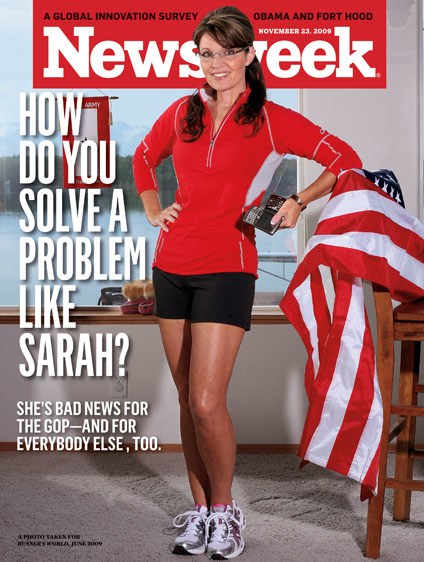
Phi Beta Iota: Poor Newsweek. First they can't afford a photographer of their own, then they develop a cover and story that is patronizing in the extreme, rather than sexist. And then to make it worse, their cover story is so badly ranked beneath stories about the story that they are inviisble. Great photo. Memorable. Newsweek, on the other hand, is NOT memorable.
Across the United States, the media ecosystem is quickly evolving. Some main-stream news organizations are shrinking, as advertising decouples from journalism. Remarkable new technologies and the work of committed citizens are making it easier for us to build unique communities that share civic passion and purpose.
In the Pacific Northwest, this evolution is proceeding rapidly.
Join some 150 editors, writers, broacasters, bloggers, producers, entrepreneurs, philanthropists, educators, students, digital entrepreneurs, media activists, community journalists, public advocates and public-policy experts for, “Reimagining News and Community in the Pacific Northwest.”
Settling An Intelligence Turf War
By Walter Pincus Washington Post November 17, 2009 Pg. 29
Early last week, several long-festering bureaucratic issues that had arisen between Director of National Intelligence Dennis C. Blair and CIA Director Leon Panetta had to be settled by national security adviser James L. Jones, through some Solomon-like decisions.
What would be the consequences of a second Islamic Emirate? My scenarios here are intended analytically, as a first-draft straw-man forecast:
The Nineties Afghan Civil War on Steroids
Momentum for a Taliban Revolution in Pakistan
Increased Islamist Violence Against India, Increasing the Likelihood of Indo-Pakistani War
Increased Al Qaeda Ambitions Against Britain and the United States
Phi Beta Iota: This is a classic status quo “Empire as Usua”l question. It is not only the wrong question, trying to answer it perpetuates the insanity that begot the problem in the first place. Steve Coll, author of Ghost Wars: The Secret History of the CIA, Afghanistan, and Bin Laden, from the Soviet Invasion to September 10, 2001, is a very smart, very well-connected mandarin with The Washington Post as his home base. The question that We the People should be forcing the White House and Congress to answer is this:
What If We Stop Spending $1.3 Trillion a Year on War, and Instead
Spend At Least a Third of That on Peace?
We never ask a question we cannot answer. The answer is clear-cut: we create a prosperous world at peace.See the two graphics below the fold.
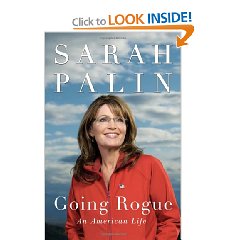
Sarah Palin may claim to scorn elites, but her new book will ring familiar to its Beltway readership.
Getting even with those who crossed her, praising her allies and generally putting a self-serving sheen on last year’s presidential campaign, “Going Rogue” is typical of the political memoir genre of recent vintage. It’s the sort of book that will send the political class scurrying to bookstores, eager to see how they fared in what’s known as “the Washington read.”
With no index, though, Palin’s book has made that ritual more difficult.
Amazon Page
So POLITICO, having obtained a copy of the book before its Tuesday release, has created a reader’s guide to “Going Rogue,” grouping the many characters into three categories: Friends, Foes, In Between.
Below the Fold we provide a commentary and links to a number of books about the prospects for honest independent government in 2012 and beyond.