Berto Jongman: Jeff Richelson’s Collection of Documents on Underground Facilities – Intelligence and Targeting Issues

04 Inter-State Conflict, 08 Proliferation, 08 Wild Cards, Government, IO Deeds of War, Military, Peace Intelligence
Berto Jongman
Berto Jongman

Underground Facilities: Intelligence and Targeting Issues

U.S. Intelligence: Hiding of Military Assets by “Rogue Nations” and Other States a Major Security Challenge for 21st Century

U.S. Documents Describe Monitoring Effort Going Back to Early Cold War Years

National Security Archive Electronic Briefing Book No. 439

UPDATE – September 23, 2013

Originally Posted – March 23, 2012

For more information contact:
Jeffrey T. Richelson – 202/994-7000
nsarchiv@gwu.edu
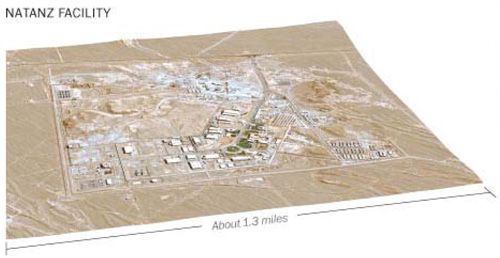
natanzWashington, D.C., September 23, 2013 – While the focus on Syria's chemical weapons use, and the possibility of military action against Syrian government targets pushed aside, for a while, the issue of how to deal with Iran's nuclear program,1 the two situations have one thing in common — their reported reliance on underground facilities to shield the production and storage of weapons of mass destruction.

Documents posted today by the National Security Archive show that such sites in Syria are only the latest in a long line of alleged and real underground facilities that have posed a high priority challenge for U.S. and allied intelligence collection and analysis efforts, as well as for military planners. There may be more than 10,000 such facilities worldwide, many of them in hostile territory, and many presumably intended to hide or protect lethal military equipment and activities, including weapons of mass destruction, that could threaten U.S. or allied interests.

Today's posting features 21 new documents, in addition to the 41 records from the Archive's initial March 23, 2012, posting on this subject. The new materials include several concerning a key topic of Cold War intelligence collection and analysis — hardened and underground communications facilities. Also included for the first time are draft charters for the National Reconnaissance Office (NRO) working group on hardened and buried targets. The majority of the new materials consist of reports from the Asian Studies Detachment (ASD) of the 500th Military Group of the Army Intelligence and Security Command. The ASD reports, based on open source intelligence, focus on various aspects of hardened and buried facilities in North Korea and China.

The 21 new items, with one exception, were acquired via Freedom of Information Act requests or research in the National Archives. The original posting described in detail the agencies and programs the U.S. government has brought to the task of identifying and assessing underground structures in foreign countries since World War II.

Read New Introduction and See Complete List of Documents with Links

4th Media: 80 Percent of U.S. Adults Face Near-Poverty, Unemployment

01 Poverty, 03 Economy, 11 Society, Commerce, Corruption, Cultural Intelligence, Government

4th media cropped80 Percent of U.S. Adults Face Near-Poverty, Unemployment

Four out of 5 U.S. adults struggle with joblessness, near-poverty or reliance on welfare for at least parts of their lives, a sign of deteriorating economic security and an elusive American dream.

Survey data exclusive to The Associated Press points to an increasingly globalized U.S. economy, the widening gap between rich and poor, and the loss of good-paying manufacturing jobs as reasons for the trend.

Read full article.

4th Media: Saudi Intelligence Behind Chemical Attacks in Syria

07 Other Atrocities, 08 Wild Cards, Corruption, Government, IO Deeds of War, Peace Intelligence

4th media croppedSaudi Intelligence Behind Chemical Attacks in Syria But Unfortunately Nobody Will Dare Say That

A senior United Nations official who deals directly with Syrian affairs has told Al-Akhbar that the Syrian government had no involvement in the alleged Ghouta chemical weapons attack: “Of course not, he (President Bashar al-Assad) would be committing suicide.”

When asked who he believed was responsible for the use of chemical munitions in Ghouta, the UN official, who would not permit disclosure of his identity, said: “Saudi intelligence was behind the attacks and unfortunately nobody will dare say that.” The official claims that this information was provided by rebels in Ghouta.

Read full article with many links.

See Also:

Saudi Arabia’s “Chemical Bandar” behind the Chemical Attacks in Syria?

Nandan Nilekani: Digital Indian — And Unique # for Every Citizen

Collective Intelligence, Commercial Intelligence, Peace Intelligence
 Nandan Nilekani

Digital Indians: Nandan Nilekani

Nandan Nilekani moved from working in business to government (Illustrator: Sumit Kumar)

When Nandan Nilekani began working on providing a unique identification number to half of India's billion-plus people four years ago, he ran into a wall of problems.

The main criticism was that 120bn rupees(£1.72bn; $1.89bn) project was also the world's biggest biometric exercise.

Not surprisingly Mr Nilekani, info-tech whizz turned head of the Unique Identification Authority of India, faced tough questions over access and misuse of personal information, surveillance, profiling, securing of confidential information by the government and threats of budget cuts. A parliamentary panel even trashed the idea, saying it would be “misused”.

Read full story.

Marcus Aurelius: Islamic Seat on UN Security Council

Peace Intelligence
Marcus Aurelius
Marcus Aurelius

A frightening prospect if there ever was one…

3. Islamic Bloc Wants Permanent Seat on Security Council

The Islamic world should be granted permanent member status on the United Nations Security Council, according to the Organization of Islamic Cooperation's secretary-general.

At a recent speech in Moscow, Ekmeleddin Ihsanoglu asserted that the 57-member OIC, the largest international organization outside the U.N., deserves “a new position.”

“I think there should be a seat for OIC in the Security Council,” he said. “If you look to the structure of the Council today, you have the [five permanent members] and there are representatives of different civilizations, different cultures, political powers.

“But you won't find a representative of more than 1.6 billion people of the Muslin world.”

Continue reading “Marcus Aurelius: Islamic Seat on UN Security Council”

SchwartzReport: Parks Make Us Smarter

Collective Intelligence, Cultural Intelligence, Peace Intelligence

schwartzreport newBenjamin Franklin understood the truth this report discusses. In his will of 1789, Franklin left money for the building of parks to Boston and Philadelphia, because he believed that creating aesthetic public spaces created greater comity in the community. More than two centuries later we are still learning this lesson.

Parks Make us Smarter – Science Proves It!

HENRY GRABAR – Salon

Last year, a group of Edinburgh architecture researchers asked a dozen students to take a walk. They began on a tree-lined shopping drag, turned along the tranquil northern edge of the Meadows, one of the city’s larger parks, and wound up in a busy commercial district some half-hour later. The pastoral section of an otherwise urban jaunt, the researchers found, induced a significant increase in meditative thinking.

This may not strike you as a novel discovery. Thanks to Henry Thoreau’s trip to Walden Pond, Teddy Roosevelt’s sojourn in the Badlands, and America’s other legends of retreat, the idea that nature has restorative powers is deeply embedded in our culture. Science is in support: A raft of studies credit bucolic settings with reducing aggression, alleviating depression, and improving mental function.

Continue reading “SchwartzReport: Parks Make Us Smarter”

David Swanson: Two Congress Members — One A Republican Questioning War, the Other a Deaf Dumb and Blind Democrat Bought and Paid For….

Peace Intelligence
David Swanson
David Swanson

A Tale of Two Congress Members

By David Swanson

In 2010 in Virginia's Fifth Congressional District, many people who prioritize peace over war probably voted for Democrat Tom Perriello over Republican Robert Hurt.  I know many who did just that.

Here's what Congressman Hurt said on Tuesday about Syria:

“I have repeatedly stated … that before the United States should commit any of its precious American lives or military resources to an attack on the Syrian regime, the President must articulate a compelling American national security interest that requires military action. I have attended classified briefings, and I have concluded that, at this time, the President has not demonstrated that a compelling national security interest is at stake. Because of this, I will not be able to support the Authorization for Use of Military Force resolution should it come to a vote under current circumstances.”

Meanwhile, former Congressman Perriello has advocated, with his colleagues at the Center for American Progress for the United States to “increase its assistance to the Syrian opposition with the goal of supporting an alternative opposition government that is better organized than at present.”  According to Perriello the U.S. has a “national security interest” in “preparing the groundwork for a political and economic transition to a new regime in Syria in the foreseeable future.”

Continue reading “David Swanson: Two Congress Members — One A Republican Questioning War, the Other a Deaf Dumb and Blind Democrat Bought and Paid For….”

noble gold