The game of “Chicken” typically involves two drivers, with cars on a converging course, daring one another to either swerve out of the way or risk a head-on collision. Ideally, one driver swerves and the other wins. The danger, of course, is that both drivers will believe that the other will swerve first and they will end up colliding. In this worst-case scenario, the size of the vehicle and its capacity to absorb the impact are key.
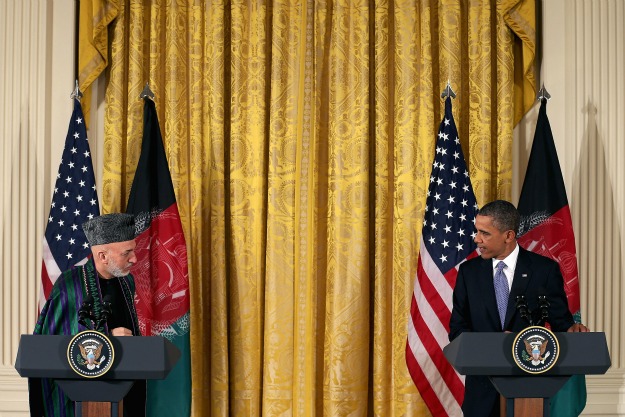
In an Afghan context, the U.S. and Afghan governments are on a collision course in a number of areas and unless cooler heads can prevail, the eventual crash will be devastating, yet totally uneven. For the United States, its international credibility will be undoubtedly damaged; but for the Afghan government, the fallout will be disastrous, and signal the beginning of the end for this period of relative progress and prosperity. Two prime examples of the stakes are the Bilateral Security Agreement (BSA), which will determine the size and shape of the U.S. mission post 2014, and the tussle over taxing U.S. government contractors supporting military operations in Afghanistan.
Following the ill-choreographed opening of the Taliban political office in Qatar, Afghan President Hamid Karzai put the BSA on pause. Even though U.S. officials were quick to admit that the Doha event was embarrassing and not what they had intended, they also made it clear that they had acted with Karzai's blessing. That really should have been the end of it and the negotiations should have resumed.
Karzai's decision to halt the BSA talks was yet another attempt to challenge the United States when Afghan sovereignty was on the line. But with the negotiations still stalled, his move may prove to be a pyrrhic victory. One of the unintended consequences of his decision is that a “zero option” (keeping no U.S. forces in Afghanistan after 2014), which had little support in Washington and in NATO-member capitals, is now being considered in earnest.
Good intentions and clear political willingness to commit significant resources has meant that, waste and inefficiencies aside, the U.S. has been able to muster military and financial support for the war in Afghanistan from nearly 50 nations. Recently, however, Afghan and Coalition allies, along with other influential regional power brokers such as India, are starting to publicly question U.S. policy in Afghanistan, particularly the decision to engage with and support the Taliban in opening a political office in Qatar.
For reasons discussed below, the dialogue between the Taliban and the U.S. should continue, quietly and with limited objectives. But public, ill-choreographed, overly ambitious, and unrealistic attempts at reconciliation will continue to make the Doha peace process a dangerous and distracting sideshow that will hurt rather than support U.S. foreign policy objectives in Afghanistan.
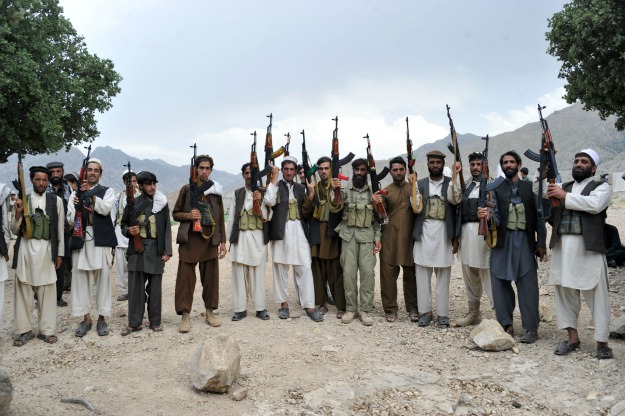
The United States, Afghan, Qatari, and Pakistani governments have all voiced their support for the opening of a Taliban office in Doha in order to promote peace negotiations. Some consider transforming the Taliban from an armed insurgency into a legitimate political group to be the critical first step in the Afghan peace process. However, to date, reconciliation efforts have stalled and focus more on rhetoric rather than substance.
There is no concrete evidence that Taliban leadership is either worn down or desperate to reach a peace agreement. Attempting to secure his legacy as a peacemaker, Afghan President Hamid Karzai wants to reach an agreement before the end of his term in April 2014. Because the Taliban have also cooperated somewhat with this principle of reconciliation, it is not immediately clear why the current approach has achieved nothing.
Viet-Nam Viet-Cong Redux
The answer is that the Doha peace process has been riddled with unrealistic expectations, and remains hopelessly inconsistent. Such reconciliation efforts without strategy and clear objectives reflect a hook without bait – while encouraging, these talks are doomed to fail without significant reform. Only with realistic expectations, a coherent strategy, national solidarity, and lots of patience, will reconciliation stand a chance of materializing.
Where We've Been Thus Far
The reconciliation offer requires three specific things from the Taliban: ending violence, breaking ties with al-Qaeda, and accepting the Afghan Constitution. The fourth, less advertised condition is the acceptance of a residual ISAF element in Afghanistan post-2014. At a recent summit in London, British, Afghan and Pakistani leaders set a six-month timeline to reach a peace settlement.
But substantive results are unlikely to emerge until after the 2014 Afghan Presidential elections. This is the single most important date in the reconciliation process and will set the tone for future debate. A six-month deadline to reach an agreement is not only unrealistic, but also damaging to the credibility of the process.
Maintaining a large military presence in Afghanistan is not in the strategic interests of either the U.S. or the Afghan government. It does not help the United States accomplish its long-term goal of countering terrorism from the Afghanistan-Pakistan region, nor its short-term goal of helping Afghanistan achieve stability and self-reliance in fighting insurgency. It is also economically unsustainable. However, retaining a smaller, lighter, residual presence in Afghanistan is critical to U.S. strategy and vital to core U.S. interests.
Additionally, U.S. strategy in Afghanistan must be based on a vision that goes out decades: Considering only short-term goals amounts to strategic myopia, unworthy of the sacrifices made by almost 2,200 U.S. service members in Afghanistan alone.
A Case for Lighter, Smarter, Long-term Residual Presence
With Osama Bin Laden dead and al-Qaeda's capabilities diminished in the Af-Pak region, the immediate threat of attacks on the U.S. from the region has greatly diminished. But the ingredients that could help Al Qaeda regenerate in the next decade remain, and thus the mission endures.
In fact, the “surge” of U.S. troops in Afghanistan in 2009 had little to do with bin Laden; rather, it was an attempt to rescue the failing mission of stabilizing Afghanistan. Bin Laden was hunted and killed not by the surge, but by a small, specialized group, the likes of which I argue should remain in Afghanistan to monitor and guard against the long-term threat of terrorist cells.
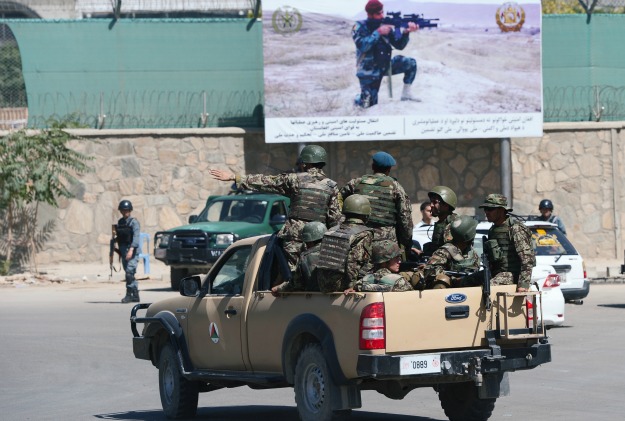
More importantly, a comprehensive counter-terrorism strategy must include the training of the Afghan National Security Forces (ANSF) to counter domestic threats. But this will take significantly longer than estimates suggest. As such, the U.S. must alter its stated strategy in Afghanistan to consider the training and equipping of the ANSF a key element of its plan to counter threats, and support Afghanistan in its domestic fight against terrorists that, left unchecked, could re-emerge. The numbers of trainers must be kept low and should not be outsourced to contractors. Currently, the only elements specifically designed to counter insurgencies are the U.S. Special Operations Forces (SOF). Considering the nuanced task, the training force should be predominantly SOF.
An amazing speech by Rainn Wilson on the coming global revolution that must happen in order for us to move forward as a human race.
“I think that there is another revolution coming. I'm not sure what it's going to look like, but I think it's going to be very interesting and it's going to unfold over the next 10 years.”