
Going viral, over 46,000 views.
English sub-titles, easily read.

The truth at any cost lowers all other costs — curated by former US spy Robert David Steele.
Going viral, over 46,000 views.
English sub-titles, easily read.
Egypt. Extract:
Generally, the Arab monarchies support the new Egyptian government. Elected Muslim governments, including Iran and Malaysia, are hostile. Indonesia, a secular government in a Muslim country, is supportive. What is curious is the hostility or ambivalence of mainstream news outlets and the stated opposition of most Western governments.
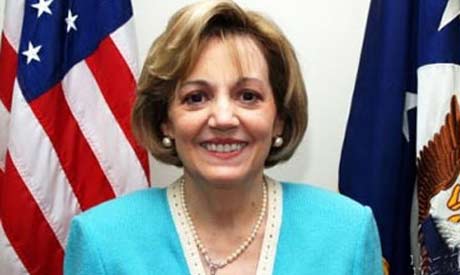
Attitudes towards the US are uniformly hostile, particularly to the US Ambassador who spoke in public on 30 June against the anti-Mursi demonstrations. That speech is cited often as the reason for hostility to the US by the Tamarrud members. Large posters of the Ambassador have her face X'ed out in red paint. The US government has limited influence with Tamarrud which believes the US propped up Mursi. The ambassador should be considered not safe in Cairo.
Continue reading “NIGHTWATCH: US Ambassador in Egypt at Risk”
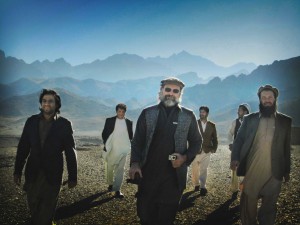
The Merry Pranksters Who Hacked the Afghan War
It was a dark time in a long, drawn-out war. Afghanistan was festering with resentment. The Pentagon brass were desperate. It was the kind of last-ditch moment when authorities start throwing an era’s weirdest ideas at its most hopeless bureaucratic mistakes.
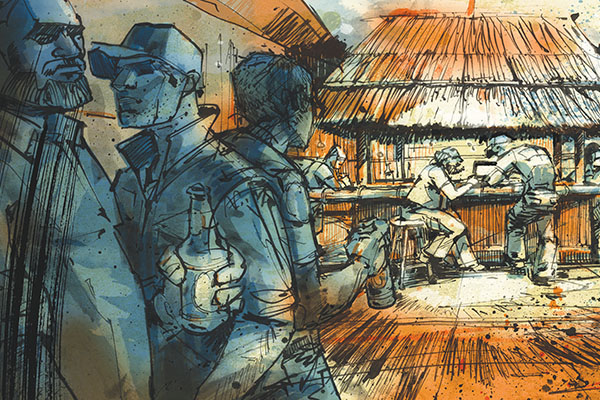
(ILLUSTRATIONS: GRAHAM SMITH)
By
Pacific Magazine, July 1, 2013
For a long time, the Taj Guest House was about the only place you could get a beer in Jalalabad. The provincial capital, about 30 miles from the infamous mountains of Tora Bora, has been the main staging ground for U.S.-led forces in the eastern part of Afghanistan since the early days of the war. When I showed up in the city in November 2011 to report on the propaganda efforts of a franchising Taliban, I found myself at the Taj. There wasn’t much to the pub—just a bamboo-covered bar, a fireplace, a glass-fronted cooler with some Heineken stacked inside, and a few bottles of vodka and other spirits lined up under the red glow of a lamp.
Plus there was an odd little sign: “We share information, communication, (and beer).”
Continue reading “REVEALED: The True Story of Dr. Dr. Dave Warner and the Synergy Strike Force”
I know of three ways to get from today to a prosperous world at peace, a world that works for all — all three merit consideration as a whole.

01. Open Source Everything (OSE). This is the technical solution. The US Government is ignorant and arrogant in part because the cult of secrecy and the ineptitude of chief technical officers, combined with the corruption of political figures that have no interest in knowing anything useful (they attend to those that pay to be heard), have resulted in Washington operating on less than 2% of the relevant information [a typical Country Team collects 20% at most and spills 80% of that in how it handles it] and in the case of the secret world, producing “at best” 4% of what the President or a major commander needs. The future of governance is to be found in bottom-up information sharing and sense-making across all boundaries. Only OSE is affordable, inter-operable, and scalable. This is where the BRICS, the EU, and NATO should be focusing as they create 21st Century Alternative C2 (collaboration and consensus have replaced command and control) — one must give up unilateral command and control in order to gain multilateral command and control.
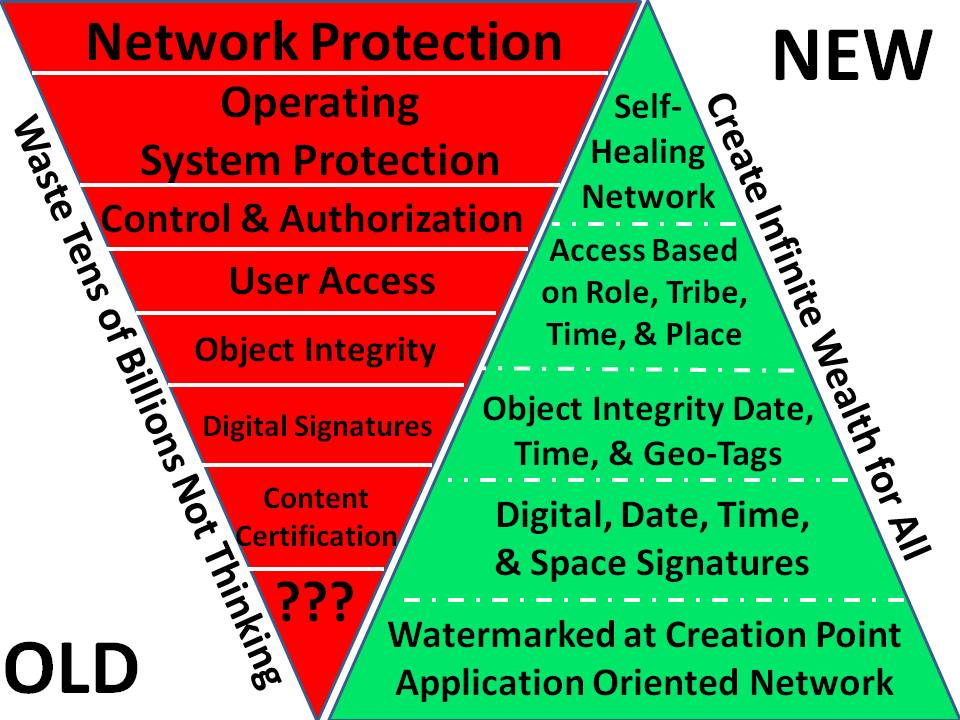
Robert Garigue (RIP) understood what none of the US cyber-chiefs understand: in a decentralized technical environment, human trust is the measure of merit, and security must be embedded such that it is NOT reliant on centralized points that are often asleep, ignorant, arrogant, under-funded, and generally useless. As Col Dr. Max Manwaring and his various contributing authors point out in The Search for Security: A U.S. Grand Strategy for the Twenty-First Century (Praeger, 2003), the primary foundation for both prosperity and peace is LEGITIMACY. A Nobel prize was awarded to the economist that demonstrated that trust lowers the cost of doing business. In brief, proprietary and predatory forms of capitalism have become one. The time has come to create Open Source Ecologies (a fine model is provided by Open Source Ecology, creating a toolkit for civilization), starting with an Autonomous Internet and Liberation Technologies that enable the five billion poor to create infinite wealth. If freedom is our objective, rather than fraud, it demands open source everything. My long-standing vision for an Open Source Agency (OSA) has morphed toward the nurturing of all of the opens as I have discovered that no one open alone will do — they form an unbeatable force for good when combined.
Continue reading “2013 Robert Steele: Concise Summary of Three Paths to a Prosperous World at Peace”
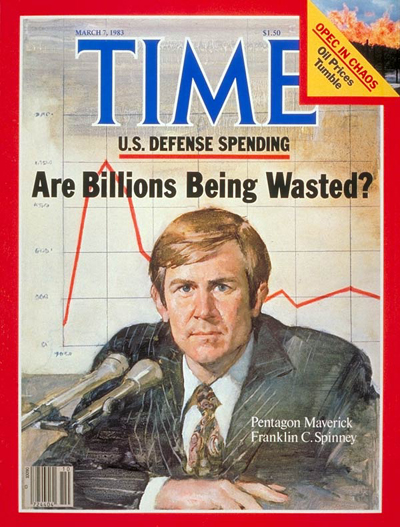
Attached is another excellent report by Patrick Cockburn on the disorientating nature of contemporary yellow journalism in the Syrian Civil War.
Of course, disorientation is not a new problem in war: Sun Tzu said, “All war is based on deception.”
But the ability to manipulate data and images with high-tech computing technology and then distribute that manufactured ‘reality' nearly instantaneously, and at very low cost, has increased and decentralized the power to deceive. This decentralization of the power to disorient has made everyone from Barack Obama to John Q. Average American more vulnerable to the self deception of an incestuously amplifying OODA loop*, and in so doing, it has spread confusion, disorder … and culpability throughout the political decision-making system.
This ambiguity goes beyond centrally orchestrated propaganda and raises what may the central question of contemporary governance in a system based on the assumptions of a representative democracy : Who are the real decision makers in an evolving decision making system (or OODA loop) that is pulled and twisted by a plethora of ephemeral shadows in a cave?
————————–
* Readers unfamiliar with the nature of incestuous amplification in OODA loops will find a brief explanation in my essay Iraq Invasion Anniversery: Inside the Decider's Head.
Chuck Spinney
Port de Plaisance,Taverna, Corsica
Foreign media portrayals of the conflict in Syria are dangerously inaccurate
World View: It is naive not to accept that both sides are capable of manipulating the facts to serve their own interests
Patrick Cockburn
Independent, 30 June 2013
Every time I come to Syria I am struck by how different the situation is on the ground from the way it is pictured in the outside world. The foreign media reporting of the Syrian conflict is surely as inaccurate and misleading as anything we have seen since the start of the First World War. I can't think of any other war or crisis I have covered in which propagandistic, biased or second-hand sources have been so readily accepted by journalists as providers of objective facts.

Huh?
‘We should have talked to Taliban' says top British officer in Afghanistan
Exclusive: General Nick Carter says west could have struck a deal with Taliban leaders after they were toppled a decade ago
Emma Graham-Harrison in Kabul
The Guardian,
The west should have tried talking to the Taliban a decade ago, after they had just been toppled from power, the top British commander in Afghanistan has told the Guardian, barely a week after the latest attempt to bring the insurgent group to the negotiating table stuttered to a halt.
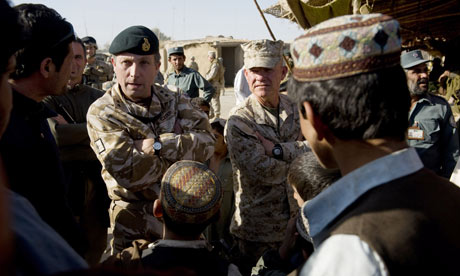
General Nick Carter, deputy commander of the Nato-led coalition, said Afghan forces would need western military and financial support for several years after western combat troops head home in 2014. And he said the Kabul government may have to accept that for some years it would have only shaky control over some remoter parts of the country.
Speaking exclusively to the Guardian, he said: “Back in 2002, the Taliban were on the run. I think that at that stage, if we had been very prescient, we might have spotted that a final political solution to what started in 2001, from our perspective, would have involved getting all Afghans to sit at the table and talk about their future,”
Acknowledging that it was “easy to be wise with the benefit of hindsight”, Carter added: “The problems that we have been encountering over the period since then are essentially political problems, and political problems are only ever solved by people talking to each other.”
Continue reading “Mini-Me: UK General “We Should Have Talked to Taliban” Decade Ago”
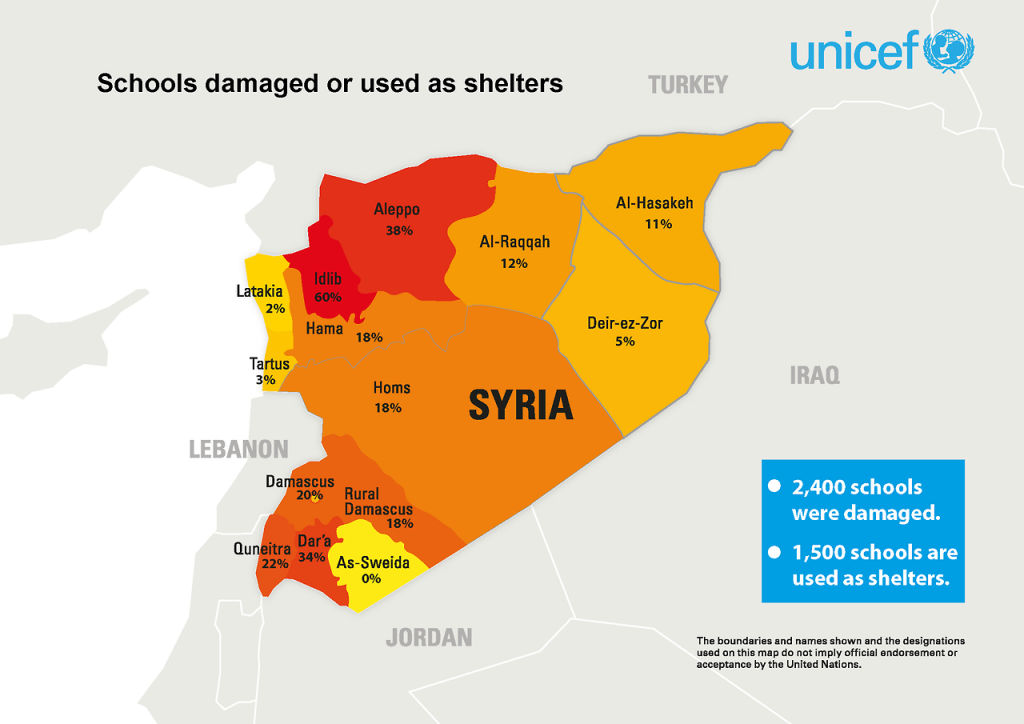
Syria: Yesterday, the official news agency, al Manar, reported that government forces had captured Tal Kalakh near the northern border of Lebanon, after several days of “fierce clashes.” It was a key node for rebel arms smuggling.
Comment: Actually the Syrian army took control of the town over the weekend. Patrick Cockburn visited Tal Kalakh this week to investigate the government claims. He reported his interviews and findings in The Independent today. They are instructive. The rebels and town leaders cut a deal with the Syrian army leaders. The terms of the deal were not disclosed but shops have opened and residents expect no more fighting.
A local Free Syrian Army (FSA) commander said he and his men changed sides because they were disillusioned. A Syrian army officer said the town cut a deal because its leading men wanted to avoid its total destruction as occurred at al Qusayr. The 300-400 FSA men fled to Lebanon or merged back into the population.
Cockburn makes several significant points based on his conversations that are insightful about the nature of the fighting. First is the revelation that many local deals are being brokered or negotiated in many towns to prevent their destruction. Second, the deals are a consequence of the destruction of al Qusayr. Third, the deals are easier when Syrians are talking to Syrians. As a result, the Syrian residents move away from neighborhoods occupied by foreign fighters.
Cockburn judges that the local cease fire agreements are holding and will be critical to ending the violence.
His observations and those of his sources explain the sputtering pace of the fighting and add insight into the government's description of the rebels. The government's negotiating progress falls under or outside the reporting threshold of the mainstream international news agencies. Syrians are more prone to cooperate with the Syrian government than with foreign fighters.
The most important point Cockburn makes is that the simplistic media depiction of Syria as two hostile camps divided by disparity of cult is an inadequate representation of a complex security problem, made much worse by outside interventions.
