A US technology company which had 20 senior staff on board Malaysia Airlines Flight MH370 had just launched a new electronic warfare gadget for military radar systems in the days before the Boeing 777 went missing.
EXTRACT
“Four days after the missing flight MH370 a patent is approved by the Patent Office, four of the five Patent holders are Chinese employees of Freescale Semiconductor of Austin TX.
The US copyright lobby has long argued against open source software – now Indonesia's in the firing line for encouraging the idea in government departments
As if all that wasn't enough, here's another brick to add to the teetering tower of news, courtesy of Andres Guadamuz, a lecturer in law at the University of Edinburgh.
Guadamuz has done some digging and discovered that an influential lobby group is asking the US government to basically consider open source as the equivalent of piracy – or even worse.
“The real question to me is not whether private banks should be allowed to create money through the lending process, but whether – and to what extent – there should be private banking at all. Nationalized banking, at least the nationalization of big banking, should be considered, in my opinion.”
A few days ago, we published a podcast-interview with Ben Dyson, of Positive Money. After sharing it on Facebook, Dmytri Kleiner suggested the following article, written by Peter Cooper and originally published in heteconomist.com, which criticises some of Positive Money’s proposals. Aside from his suggestion to stop playing nice with private banking altogether (which I agree with), Cooper states, “The biggest problem is the notion of an undemocratic, independent committee determining the government’s capacity to create new money”. Conversely, Positive Money argues that “… the MCC (Monetary Creation Committee) is a democratically accountable transparent public body with the remit to work in the public interest.”
Now, to me, “democratically accountable” isn’t the same thing as democratically elected, even if it arguably is, by proxy. Nor do I think that representative democracy is all that democratic, but I understand Positive Money’s choice to keep their narrative within mainstream ideology, even if a lot of it is quite subversive. They’re certainly doing a good job of opening Pandora’s box in exposing money creation, and it’s my hope that this will serve as a gateway drug to the work of Silvio Gesell or Charles Eisenstein, among others.
We’ve long known that life isn’t fair and that the world’s wealth is unevenly distributed. But the latest factoid from Oxfam on global poverty and inequality is breathtaking. In a new report, the nonprofit reports that just 85 people—the richest of the world’s rich—hold as much wealth as the poorest 3.5 billion. That’s half the world’s population.
In other words, the top 0.00000001 percent are worth as much as the bottom 50 percent combined. The top 1 percent, meanwhile, control nearly half the world’s wealth, or 65 times as much as the world’s less-fortunate half.
This kind of report should engender outrage. We can not feed little children nor care properly for the poor and disabled. But welfare for corporations knows no bounds. It is absolutely mad, and it is destroying us. Most of us are aware that the government gives mountains of cash to powerful corporations in the form of tax breaks, grants, loans and subsidies–what some have called “corporate welfare.” However, little has been revealed about exactly how much money Washington is forking over to mega businesses. Until now.
A new venture called Open the Books, based in Illinois, was founded with a mission to bring transparency to how the federal budget is spent. And what they found is shocking: between 2000 and 2012, the top Fortune 100 companies received $1.2 trillion from the government. That doesn't include all the billions of dollars doled out to housing, auto and banking enterprises in 2008-2009, nor does it include ethanol subsidies to agribusiness or tax breaks for wind turbine makers.
What Open the Book's forthcoming report [3] does reveal is that the most valuable contracts between the government and private firms were for military procrument deals, including Lockheed Martin ($392 billion), General Dynamics ($170 billion), and United Technologies ($73 billion).
Food prices are expected to see their biggest annual increase in the past three years thanks mostly to devastating drought conditions all over the world. Dry conditions mean poor crop production; poor crop production means fewer livestock; and fewer livestock means higher prices for meats and dairy at the grocery store. That plus a pinch on products like cocoa, sugar, wheat, rice and especially coffee have the Bureau of Labor Statistics predicting a big bump in food costs.
Higher meat and dairy prices are mostly the culprits in the United States, thanks in part to ongoing drought conditions in the Midwest and Great Plains that have forced ranchers to cull their herds rather than pay exorbitant prices to feed the animals. Inflation of corn and soybean products could be managed if farmers receive favorable conditions for their crops this summer, in turn driving down prices of animal feed as well as products for human consumption. Still, consumers could pay as much as $1 more per gallon for milk at the store to compensate for low supplies mixed with high demand.
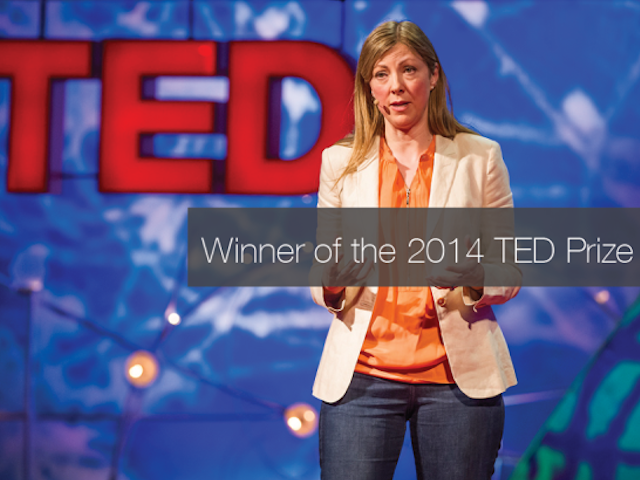
Anti-corruption activist Charmian Gooch launched a new global campaign on Tuesday night to unmask shell corporations and lobby for legislation requiring more transparency, using a newly awarded $1 million TED Prize.
The Global Witness co-founder won the prestigious award to expand on her organization’s work to unmask shell companies used by dictators, criminals and terrorists for money laundering and to hide assets around the world.
Click on Image to Enlarge
“My wish is for us to know who owns and controls companies, so that they can no longer be used anonymously against the public good,” Gooch said while accepting the award and unveiling her wish. “Together, let’s ignite world opinion, change the law, and together launch a new era of openness in business.”
“This isn’t just a dry policy issue,” Gooch added. “This is a human issue which affects us all. This is about being on the right side of history.”
Shell companies are widely used around the globe by people and entities that want to conceal financial transactions or the true ownership of corporations. Activists have argued that widespread use of shell corporations have made it easier for dictators and criminals to hide money, evade taxes, or illegally transfer assets.