Inequality has been rising in most countries around the world, but it has played out in different ways across countries and regions. The United States, it is increasingly recognized, has the sad distinction of being the most unequal advanced country, though the income gap has also widened to a lesser extent, in Britain, Japan, Canada and Germany. Of course, the situation is even worse in Russia, and some developing countries in Latin America and Africa. But this is a club of which we should not be proud to be a member.
Some big countries — Brazil, Indonesia and Argentina — have become more equal in recent years, and other countries, like Spain, were on that trajectory until the economic crisis of 2007-8.
In July 2011, J. William Leonard, a former director of the Information Security Oversight Office (ISOO), took the extraordinary step of filing a formal complaint with the Office he once led charging that a document used to indict former NSA official Thomas Drake under the Espionage Act had been wrongly classified in violation of the executive order on classification. (“Complaint Seeks Punishment for Classification of Documents” by Scott Shane, New York Times, August 2, 2011; “Ex-federal official calls U.S. classification system ‘dysfunctional'” by Ellen Nakashima, Washington Post, July 21, 2012)
Last December, in a newly disclosed response, John P. Fitzpatrick, the current ISOO director, concluded that Mr. Leonard's complaint did not warrant the sanctions that Mr. Leonard had urged. Neither the original classification of the NSA document, titled “What a Wonderful Success,” nor its continued classification “rise to the level of willful acts in violation of the Order,” Mr. Fitzpatrick wrote in his December 26, 2012 response.
With that, the matter was officially closed. But the divergent views underlying the complaint remain unresolved and continue to fester.
“I have devoted over 34 years to Federal service in the national security arena, to include the last 5 years of my service being responsible for Executive branch-wide oversight of the classification system,” Mr. Leonard wrote in his 2011 complaint. “During that time I have seen many equally egregious examples of the inappropriate assignment of classification controls to information that does not meet the standards for classification; however, I have never seen a more willful example.”
March 19, 2013. Ten years ago today the Bush regime invaded Iraq. It is known that the justification for the invasion was a packet of lies orchestrated by the neoconservative Bush regime in order to deceive the United Nations and the American people.
The US Secretary of State at that time, General Colin Powell, has expressed his regrets that he was used by the Bush regime to deceive the United Nations with fake intelligence that the Bush and Blair regimes knew to be fake. But the despicable presstitute media has not apologized to the American people for serving the corrupt Bush regime as its Ministry of Propaganda and Lies.
It is difficult to discern which is the most despicable, the corrupt Bush regime, the presstitutes that enabled it, or the corrupt Obama regime that refuses to prosecute the Bush regime for its unambiguous war crimes, crimes against the US Constitution, crimes against US statutory law, and crimes against humanity.
In his book, Cultures Of War, the distinguished historian John W. Dower observes that the concrete acts of war unleashed by the Japanese in the 20th century and the Bush imperial presidency in the 21st century “invite comparative analysis of outright war crimes like torture and other transgressions. Imperial Japan’s black deeds have left an indelible stain on the nation’s honor and good name, and it remains to be seen how lasting the damage to America’s reputation will be. In this regard, the Bush administration’s war planners are fortunate in having been able to evade formal and serious investigation remotely comparable to what the Allied powers pursued vis-a-vis Japan and Germany after World War II.”
The media is doing its usual vapid tour of the 10th “anniversary” of the American invasion of Iraq. Far better to consider how the nation permitted the disgrace to happen. Mike Lofgren cites three important lessons to learn.
For myself, I believe it most important to consider the domestic politics and careerist posturing that drives civilian (and military) leaders to beat the drums of war in order to manipulate political (and budgetary) decisions, or worse to simply advocate war.
Consider Mike's lessons below as you read in the morning news articles of the current US B-52 exercises over the Korean peninsula and the hysteria of the Joint Chiefs of Staff in reacting to a historically minor budget correction. Given the nature of the North Korean regime, is this the time to bait them? Have the Joint Chiefs shown they are capable to dealing with budget events they have only had a year and a half to prepare for? Is there an American domestic political (and budgetary) content to the US escalation of events in Korea?
As you read Mike's important column below, it is useful to think about such questions.
On the decennial of the U.S. invasion of Iraq, the persons responsible have shown remarkably little guilt over launching an unprovoked war of aggression, even when the lamentable results might be expected to give one pause to rethink the enterprise. Marveling at the complacency about Iraq of America's foreign policy elite as they are fawningly interviewed on the Sunday talk shows, columnist Alex Pareene says that “[p]eople who were integral in the decision to wage that war sat there and opined on what the United States should do about Iran and China and North Korea and no one laughed them out of the room. It was disgusting.” Disgusting, but hardly surprising here in the United States of Amnesia.
Are there any lessons to be drawn from the debacle? Here are three tentative conclusions:
Cyprus: Comment. International press outlets have provided detailed reporting on the so-called tax Cypriot leaders have proposed imposing on bank deposits to help pay for an international bailout. Cyprus is the fifth European Union country to request a bailout. The issues are complex and not relevant to this brief discussion.
NightWatch sees three threats in the situation.First is the breakdown of public confidence in the government and public financial institutions.That is already manifest in the run on ATMs. Banks on Cyprus were closed on the 18th, but the run on the banks should continue when they open on the 19th. There will not be enough cash to service the customers. Civil disorders should be expected.
The breakdown in confidence feeds the second threat which is the breakdown in respect for law and order. Cyprus is one step away from widespread rioting and a serious breakdown in public order. Rioting is likely when ordinary citizens conclude that they are powerless to protect what they have earned and no amount of effort on their part ensures their property rights.
The third threat is that the fear of losing everything will spread to other countries.
The below article, which appeared in the Atlantic last January, is a very important illustration of how domestic politics determine foreign policy. Bear in mind, the behaviour described below occurred when there was (and still is) a consensus among the pol-mil intellectuals that domestic politics stops at the water's edge and that foreign policy was and should be bi-partisan — the conclusion is a good analysis of where this kind of romantic intellectualization leads.
By Benjamin Schwarz, The Atlantic, 11 January 1913
EXTRACT
On that very first day of the ExComm meetings, McNamara provided a wider perspective on the missiles’ significance: “I’ll be quite frank. I don’t think there is a military problem here … This is a domestic, political problem.” In a 1987 interview, McNamara explained: “You have to remember that, right from the beginning, it was President Kennedy who said that it was politically unacceptable for us to leave those missile sites alone. He didn’t say militarily, he said politically.” What largely made the missiles politically unacceptable was Kennedy’s conspicuous and fervent hostility toward the Castro regime—a stance, Kennedy admitted at an ExComm meeting, that America’s European allies thought was “a fixation” and “slightly demented.”
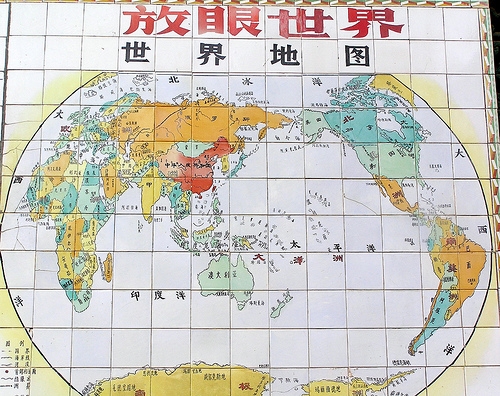
China: The National People's Congress ended on the 17th with a press conference by Premier Li Keqiang. Before the closing, however, President Xi Jinping delivered his first address to the Congress. The central theme was The Chinese Dream.
Eight of the 17 paragraphs of the text were devoted to, or carried forward the application of, the dream. One of them reiterated the guidance Xi gave to the People's Liberation Army delegates on the 11th: obey the party, win wars and behave well.
Xi introduced the dream immediately after four paragraphs of thanks and preamble. The concluding, sentence of the second paragraph of the introduction is significant.
“Today, our people's republic is standing on the East of the world with a spirited posture.”
Comment: The point is that Xi did not describe China's posture as rising, but as standing. The period of rising has ended.
After the fourth paragraph of introduction, Xi began the discussion and for the Chinese dream.