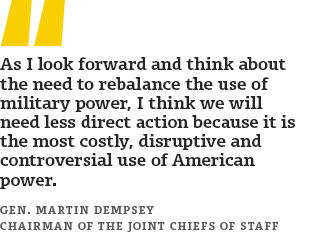
Dempsey Wants to ‘Rebalance the Use of Military Power’
By James Kitfield
Defense One, May 12, 2014
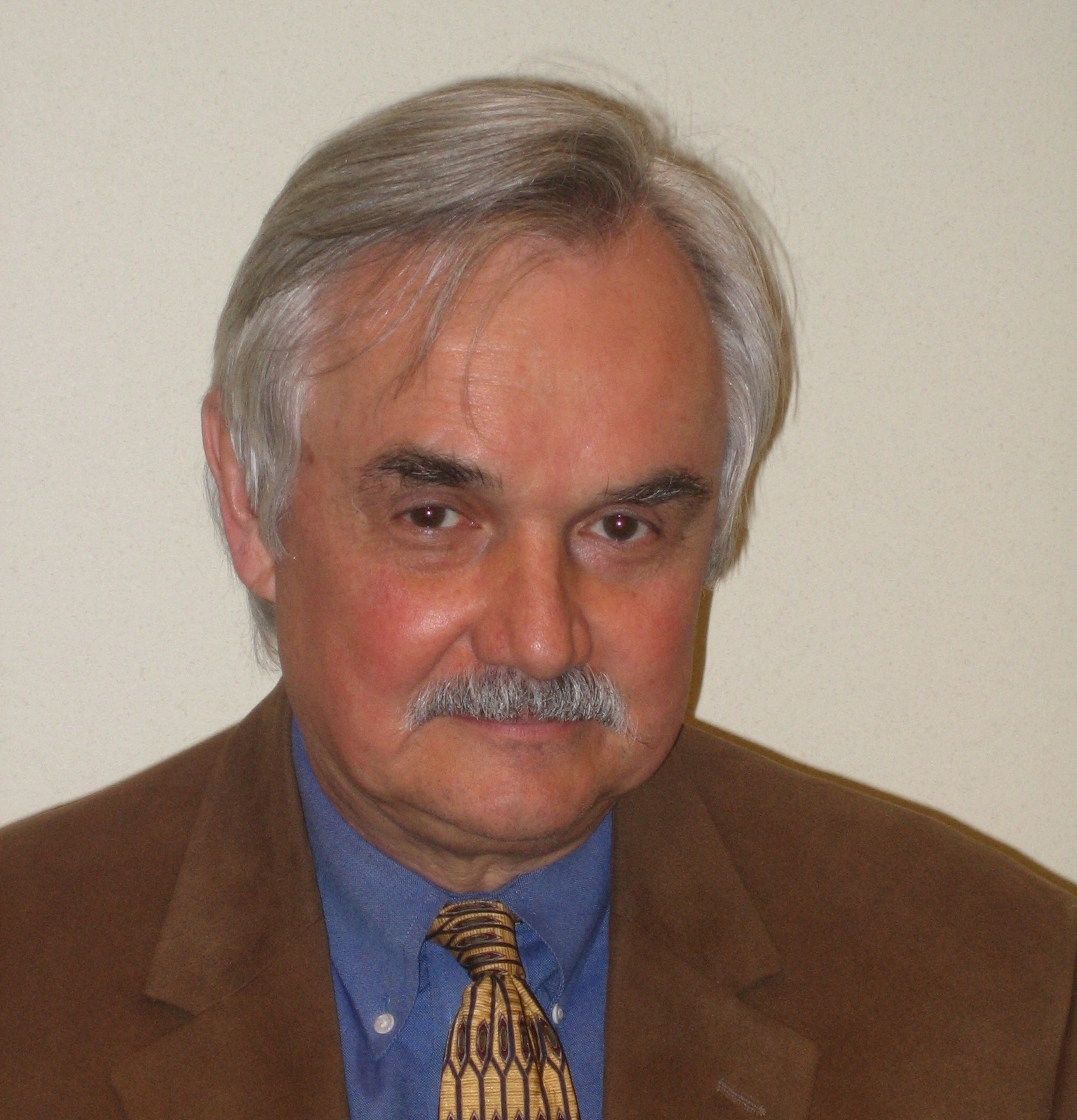
At the top of the United States military’s vast, global bureaucracy sits the chairman of the Joint Chiefs of Staff, the highest-ranking military officer in the land and the president’s senior military advisor. The chairman sits between the four-star service chiefs on one side, and the four-star combatant commanders on the other. The chiefs are responsible for developing, training and equipping the armed forces for the future. The commanders are responsible for deploying those forces, and their focus is on the application of military power to mitigate crises of the day. Between them in that “supply and demand” equation sits Gen. Martin Dempsey mitigating disputes and fashioning tradeoffs.
As U.S. combat forces withdraw from Afghanistan this year, the service chiefs are trying to manage a force drawdown across the military as combatant commanders cope with myriad crises and an unstable world. That has made Dempsey’s job one of the most difficult of any chairman of the Joint Chiefs in modern times. Defense One contributor James Kitfield recently discussed those challenges with Dempsey. Edited excerpts from their interview follow:
Defense One: Even before the U.S. has pulled its last combat troops out of Afghanistan, the administration is being widely criticized for its reluctance to use military force in response to numerous other crises. How do you balance the frequent demands for a U.S. military response with a stressed force and war-weary American public?
Dempsey: Well, I’m going to get a little philosophic with you here, but when you look at what the military instrument of power can accomplish, it is actually more effective in dealing with strength-on-strength situations than it is in dealing with strength-on-weakness scenarios. And we’re finding that a weakening of structures and central authority is pervasive in today’s world. The Middle East is a poster child for that dynamic. But if you look at almost any sector of civilization – from international organizations, to big corporations to places of worship – their authority has diminished over the past decade. That has to do with the spread of technology that has made information so ubiquitous in today’s world. But the result has been a weakened international order. And frankly, it’s harder to articulate the proper use of military power in that environment as opposed to a world with stronger centers of authority.