
This looks like a nice simple free tool to enhance students video projects and make them easier to share. Very quick and simple to use.

The truth at any cost lowers all other costs — curated by former US spy Robert David Steele.
This looks like a nice simple free tool to enhance students video projects and make them easier to share. Very quick and simple to use.
An Introductory Guide to Content Curation
If you are interested in understanding what content curation is all about and where's its key value, you will find this reading material relevant to your learning goal.
In this reading collection (25 articles) you can learn how curation can be a fantastic instrument for learning, journalism and marketing, as it provides the means to create value, to find unique resources and to illustrate them, and in this process it showcases your competence and expertise on the matter (or the one of your company / organization).
If you are just starting out with content curation, this learning playlist will provide you with all the basic info you need to know to better understand this new activity and its relevance in our times.

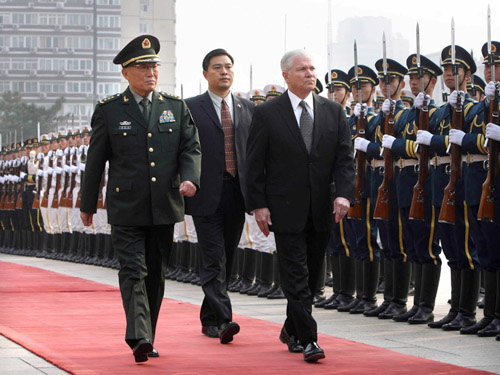
Robert Gates: A man still at war
Washington Post, 12 January 2014
Skagit County, Wash. — Robert M. Gates is a crier. He is also an expert at restraining himself.
The war is fought in the throat, and lost in the eyes.
 He clears his throat as if it will hitch his composure back into compliance. His eyes, however, water and redden. It’s clear what will happen if he blinks.
“I’m — ” he says and stops.
“I’m — ” he says and stops.
“I think I’m — ” he says and stops. “I think I’m at peace.”
He sits in a wooden swivel chair but has stopped swiveling.

Data Broker Offered Sensitive Lists for Sale
Now this is downright creepy. The Wall Street Journal’s tech site Digits notifies us that “Data Broker Removes Rape-Victims List After Journal Inquiry.” As the headline states, the list has now been removed, but yikes! Medbase200 offered this tragic roster for sale, along with ones listing victims of domestic violence, HIV/AIDS patients, and “peer pressure sufferers”, until an inquiry from the Wall Street Journal prompted them to remove them all. This looks like a very large hole in our HIPPA protections.
Writer Elizabeth Dwoskin reports:
Continue reading “Stephen E. Arnold: Been Raped? There's a List for Sale with Your Name On It…”

Putting the Steele into intelligence reform
Robert Steele is one of the more interesting writers on intelligence. Based in the US, and a former practitioner he has brought an enormous amount of energy to the questions around intelligence effectiveness and intelligence reform, and can rightly be thought of as a grandfather of the open source intelligence movement, and more recently the expanded “Open Source Everything” meme. I should insert the health warning that he has appeared in the Companion guide that Mike Goodman, Claudia Hillebrand and I edited, so I am not entirely impartial on this, but I would place myself as a ‘critical friend’ of his work.[i]
He has recently published a semi-manifesto piece about US intelligence and it can be found on this link. I have distilled the following key points from it, that I want to write around briefly here, but the original piece is where his take on these issues sit, obviously: 1) intelligence should be about decision support; 2) intelligence is currently being justified along the lines of the quantity of secrets it produces the Executive without regard to the total government need; 3) there is a dominant discourse that only secret intelligence agencies are equipped to ‘do’ intelligence; 4) Parliament and politicians in general desperately need intelligence qua decision-support, sense-making applied to all information secret and open that applies to their functional domains; and 5) the public desperately needs intelligence, again in the form of decision support. Recently the public has become the object – Americans would say the target – of intelligence agencies, which is quite the opposite of the public being a virtual intelligence network in being, contributing to national and public security more effectively by leveraging the creative commons approach to information, what some call collective or co-intelligence.[ii]
Continue reading “Rob Dover: Putting the Steele into intelligence reform”

Dumb, computers are.
A Busy Doctor’s Right Hand, Ever Ready to Type
Amid the controlled chaos that defines an average afternoon in an urban emergency department, Dr. Marian Bednar, an emergency room physician in Dallas, entered the exam room of an older woman who had fallen while walking her dog. Like any doctor, she asked questions, conducted an exam and gave a diagnosis — in this case, a fractured hand — while also doing something many physicians in today’s computerized world are no longer free to do: She gave the patient her full attention.
Standing a few feet away, tapping quickly and quietly at a laptop computer cradled in the crook of her left arm, was Amanda Nieto, 27, Dr. Bednar’s scribe and constant shadow. While Ms. Nieto updated the patient’s electronic chart, Dr. Bednar spoke to the woman, losing eye contact only to focus on the injured hand.
Continue reading “Yoda: Human-Centric Computing — One Example”
“Flock” of Nano Satellites to Capture High-Res Views of Whole Earth
A private San Francisco start-up has launched the largest-ever ensemble of Earth-imaging satellites
Scientific American, 10 January 2014
The constellation of Earth-imaging satellites launched yesterday—28 individual sputniks, called “Doves,” each about the size of its namesake and weighing in at a svelte five kilograms—is on its way to the International Space Station. If all goes well, by the end of the month “Flock 1,” as the group is called, will distribute its nanosatellites in Earth orbit, the better to photograph the complete surface of the planet at high resolution 365 days a year. The satellites will provide near-continuous pictures of Earth’s surface at a resolution of three to five meters per pixel.
Planet Labs, the San Francisco start-up that built Flock 1, is one of a growing group of companies and governments launching very small satellites. As their cost and size have plummeted, partly in response to the availability of standardized off-the-shelf components, nanosatellites such as CubeSat, have opened up unprecedented opportunities in remote sensing. Unlike traditional Earth-imaging satellites, which cost millions to build and launch, each of Planet Labs’ diminutive sky cameras, which in its predeployed state resembles a child’s kaleidoscope, comes in at a fraction of that cost.
