Earlier today, former National Security Agency (NSA) Senior Executive Thomas Drake addressed a special Civil Liberties Committee (LIBE) created by the European Parliament to investigate spying efforts by the United States and EU countries. Addressing specially-appointed Members of the European Parliament (MEPs), Drake spoke as a former NSA crypto-linguist who witnessed what he describes as a “persistent surveillance state” that was “born during the first few critical weeks and months following 9/11.”
Drake, a whistleblower, was the subject of a federal criminal leak investigation and faced a potential 35 years under a 10-felony count indictment, including five counts under the Espionage Act. In 2011, the federal government dropped all charges against Drake.
Nearly every product or service has the potential to sell to multiple target audiences, but most companies focus only on their core customers. Isn't it time to play the field a little?
Back in the 1980s, Plano plastic tackle boxes were a must for fishing enthusiasts. When game show hostess Vanna White was photographed with her tackle box full of cosmetics, Plano began making Caboodles, colorful versions of the boxes. Within five years the new customers were buying more than the fishing crowd ever did. Does this count as “out of the box” thinking?
The Caboodles story is no anomaly; here are more:
Guns and Doses: The pellets for paintball sports use the same gelcap casings featured in prescription and over-the-counter medications – and the pellets are made by the same manufacturers.
Puccini, Pygmalion, and popcorn: The New York Metropolitan Opera House and the U.K.’s National Theatre Live film their world-class productions for screening at movie theaters globally. The arts organizations get much-needed funds and the theaters get new patrons.
Leveraging 101: Most community colleges have the facilities, equipment, and staff for workforce training and retraining, so some companies are partnering with their local campus to offer a specialized curriculum just for their employees.
A classic case: Pelican Products‘ watertight, bomb-proof cases are perfect for transporting weapons, electronics, and engines. Thanks to new temperature control features, the cases are now also in demand for transporting blood, vaccines and other sensitive substances.
Boardroom service: Ritz-Carlton Hotels, known around the world for extraordinary customer service, launched The Ritz-Carlton Leadership Center in 2000 to teach its philosophy and techniques to organizations in every sector. Notable clients include Apple and the U.S. Navy.
How can you look at your products, services, technologies, skills, and facilities with fresh eyes to find ways to grow your company and create value for new customers? Get help! Sharp Market Intelligence identifies unknown “other” markets and customers who are already buying your offerings but don’t fit your customer profile.
SharpInsightsare byte-size bits of food for thought for executives. You are welcome to forward this message to colleagues, tweet or reprint it, as long as you credit us and link to the source: http://www.sharpmarket.com Want more SharpInsights? Visit the archives.
The Afghan War is officially winding down. American casualties, generally from towns and suburbs you’ve never heard of unless you were born there, are still coming in. Though far fewer American troops are in the field with Afghan forces, devastating “insider attacks” in which a soldier or policeman turns his gun on his American allies, trainers, or mentors still periodically occur. Civilian casualties continue to rise. “Surgically precise” U.S. air and drone strikes still mysteriously kill Afghan civilians. And as U.S. combat troops withdraw, Afghan-on-Afghan fighting is actually increasing, with the U.S.-trained army taking almost Vietnam-level, possibly unsustainable casualties (100 or more dead a week), while the police are similarly hit hard.
Meanwhile, as TomDispatch regular Ann Jones points out, our second longest war has already played Houdini, doing a remarkable disappearing job in “the homeland.” Almost 12 years after it began, no one here, it seems, is considering how to assess American “success” on that distant battlefield. But were we to do so, what possible gauge might we use? Here’s a suggestion: how about opium production? In 1979, the year America’s first Afghan war (against the Soviets) began, that country was producing just 250 tons of opium; by the early years of the post-9/11 American occupation of the country, that figure had hit 3,400 tons. Between 2006 and the present, it’s ranged from a 2007 high of 8,200 tons to a low of just under 5,000 tons. Officials of Russia’s Federal Drug Control Service now claim that 40,000 tons of illicit opiates have been stockpiled in Afghanistan, mostly to be marketed abroad. As of 2012, it was the world’s leading supplier of opium, with 74% of the global market, a figure that was expected to hit 90% as U.S. combat troops leave (and foreign aid flees). In other words, success in an endless war in that country has meant creating the world’s first true narco-state. It's a record to consider. Not for nothing, it seems, were all those billons of dollars expended, not without accomplishments do we leave (if we are actually leaving).
INFORMATION SHARING AND COLLABORATION IN THE UNITED STATES INTELLIGENCE COMMUNITY: AN ETHNOGRAPHIC STUDY OF THE
NATIONAL COUNTERTERRORISM CENTER
Bridget Rose Nolan
A DISSERTATION in Sociology Presented to the Faculties of the University of Pennsylvania in Partial Fulfillment of the Requirements for the Degree of Doctor of Philosophy
On balance, then, the combination of structural and cultural issues discussed in this dissertation—the role of status, the flow of information, and the tension between secrecy and openness—suggests that NCTC has not achieved the information sharing and collaboration envisioned by the 9/11 Commission.
Welcome to the Free Software Supporter, the Free Software Foundation's monthly news digest and action update — being read by you and 70,716 other activists. That's 1,090 more than last month!
FSF seeks full-time senior GNU/Linux systems administrator
Questions about DRM? Visit our new FAQ
GNU's big “three-o”
New iPhones put more polish on Apple's restrictions
Interview with Caleb James DeLisle of cjdns
Recap of New Haven Software Freedom Day Cryptoparty
June 2013 – Torreón, Mexico – RMS at the Museo Arocena
Show your allegiance to GNU at the office with this GNU polo shirt!
Celebrate GNU's 30th birthday with this commemorative mug!
Twenty-one organizations ask Italian Data Protection Authority to publish readable documents
Jamaica Ministry of Health adopts GNU Health
LibreOffice migration in Valencia, Spain complete
MediaGoblin 0.5.0: Goblin Force
LibrePlanet featured resource: GNU 30th media
GNU Spotlight with Karl Berry: 23 new GNU releases!
GNU Toolchain Update
Richard Stallman's speaking schedule and other FSF events
Thank GNUs!
Take action with the FSF!
FSF seeks full-time senior GNU/Linux systems administrator
From September 24th
The FSF seeks a full-time senior systems administrator. The ideal candidate will be a well-rounded GNU/Linux systems administrator who enjoys learning and problem-solving. (S)he will be familiar with the free software community and how it works, and will be more interested in making a substantial contribution to software freedom and having employment consistent with ethical ideals than obtaining the highest salary.
The anti-DRM team at Defective by Design has compiled a Digital Restrictions Management (DRM) FAQ, or “Frequently Asked Questions” list, to address the most common misconceptions regarding DRM.
This past weekend, the FSF celebrated thirty years of GNU with free software supporters around from the world at our event in Cambridge, MA and at satellite events being held in eighteen different cities.
New iPhones put more polish on Apple's restrictions
From September 10th
As with previous iPhones, apps and devices come with a kill switch, third party peripherals are arbitrarily restricted, books and other media purchased from iTunes come with DRM, and all software must be cryptographically signed and approved by Apple. The iPhone 5s and 5c succeed in leaving their users at the mercy of Apple.
This is the latest installment of our Licensing and Compliance Lab's series on free software developers who choose GNU licenses for their works. In this edition, we talk to Caleb James DeLisle of cjdns, a mesh networking application.
Recap of New Haven Software Freedom Day Cryptoparty
From September 26th
Joshua Gay, FSF licensing and compliance manager, helped host and run a Software Freedom Day event in New Haven, Connecticut where he currently lives and works.
June 2013 – Torreón, Mexico – RMS at the Museo Arocena
From September 25th
On June 13th, 2013, RMS was at the Museo Arocena, in Torreón, Mexico, to give a speech hosted by the GULAG (the La Laguna GNU/Linux User Group) for their seventh Free Software Conference, to students, professors, and the general public.
Show your allegiance to GNU at the office with this GNU polo shirt!
From September 26th
Polo shirts featuring the new GNU head logo are now available in the GNU Press store for $35. Also available are limited edition GNU 30th anniversary travel mugs for $25.
Celebrate GNU's 30th birthday with this commemorative mug!
From September 27th
Celebrate the 30th anniversary of GNU with this limited edition commemorative travel mug. The side of the cup features the outline of the new GNU mascot logo in front of a rising yellow sun, and the lid is blue.
Twenty-one organizations ask Italian Data Protection Authority to publish readable documents
By FSF Europe, from September 21st
The Free Software Foundation Europe and twenty Italian civil society organizations wrote a letter to the President of the Authority for the Protection of Personal Data, asking the agency to ensure that all documents published on its website can be read and used with Free Software programs.
The Jamaica Ministry of Health and GNU Solidario have signed an agreement to cooperate in the implementation of GNU Health as the Free Health and Hospital Information System in this country.
The Valencia autonomous region government expects to save around 1.5 million euro per year on proprietary software licenses since having finished the migration to LibreOffice on all 120,000 desktop PCs of the administration which includes schools and courts. More important than the money, they have made a great advance toward user freedom.
Join the FSF and friends in updating the Free Software Directory
From September 30th
Tens of thousands of people visit directory.fsf.org each month to discover free software. Each entry in the Directory contains a wealth of useful information, from basic category and descriptions to version control, IRC channels, documentation, and licensing. The Free Software Directory has been a great resource to software users over the past decade, but it needs your help staying up-to-date with new and exciting free software projects.
To help, join our weekly IRC meetings on Fridays. Meetings take place in the #fsf channel on irc.gnu.org, and usually include a handful of regulars as well as newcomers. Everyone's welcome.
The next meeting is Friday, October 4th, from 2pm to 5pm EDT (18:00 to 21:00 UTC). Details here:
After this meeting, you can check https://www.fsf.org/events to see the rest of October's weekly meetings as they are scheduled.
LibrePlanet featured resource: GNU 30th media
Every month on LibrePlanet, we highlight one resource that is interesting and useful — often one that could use your help.
For this month, we are highlighting GNU 30th media, which is a collection of videos and photos from GNU 30th celebrations. You are invited to adapt, spread, and improve this important resource.
This month we welcome Juergen Sauermann as the author and maintainer of the new GNU APL package, a full APL interpreter, and Brian Tiffin, Simon Sobisch, and Bernard Giroud as the maintainers of the new GNU Cobol package.
Also welcome to Ludovic Courtes as the new maintainer of DMD, in addition to his existing work on many other packages, notably Guile (the GNU extension language) and GUIX (a functional package manager for GNU). Although technically still an alpha release, GUIX 0.4 was released as part of the GNU 30th birthday celebration, https://www.gnu.org/software/guix/. A new version of GNU HURD (the GNU kernel) and related packages was also released for the celebration, https://www.gnu.org/software/hurd/.
As always, please feel free to write to me, karl@gnu.org, with any GNUish questions or suggestions for future installments.
GNU Toolchain update
From September 23rd
The GNU toolchain refers to the part of the GNU system which is used for building programs. These components of GNU are together often on other systems and for compiling programs for other platforms.
This month features improvements to binutils, GCC, and other programs.
We appreciate everyone who donates to the Free Software Foundation, but we'd like to give special recognition to the folks who have donated $500 or more in the last month.
Contributions from thousands of individual members enable the FSF's work. You can contribute by joining at https://www.fsf.org/join. If you're already a member, you can help refer new members (and earn some rewards) by adding a line with your member number to your email signature like:
The FSF is also always looking for volunteers (https://www.fsf.org/volunteer). From rabble-rousing to hacking, from issue coordination to envelope stuffing — there's something here for everybody to do. Also, head over to our campaign section (https://www.fsf.org/campaigns) and take action on software patents, DRM, free software adoption, OpenDocument, RIAA and more.
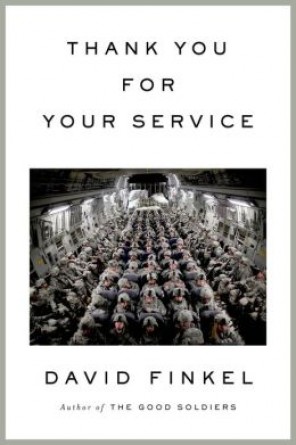
Nominally a sequel to The Good Soldiers, his 2009 account of an American infantry battalion at war in Iraq, David Finkel’s new book actually serves as a perfect companion to George Packer’s recent bestseller, The Unwinding. Like Packer, Finkel examines the human detritus left in the wake of fraudulent promises and collapsed illusions. In The Unwinding, Packer contemplates the fate of those victimized by cataclysmic economic change. In Thank You for Your Service, Finkel looks at those victimized by egregious military malpractice.
The post-industrial, high-tech, information-age economy unveiled near the end of the 20th century supposedly offered a template for permanent prosperity. The Great Recession upended such expectations. Although some Americans have gotten very rich indeed, far larger numbers of ordinary citizens find themselves unemployed and unemployable. With impressive sensitivity, Packer tells their story.
Amazon Page
Concocted at about the same time, a post-industrial, high-tech, information-age approach to waging war supposedly offered a template for assured victory. Iraq and Afghanistan have shredded such pretensions. Although some high-ranking military and civilian officials found ways to cash in, far larger numbers of ordinary soldiers (and their families) suffered, many of them grievously. In painful, intimate and at times almost voyeuristic detail, Finkel tells their story.
More specifically, Finkel, a reporter with The Washington Post, attends to what he calls the “after war.” His concern is with the soldiers who return from the war zone bearing wounds — and with the loved ones on whom those wounds also become imprinted. Above all, he is concerned with wounds that may not be fully visible: the post-traumatic stress disorder (PTSD), traumatic brain injury and related conditions that affect roughly a half-million younger veterans. Make that a half-million and counting.
To translate this disturbing statistic into flesh and blood, Finkel checks in on some of the soldiers featured in his previous book. What he finds is anger, anxiety, shame, depression, guilt, sleeplessness, self-abuse, spousal abuse, child abuse, alcohol abuse, drug abuse and suicidal tendencies, sometimes acted on, sometimes not. Shouting matches, crying jags and bizarre behavior along with guns and two-pack-a-day smoking habits abound, but not much in the way of useful therapy. Of one soldier, Finkel writes: “He began to take sleeping pills to fall asleep and another kind of pill to get back to sleep when he woke up. He took other pills, too, some for pain, others for anxiety. He began to drink so much vodka that his skin smelled of it, and then he started mentioning suicide.”