
IO Newsletter is back…..
Short URL for all issues is http://www.oss.net/IO
ARSTRAT IO Newsletter v11 no 01.doc
Internet Work-Arounds for Egypt Et Al
Continue reading “Information Operations Newsletter Vol 11 No 01”

The truth at any cost lowers all other costs — curated by former US spy Robert David Steele.
IO Newsletter is back…..
Short URL for all issues is http://www.oss.net/IO
ARSTRAT IO Newsletter v11 no 01.doc
Internet Work-Arounds for Egypt Et Al
Continue reading “Information Operations Newsletter Vol 11 No 01”
2 February 2011
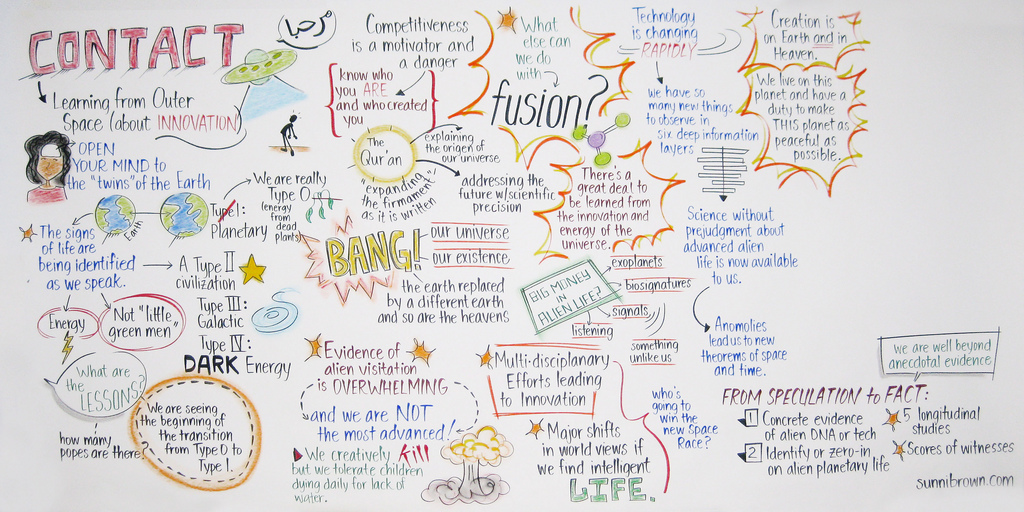
World business leaders told flying saucers are real & extraterrestrials exist
Might Extraterrestrial Intelligence Sway Religious Beliefs?
NASA's Kepler Mission Discovers Earth-like Planets
Extraterrestrials now live among us in China and in U.S.A., newspapers report
WikiLeaks Nominated For Nobel Peace Prize (Associated Press)
A Norwegian lawmaker has nominated WikiLeaks for the 2011 Nobel Peace Prize, saying Wednesday that its disclosures of classified documents promote world peace by holding governments accountable for their actions.
Continue reading “WikiLeaks Nominated For Nobel Peace Prize”
‘Al-Qaida on brink of using nuclear bomb'
By Heidi Blake and Christopher Hope, The Daily Telegraph February 1, 2011
Al-Qaida is on the verge of producing radioactive weapons after sourcing nuclear material and recruiting rogue scientists to build “dirty” bombs, according to leaked diplomatic documents.
A leading atomic regulator has privately warned that the world stands on the brink of a “nuclear 9/11”.
Security briefings suggest that jihadi groups are also close to producing “workable and efficient” biological and chemical weapons that could kill thousands if unleashed in attacks on the West.
Comment and Other Sources Below the Line….
Continue reading “‘Al-Qaida nuclear bomb' + Egypt Push-Back”
Dignitarian World Emerging: Arianna's Blog Predicts the Future
 Pamela Gerloff
What's happening in Brazil and Chile heralds a new era emerging now on the planet, vividly demonstrating that there is a way to solve the problems we currently face. That path to resolution, and the term for the phenomenon Arianna describes, is dignitarian. In its simplest form, it means acting to protect, enhance, and serve the dignity of all. Not just special interests and lobbyists, banks and financiers, corporations, or political factions; not just friends and family or your network of buddies; and not just the people who voted for you or whom you officially represent. To be dignitarian means to protect the dignity of all. All of the people, all of the time. Regardless of our role in life–whether we're considered a “somebody” or a “nobody” or something in between–we can all be dignitarians, and now a few countries are showing us how.
Dignity is the principle that explains why, in one moment, a conservative politician might choose a course of action that's considered politically liberal and, in another, stick to the party line. Or why two opposing political parties can find common goals, such as becoming the first country to eliminate poverty. The deciding factor–whether articulated or not–is dignity. The question to ask is always: Does this decision, this initiative, this approach, serve the dignity of all? This is transpartisan politics at its best. It is also leadership in its purest form.
. . . . . .
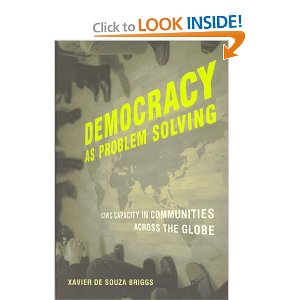
In his new book, Democracy as Problem Solving: Civic Capacity in Communities Across the Globe (2008: MIT Press), Xavier de Souza Briggs shows how civic capacity—the capacity to create and sustain smart collective action—is crucial for strengthening governance and changing the state of the world in the process.
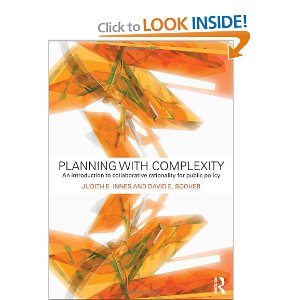
Analyzing emerging practices of collaboration in planning and public policy to overcome the challenges complexity, fragmentation and uncertainty, the authors present a new theory of collaborative rationality, to help make sense of the new practices. They enquire in detail into how collaborative rationality works, the theories that inform it, and the potential and pitfalls for democracy in the twenty-first century. Representing the authors’ collective experience based upon over thirty years of research and practice, this is insightful reading for students, educators, scholars, and reflective practitioners in the fields of urban planning, public policy, political science and public administration.
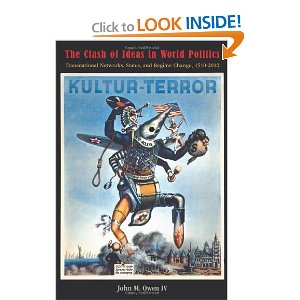
Some blame the violence and unrest in the Muslim world on Islam itself, arguing that the religion and its history is inherently bloody. Others blame the United States, arguing that American attempts to spread democracy by force have destabilized the region, and that these efforts are somehow radical or unique. Challenging these views, The Clash of Ideas in World Politics: Transnational Networks, States, and Regime Change, 1510-2010 reveals how the Muslim world is in the throes of an ideological struggle that extends far beyond the Middle East, and how struggles like it have been a recurring feature of international relations since the dawn of the modern European state. John Owen examines more than two hundred cases of forcible regime promotion over the past five centuries, offering the first systematic study of this common state practice. He looks at conflicts between Catholicism and Protestantism between 1520 and the 1680s; republicanism and monarchy between 1770 and 1850; and communism, fascism, and liberal democracy from 1917 until the late 1980s. He shows how regime promotion can follow regime unrest in the eventual target state or a war involving a great power, and how this can provoke elites across states to polarize according to ideology. Owen traces how conflicts arise and ultimately fade as one ideology wins favor with more elites in more countries, and he demonstrates how the struggle between secularism and Islamism in Muslim countries today reflects broader transnational trends in world history.
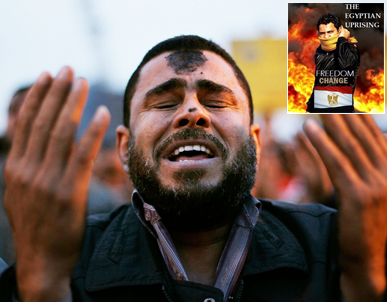
In Egypt, a Facebook page administrator known only by the handle El Shaheeed, or Martyr, is one of the driving forces behind the historic protests. Mike Giglio tracks down the mysterious figure, who talks about his crucial role in organizing the demonstrations.
Iran’s Green Revolution had a martyr named Neda, a 26-year-old woman gunned down in the streets of Tehran. Tunisia’s was Mohamed Bouazizi, an unemployed university graduate who set himself ablaze outside a government building. Egypt’s is Khaled Said—because someone has been agitating under the dead man’s name.
Read rest of article with interview….
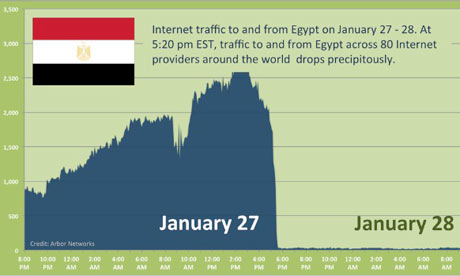
A scientist at the network security company Arbor Networks has used data from 80 Internet service providers around the world to create an image of the Internet block in Egypt.
The graphic, which was compiled using anonymous traffic engineering statistics, shows traffic to and from Egypt dropping sharply around 5:20 p.m. ET. As of about three hours ago, traffic has not picked back up.
