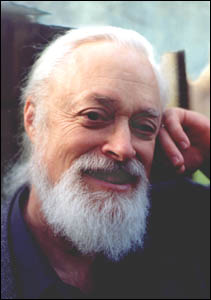
Tom Engelhardt: The Great Fragmentation – America Impotent

Cultural Intelligence
Tom Englehardt
Tom Englehardt

The Great Concentration or the Great Fragmentation?

Tom Engelhardt

TomDispatch, 18 September 2014

EXTRACTS

Could there be any question that dominance, or even as the U.S. military liked to put it, “full-spectrum dominance,” was the obvious, uncontested, and only possible result?

A Jihadist Paradise on Earth

As the present chaos across large swathes of our world indicates, however, it didn’t turn out to be so.  The planet was telling quite a different story, one focused not on the concentration of power but on a radical form of power drain.  In that story, the one for which the evidence kept piling up regularly in the post-9/11 years, no application of power seemed to work for Washington.  No enemy, no matter how minor, weak, ill armed, or unpopular could be defeated.  No jihadist group wiped out.  Not one.

Continue reading “Tom Engelhardt: The Great Fragmentation – America Impotent”

Yoda: Neil Irwin in NYT Gets Its Right – Scotland’s Independence Vote Shows a Global Crisis of the Elites — Robert Steele Comments + Book Review RECAP

Cultural Intelligence, Earth Intelligence, Peace Intelligence
Got Crowd? BE the Force!

At last, NYT gets something right.

Scotland’s Independence Vote Shows a Global Crisis of the Elites

New York Times, 18 September 2014

When you get past the details of the Scottish independence referendum Thursday, there is a broader story underway, one that is also playing out in other advanced nations.

It is a crisis of the elites. Scotland’s push for independence is driven by a conviction — one not ungrounded in reality — that the British ruling class has blundered through the last couple of decades. The same discontent applies to varying degrees in the United States and, especially, the eurozone. It is, in many ways, a defining feature of our time.

. . . . . . . .

Power is not a right; it is a responsibility. The choice that Scotland is making on Thursday is of whether the men and women who rule Britain messed things up so badly that they would rather go it alone. And so the results will ripple through world capitals from Athens to Washington: The way things are going currently isn’t good enough, and voters are getting angry enough to want to do something about it.

Continue reading “Yoda: Neil Irwin in NYT Gets Its Right – Scotland's Independence Vote Shows a Global Crisis of the Elites — Robert Steele Comments + Book Review RECAP”

1997 Reference: CIA’s Intelligence Sharing With Congress + RECAP

Ethics, Government

EXTRACT:

From my point of view, the academic community in some ways is even more remiss [than the media]. During my brief fledgling career as a novice academic, I have come to the conclusion that most university-level courses on the American foreign policy process are absolutely mute on this subject [intelligence sharing with Congress, and the repercussions thereof, as a major change in the US foreign policy process]. It is as if time was frozen in the 1960's. I believe the current scholarly literature on foreign policy processes has little discussion of this — almost none. I am not aware of any Ph.D. theses being done in this area, although I can think of some wonderful case studies that could be the basis for doctoral dissertations. The media and the academic community do not quite get it.

(U) 1997 CIA's Intelligence Sharing with Congress

Continue reading “1997 Reference: CIA's Intelligence Sharing With Congress + RECAP”

Mongoose: Attaboy Australia — Beheading IO Stopped — But What Should US Do?

Ethics, Government, Law Enforcement, Media, Military, Peace Intelligence
Mongoose
Mongoose

Very well done, Australia!

Australia raids foil reported ISIS beheading plots

Australian counterterrorism forces detained 15 people Thursday in a series of suburban raids after receiving intelligence that the Islamic State movement was planning public beheadings in two Australian cities to demonstrate its reach.

About 800 federal and state police officers raided more than a dozen properties across 12 Sydney suburbs as part of the operation — the largest in Australian history, Australian Federal Police Deputy Commissioner Andrew Colvin told the Associated Press. Separate raids in the eastern cities of Brisbane and Logan were also conducted.

The Australian Broadcasting Corporation reported that the plan involved kidnapping randomly selected members of the public off the streets in Sydney and Brisbane, beheading them on camera, and releasing the recordings through Islamic State's propaganda arm in the Middle East.

Continue reading “Mongoose: Attaboy Australia — Beheading IO Stopped — But What Should US Do?”

Tom Atlee: Climate and Democracy

Cultural Intelligence, Earth Intelligence
Tom Atlee
Tom Atlee

The two most important issues? Climate and democracy.

Climate and democracy are what I call meta-issues – issues which impact virtually every other issue and therefore, I believe, have priority over all other issues. This is a controversial assertion. But I want to stress that it comes not from denial of the importance of other issues, but from caring about them from a big enough perspective to see that they can’t be successfully addressed in isolation from these two all-pervading issues which have the power to make or break everything else we are doing.

After receiving my last message, an organizer for Sunday’s mega-People’s Climate March in NYC (and elsewhere) asked me what I thought of it.  [Note:  This post was written after the subsequent post about research and polarization, but mistakenly posted before it.]

While urging anyone who feels called to attend this important mega-demonstration to do so if they can, I want to give a more nuanced response to the organizer who wrote to me, and to share it with you here.

It has been joked that all people are equal but some are more equal than others.

In a similar vein, I would suggest that all issues are important and interconnected, but some are more important and interconnected than others.

Take climate and democracy.

Read full post.

Jean Lievens: Overhaul Global Economy — Deals with Climate Change, Generates More and Better Profits

03 Economy, 03 Environmental Degradation, Ethics, Future-Oriented
Jean Lievens
Jean Lievens

Climate change report: prevent damage by overhauling global economy

Reducing emissions can generate better growth than old high-carbon model, says co-author of report, Lord Stern.

The world can still act in time to stave off the worst effects of climate change, and enjoy the fruits of continued economic growth as long as the global economy can be transformed within the next 15 years, a group of the world's leading economists and political leaders will argue on Tuesday.

Tackling climate change can be a boon to prosperity, rather than a brake, according to the study involving a roll-call of the globe's biggest institutions, including the UN, the OECD group of rich countries, the International Monetary Fund and the World Bank, and co-authored by Lord Stern, one of the world's most influential voices on climate economics.

The report comes ahead of a UN-convened summit of world leaders on global warming next week at which David Cameron has pledged to lead calls for strong action.

“Reducing emissions is not only compatible with economic growth and development – if done well it can actually generate better growth than the old high-carbon model,” said Stern.

Read full article.

SchwartzReport: Plastic Bags In Depth

03 Environmental Degradation
Stephan A. Schwartz
Stephan A. Schwartz

I found this report a real eye-opener. Perhaps you will too. Personally, I live with a bag lady, who always has a dozen cloth bags in the car, so I use neither paper nor plastic. But, this article suggests, even that is not as good as we thought, as you will read. Still we do use the bags over and over, so hopefully it is an improvement. It is a tough problem, but plastic is never an ideal solution in situations such as family groceries and the like.

California Just Banned Free Plastic Bags. Hold the Rejoicing.
KATIE ROSE QUANDT, Senior Online Editorial Fellow – Mother Jones

Last month, California became the first state to pass a bill banning the ubiquitous disposable plastic bag. If signed into law, the measure will prohibit grocery and retail stores from providing single-use plastic bags and require them to charge at least 10 cents for paper bags, compostable bags, and reusable plastic bags. The bill, introduced by Sen. Alex Padilla (D-Los Angeles), will also provide funding for California-based plastic bag companies to develop sturdier, reusable options.

Continue reading “SchwartzReport: Plastic Bags In Depth”

noble gold