Public Health Experts Identify Militarism As Threat

Cultural Intelligence, Peace Intelligence
David Swanson
David Swanson

Public Health Experts Identify Militarism As Threat

A remarkable article appears in the June 2014 issue of the American Journal of Public Health.  (Also available as free PDF here.)

The authors, experts in public health, are listed with all their academic credentials: William H. Wiist, DHSc, MPH, MS, Kathy Barker, PhD, Neil Arya, MD, Jon Rohde, MD, Martin Donohoe, MD, Shelley White, PhD, MPH, Pauline Lubens, MPH, Geraldine Gorman, RN, PhD, and Amy Hagopian, PhD.

Some highlights and commentary:

“In 2009 the American Public Health Association (APHA) approved the policy statement, ‘The Role of Public Health Practitioners, Academics, and Advocates in Relation to Armed Conflict and War.' . . . In response to the APHA policy, in 2011, a working group on Teaching the Primary Prevention of War, which included the authors of this article, grew . . . .”

“Since the end of World War II, there have been 248 armed conflicts in 153 locations around the world. The United States launched 201 overseas military operations between the end of World War II and 2001, and since then, others, including Afghanistan and Iraq. During the 20th century, 190 million deaths could be directly and indirectly related to war — more than in the previous 4 centuries.”
Continue reading “Public Health Experts Identify Militarism As Threat”

Mini-Me: US Intelligence Community’s Kodak Moment — IMPLOSION — Comment by Robert Steele

07 Other Atrocities, Corruption, Director of National Intelligence et al (IC), Ethics, Government, Idiocy, Ineptitude, IO Impotency, Military
Who?  Mini-Me?
Who? Mini-Me?

Huh?

The U.S. Intelligence Community's Kodak Moment

The game is changing rapidly. Can Washington's intelligence community keep up?

Josh Kerbel

National Interest, 15 May 2014

Josh Kerbel is the Chief Analytic Methodologist at the Defense Intelligence Agency. He writes often and openly on the intersection of government (especially intelligence) and globalization. The views expressed in this article are his alone and do not imply endorsement by the Defense Intelligence Agency, the Department of Defense or the US Government.

Click on Image to Enlarge

In 2012, the once-mighty Eastman-Kodak company declared bankruptcy. It was an event that should have reverberated strongly with the United States Intelligence Community (IC)—and not just due to the obvious connection between imaging and spying. Rather, it should have resonated because in Kodak the IC could have glimpsed a reflection of itself: an organization so captivated by its past that it was too slow in changing along with its environment.

To understand the IC’s similar captivation and lethargy—to remain focused on classified collection in an era of increasingly ubiquitous, useful and unclassified data—one must first understand the type of problem around which the modern IC business model remains designed: the Soviet Union. The Soviet Union was fundamentally a collection problem. That is to say, it was a closed system (i.e., a discrete entity) with clear edges and a hierarchical governance structure. Given that nature, knowing what was happening in the Soviet Union required the use of classified means of collection—most of which the IC alone possessed.

Continue reading “Mini-Me: US Intelligence Community's Kodak Moment — IMPLOSION — Comment by Robert Steele”

Steven Aftergood: Army Views Emerging Intelligence Technologies – Killer Quotes!

IO Technologies, IO Tools
Steven Aftergood
Steven Aftergood

ARMY VIEWS EMERGING INTELLIGENCE TECHNOLOGIES

“Emerging Intelligence Technologies” is the theme of the latest issue of the U.S. Army's Military Intelligence Professional Bulletin (MIPB), January-March 2014.

“Rapid technology developments in response to urgent wartime requirements have brought the intelligence community (IC) some tremendous new capabilities. Advancement in the areas of biometrics, battlefield forensics, miniaturization, SIGINT terminal guidance, DCGS-A, and distributed processing have been vital to the success of Military Intelligence (MI) and the Army,” wrote Maj. Gen. Robert P. Ashley.

“This issue of MIPB looks at several of these capabilities and their integration into our formations.”

The new Bulletin was obtained under the Freedom of Information Act.

Continue reading “Steven Aftergood: Army Views Emerging Intelligence Technologies – Killer Quotes!”

Jean Lievens: Could decentralized networks help save democracy?

Advanced Cyber/IO, Cultural Intelligence
Jean Lievens
Jean Lievens

Could decentralized networks help save democracy?

Democratic movements can flourish online, but just as easily get censored. A group of researchers is developing solutions to the vulnerabilities and privacy problems with using big social media platforms like Facebook and Twitter.

Turkish President Recep Tayyip Erdogan disrupted communications between his opponents when he shut down Twitter during the run-up to the country's recent election. But in doing so, he provided yet more proof of how flawed social web activism can be. Whether the lessons in Turkey are heeded could have serious consequences for democracy.

Social networks such as Twitter and Facebook have enabled unprecedented levels of communication and have even received credit for at least one major democratic revolution. There's just one problem: because of their monolithic nature, these centralized networks expose users to snooping and interference of the kind Erdogan caused, says Sonja Buchegger, Associate Professor of Computer Science at KTH Royal Institute of Technology.

A single, large-scale platform provides an easier target for anyone who wants to interfere with online political activity, says Buchegger. “But, if Twitter were decentralized, and you had users cooperating and communicating directly, that wouldn't have been possible to disrupt.

“Decentralization allows for greater freedom of expression.

The good news is that there could be a computer science answer to the problem. Buchegger is leading a group of scientists at KTH who are creating building blocks that developers could use to launch decentralized, distributed networks, which would not only be difficult to interfere with, but would also protect people from government snooping.

Read full article.

John Robb: Russia in Crimea – A Hostile Energy Acquisition

Commercial Intelligence, Peace Intelligence
John Robb
John Robb

Why is Russia going after the Crimea? It's just a hostile acquisition

As I've said for years, Russia is an energy company with all the trappings of nation-state — John McCain recently paraphrased me by calling Russia “a gas station masquerading as a country.”

Everything Russia does militarily is aimed at expanding it's energy interests.  From acquiring new oil and gas basins to exploit to forcing countries to allow it to build new pipelines or expand old ones.  It's also used everything from extortion to cyberattack to pull it off.

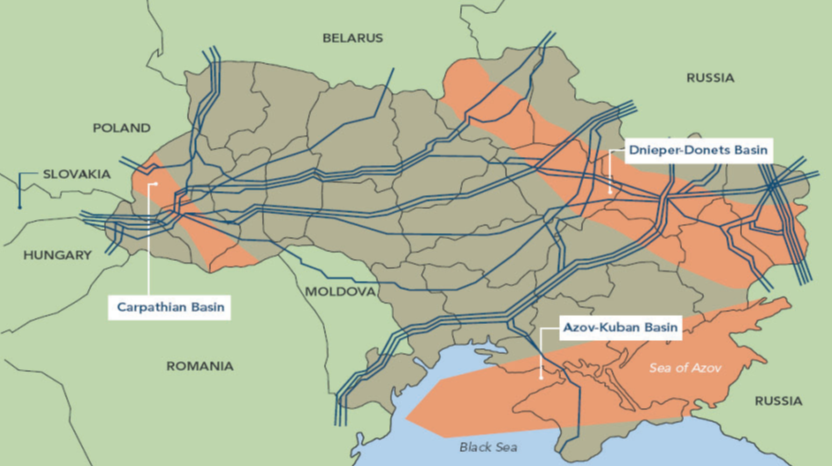
Here's a map of the natural gas basins in Ukraine.  Note the big one under the Sea of Azov.

Click on Image to Enlarge

Read full post.

Chuck Spinney: Michael Hudson on The New Cold War’s Ukraine Gambit

Commercial Intelligence, Peace Intelligence
Chuck Spinney
Chuck Spinney

Long but well worth reading and thinking about. CS


The New Cold War’s Ukraine Gambit

Michael Hudson [1]

Posted on michaelhudson.com, 12 May 2014

http://michael-hudson.com/2014/05/the-new-cold-wars-ukraine-gambit/

Michael Hudson is Distinguished Research Professor of Economics at University of Missouri, Kansas City, and former Professor of Economics and Director of Economic Research at the Latvia Graduate School of Law.

The following article is from a new book, Flashpoint in Ukraine, edited by Stephen Lendman. It is currently available from Clarity Press as an e-book, and soon to be printed.

Finance in today’s world has become war by non-military means. Its object is the same as that of military conquest: appropriation of land and basic infrastructure, and the rents that can be extracted as tribute. In today’s world this is taken mainly in the form of debt service and privatization. That is how neoliberalism works, subduing economies by indebting their governments and using unpayably high debts as a lever to pry away the public domain at distress prices. It is what today’s New Cold War is all about. Backed by the IMF and European Central Bank (ECB) as knee-breakers in what has become in effect a financial extension of NATO, the aim is for U.S. and allied investors to appropriate the plums that kleptocrats have taken from the public domain of Russia, Ukraine and other post-Soviet economies in these countries, as well as whatever assets remain.

Continue reading “Chuck Spinney: Michael Hudson on The New Cold War’s Ukraine Gambit”

noble gold