Evan Ellis: Latin America Engagement with China

Cultural Intelligence, Peace Intelligence
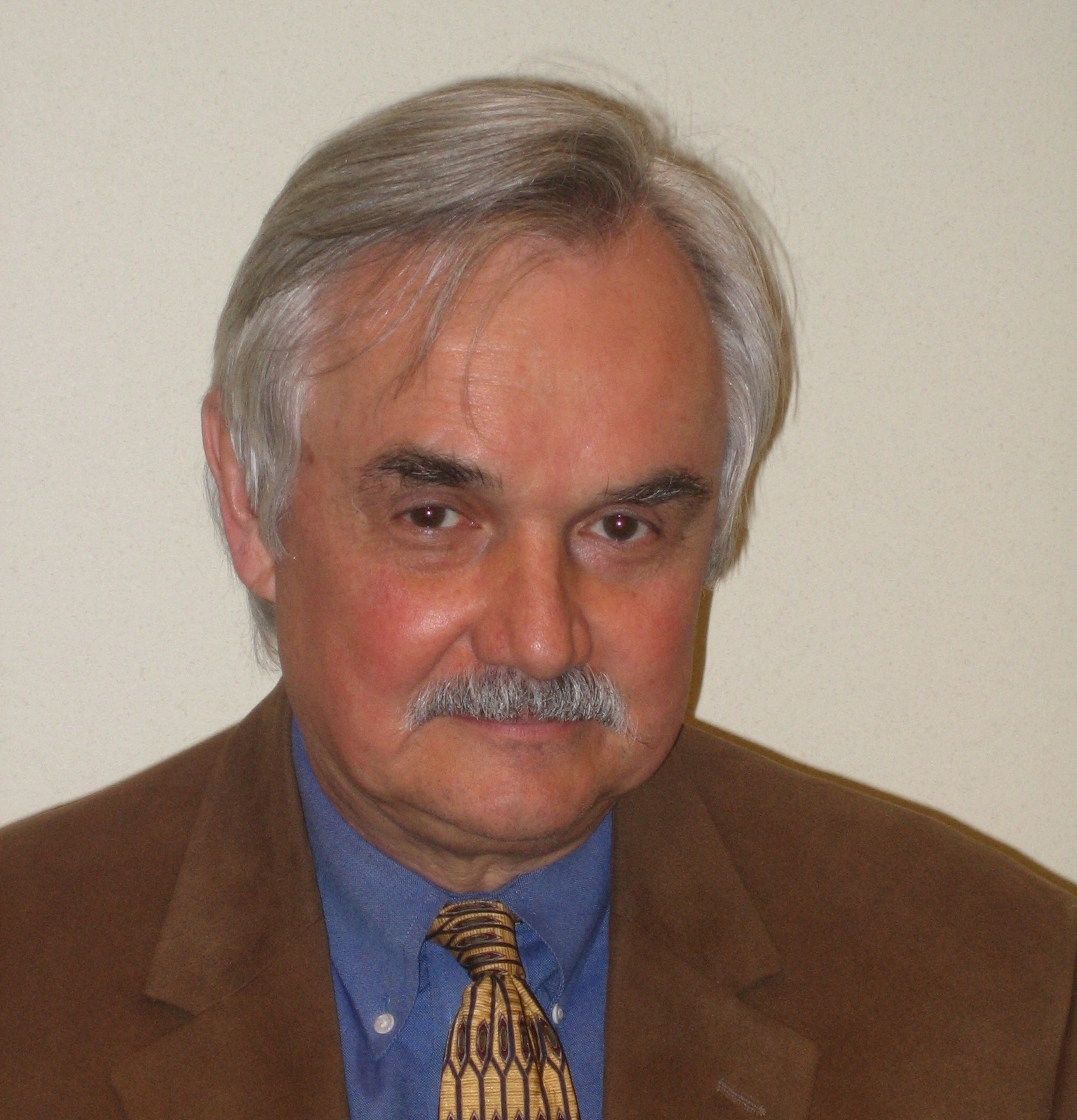
Evan Ellis
Evan Ellis

Latin America’s Foreign Policy as the Region Engages China

Security and Defense Studies Review (Volume 15 / 2014)

This article examines the foreign policy of Latin America and the Caribbean toward the People’s Republic of China. It finds that, for those nations recognizing Taiwan most Latin American nations have had relatively few political differences with the PRC. Exceptions include Brazil’s bid for a seat on the UN Security Council and Mexico’s receipt of the Dali Lama under the sexenio of Felipe Calderón. Within the region, the most important differences have emerged on issues of foreign economic policy. The article finds that Latin America’s heterogeneous orientation toward China on economic issues may be understood in terms of four cross-cutting cleavages, which reflect economic, political, and geographic divisions in the region more broadly: (1) north versus south, (2) populist regimes versus market economies, (3) pure resource exporters versus industrialized exporters versus nonexporting capital recipients versus pure importers , and (4) Pacific versus Atlantic.

PDF (19 Pages): Latin Americas Foreign Policy as the Region Engages China – Evan Ellis (SDSR)

See Also:

Evan Ellis @ Phi Beta Iota

Berto Jongman: Neelie Kroes, VP European Commission, on Threats, Challenges, and Change Needed in the Internet Governance Concept

Advanced Cyber/IO
Berto Jongman
Berto Jongman

Her demands sound like OSINT demands in the 1990's.

I will soon be travelling to Sao Paulo to attend NETmundial, the Multi-stakeholder Meeting on the Future of Internet Governance. The purpose of NETmundial is to develop principles of Internet governance and a roadmap for the future development of this ecosystem.

I have already shared with all of you my thoughts on the draft “outcome document” that I and other members of the High-Level Multi-stakeholder Committee of NETmundial received on 3 April 2014. In the meantime, the organisers of the conference have published a new version of the outcome document and are inviting everyone to send their views and comments – I warmly invite all of you to do so.

I did so, too; I have sent an email to the members of the High Level Multi-stakeholder Committee, to the Chair of the Meeting (Prof. Virgilio Almeida) and to the two co-chairs of the Executive Meeting Committee, Raul Echeberria and Demi Getschko.

Again, in a spirit of transparency, I would like to share the contents of this message with the broader Internet community…. so please read my letter below.

+++ COPY OF THE EMAIL I SENT +++

From: KROES Neelie (CAB-KROES)

Sent: Wednesday, April 09, 2014 7:26 PM

To: ‘hlmc@netmundial.br

Subject: Proposals for the NETmundial outcome document

Dear colleagues,

I am pleased to see that the draft outcome document for NETmundial has been published and that the broader public has now the possibility to intervene in the discussion, before we all meet in Sao Paulo next week. Again, I would like to thank all the members of the Executive Multistakeholder Committee, as well as the Chair and the Co-Chairs of the meeting, for their tireless work.

As a follow-up to the comments which I have already shared with you, I would like to make some further observations. In the same spirit of transparency as my previous communication, I am also posting a copy of this e-mail on my blog.

I continue to strongly believe that the outcomes of NETmundial must be concrete and actionable, with clear milestones and with a realistic but ambitious timeline. Several reactions to my comments show that I am not alone in thinking that concreteness is paramount to the success of this important gathering; and even though positions on substance may well differ, I believe that my assessment on the necessity of a “change of pace” in these discussions is shared by a broad range of stakeholders.

Read in this light, it is clear me that more work is needed on the latest draft; especially if we consider that a number of public contributions submitted to NETmundial did include concrete and actionable suggestions.

Luckily, several passages of the draft outcome document do lend themselves quite well to being turned into more concrete actions – and we should make full use of this opportunity. I will focus on six specific examples:

  1. Improvements to the multi-stakeholder model
  2. Strengthening the Internet Governance Forum
  3. Tools and mechanisms for better information sharing and capacity building
  4. Globalisation of IANA
  5. Globalisation of ICANN
  6. Jurisdictional issues on the Internet

Continue reading “Berto Jongman: Neelie Kroes, VP European Commission, on Threats, Challenges, and Change Needed in the Internet Governance Concept”

Winslow Wheeler: New F-35 Claims on Cost Highly Questionable

Corruption, Idiocy, Ineptitude, Military
Winslow Wheeler
Winslow Wheeler

My analysis of the new DOD data on the cost of the F-35 is at the Straus Military Project website at http://www.pogo.org/our-work/straus-military-reform-project/weapons/2014/new-f-35-claim-lower-os-estimate-more-than-offsets-higher-acquisition-cost.html, and it is below.

While the media reports on these costs were out last week, there are some critically important elements of the DOD cost reporting that got little or no attention.

New F-35 Claim: Lower O&S Estimate More than Offsets Higher Acquisition Cost

Last week the Defense Department released its new Selected Acquisition Reports (SARs) on its major weapon programs.  These annual reports are the Pentagon's effort at definitive cost analysis; they come in two forms: the summary data on all 77 of DOD's Major Defense Acquisition Programs (MDAPs) and separate reports on individual programs, such as the F-35-the latter put on-line without a pay wall by Breaking Defense.

As in recent years, the release of new data on the F-35 provoked press coverage, some of it quite thorough in summarizing much the new data and what the top F-35 defender, F-35 program manager Lt. Gen. Christopher Bogdan, had to say about it all.  However, there are some important points that did not get the attention they perhaps deserve, and one key point seems to have been generally missed.

Continue reading “Winslow Wheeler: New F-35 Claims on Cost Highly Questionable”

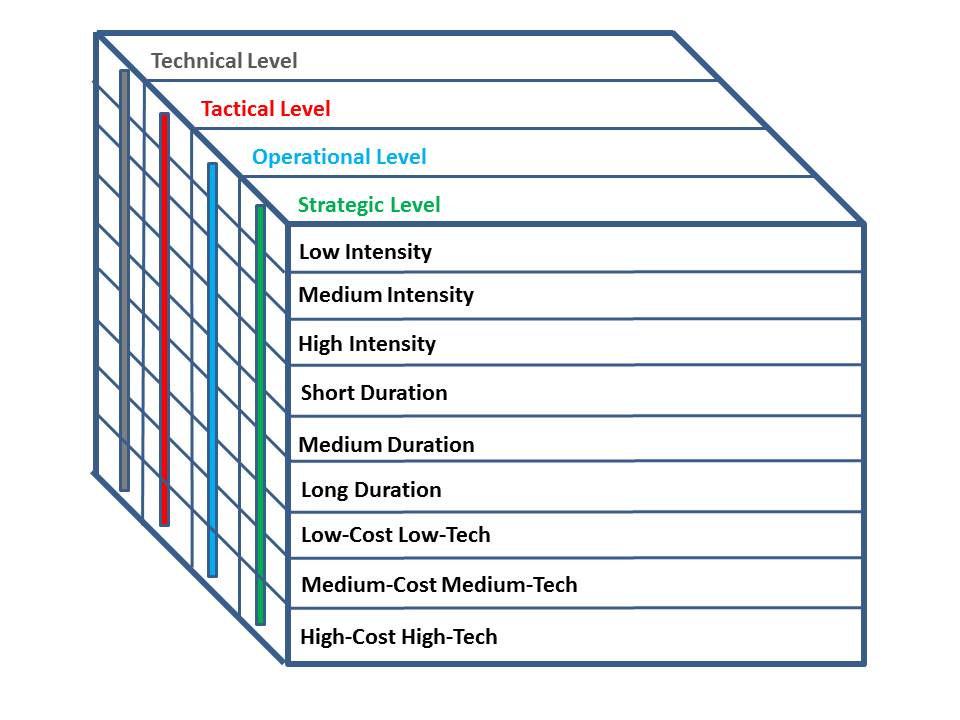
Graphic (3): Peacekeeping Technologies Concept for UN High Level Panel on Peacekeeping Technologies

Capabilities-Force Structure, Multinational Plus, Peace Intelligence, Strategy-Holistic Coherence, United Nations

ROBERT STEELE: Dr. Walter Dorn is a member of the new panel which virtually assures their success. Below are three graphics I submitted for consideration.

PPT (3 Slides): Peacekeeping Technologies Survey Concept

Click on Image to Enlarge

Continue reading “Graphic (3): Peacekeeping Technologies Concept for UN High Level Panel on Peacekeeping Technologies”

Robert Steele: Why Big Data is Stillborn (for Now) + Comments from EIN Technical Council

IO Impotency
Robert David STEELE Vivas

Big Data 101

Terabyte a day from a single sensor is a big deal. Put enough of them together and you get a petabyte that would take three years to transfor over existing legacy pipes. The “cloud” is fiction — picture using a straw to suck on the ocean.

01 Most pipes are in the gigabyte range. There are number in the terabyte range but they tend to be hogged by either secret intelligence or secret finance (e.g. between UK and US). Most “big data” has to be moved in physical containers. Most data centers do not have excess capacity to handle petabyte level simultaneous search and pattern discovery.

02 The big data endeavors that ARE successful at distributing massive amounts of data (in the multi terabyte range per day) over legacy networks are successful because they were designed from sratch to do exactly that. This cannot be said of most if not all intelligence collection programs.

03 Persistent surveillance is a pig. A really big pig. Most persistent surveillance offerings have software optimized for the one pig, not for many little pigs contributing to one big pig pen. Quality source-independent software is a HUGE differentiator and most Contracting Officers and their Technical Representatives (COTR) do not appear to understand this. On top of that is the analytic mindset and training that goes with making the most of many little pigs penned together under one analytic software umbrella.

Continue reading “Robert Steele: Why Big Data is Stillborn (for Now) + Comments from EIN Technical Council”

noble gold