Creating a Sustainable and Desirable Future : Insights from 45 Global Thought Leaders
Robert Costanza, Ida Kubiszewski (eds)
The major challenge for the current generation of mankind is to develop a shared vision of a future that is both desirable to the vast majority of humanity and ecologically sustainable. Creating a Sustainable and Desirable Future offers a broad, critical discussion on what such a future should or can be, with global perspectives written by some of the world's leading thinkers, including: Wendell Berry, Van Jones, Frances Moore Lappe, Peggy Liu, Hunter Lovins, Gus Speth, Bill McKibben, and many more.
JP Rangaswami's thoughtful series of blog posts on the why and how of filtering online info-flows is a fundamental infotention text. Instead of Scooping all seven, I've Scooped this blog post by Jon Reed that summarizes and links to all seven parts.
I liked JP Rangaswami‘s series on filtering so much, I decided to filter it.
The Chief Scientist at Salesforce.com, Rangaswami has a personal blog site, confused of calcutta: a blog about information, where he blogs on far-ranging enterprise topics on behalf of himself, not his employer.
The filtering series has been a very good read, but quickly became a monster series. The initial post laid out seven filtering principles; there are now five follow up posts to chew on.
The Carabinieri, Italy's military police, used a new software platform to analyze the phone records of organized crime groups. Here's what happened.
There's a reason why the NSA likes metadata so much. Metadata–the auxiliary data generated by every digital move you make–can track a person's digital life in detail. Now a team of Italian academics are showing how metadata can reveal the structure of organized crime groups with a software tool called LogAnalysis, which combines information from mobile phone records with police databases. And among LogAnalysis's first users is the Carabinieri, the Italian military police.
Emilio Ferrara, a postdoc at Indiana University, created LogAnalysis with three researchers from the University of Messina in Sicily. Ferrara explains that their platform “infers, with pretty high confidence, the roles of individuals involved in criminal activity from communication data, simply looking at patterns and network features.”
Here's how it works: Police feed phone logs they obtain into LogAnalysis; those then get mashed up with mug shots, criminal records, and other proprietary information from police databases. This information then shapes the Carabinieri's investigations by giving vital clues about intra-group relationships of an organized crime group believed to be behind robberies, extortions, and narcotics trafficking. It's important to note that their paper anonymized all records, and did not identify which organized crime group Italian law enforcement were investigating.
It turns out that metadata can tell quite a lot about the way an organization is set up. Matt Unger, the chief digital officer of New York firm K2 Intelligence, explained over the phone to Fast Company that “with a good analytics platform, cell phone metadata reveals who the influencers are. They are the ones who send and receive the most communications, and you can also see the ripples they make in turn.”
Here you see the research data supporting the demographic transition trend SR has been describing for almost 20 years. This is what is driving the Tea Party, and why the Republican Party, as constituted, is ultimately doomed. Click through to see the very helpful animated graphic.
Demographic transformations are dramas in slow motion. America is in the midst of two right now. Our population is becoming majority non-white at the same time a record share is going gray. Each of these shifts would by itself be the defining demographic story of its era. The fact that both are unfolding simultaneously has generated big generation gaps that will put stress on our politics, families, pocketbooks, entitlement programs and social cohesion.
In the 19th century, the counter-hegemonic forces of labour focused on the democratisation of the state as well as focusing on the redistribution of the surplus value created by labour. Both tasks are by no means obsolete given the evolution towards market state models which have hollowed out popular democracy, as well ans the increased role of debt in human exploitation1. However, what is now needed in addition, for and by 21st century social movements, is the democratisation of the means of monetization. In a contributive economy, use value becomes key, and undermines mechanisms based on labor value alone; value must therefore become pluralistic and diverse, and so must monetary means; while undoubtedly, demonetization will be a good thing in many sectors under a regime of civic domination, we will also need new forms of monetization, and restore the feedback loop between value creation and value capture. As we will argue, the current value regime, which we call ‘cognitive capitalism under the emergence of netarchical capitalism’ (see infra), is unable to redistribute value in a fair way, and is creating not just a crisis of social reproduction for working people, but also a crisis of accumulation of capital. In our article, value and money regimes are placed in the context of the evolution of the overall political economy toward an increasing importance of models based on peer production. We will look at what kind of social system and policy transition, that can solve this crisis of value.
Confidential U.S. assessments, which the State Department tried to hide from the public, show nearly all Afghan Cabinet ministries are woefully ill-prepared to govern after the U.S. withdraws its troops, often describing the gaps in knowledge, capability and safeguards as “critical” and describing an infrastructure in danger of collapsing if left to its own accord.
The State Department USAID reports, obtained by The Washington Times, paint a sobering portrait about the impact of the billions of dollars the U.S. has spent on nation-building over the past decade.
An Inadequate Defense Budget? Compared to Whom? Compared to When?
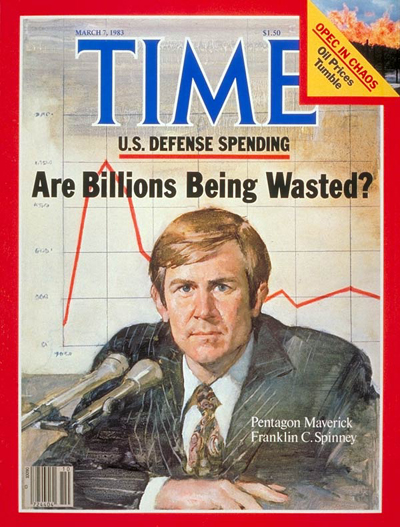
Many Republicans and numerous Democrats, especially on the House and Senate Armed Services Committees, have been characterizing the US defense budget as inadequate. They propose to release the Pentagon from the statutory spending caps set by the Budget Control Act of 2011 and its “sequestration,” which would keep some, but not all, Pentagon spending in the neighborhood of $500 billion, annually, for several years. The Joint Chiefs of Staff, the Secretary of Defense and any other Pentagon official near a microphone have been cheering them on.
Absent from all their talking points are three salient facts:
President Obama's 2015 request for all national security related programs would exceed $1 Trillion;
the US outspends any other nation, especially presumed threat nations, by a huge amount, and
under the dreaded sequestration, the Pentagon portion of national security spending would remain at historically high levels.
There is a major mismatch between the actual size of the US defense budget and the characterization of inadequacy given to it. The enormity of the US defense budget, even under sequestration, is readily apparent in both relative and absolute terms.