Stephen E. Arnold: Google As Intrusive As Could Be…

IO Impotency
Stephen E. Arnold
Stephen E. Arnold

Google Is as Intrusive as They Come

If you see the world through Google (www.google.com) colored glasses, you might think the search king can do no wrong, such as in this recent Medium.com article, “Why the Future Belongs to Google.” https://medium.com/mobile-culture/994daa5d0fee However, it’s starting to look like even those wearing the glasses are not happy.

According to the drum-thumping Medium.com piece:

“The search giant has infiltrated almost every sphere of our digital interaction and made the experience richer, more satisfying and rather beautiful…There are many big-name brands which often try to achieve this, but either their endeavour feels too intrusive or they just fail without a whimper.”

Pardon us, but if there’s one thing Google constantly stumbles over it’s how intrusive its latest and greatest ideas are. http://www.wordstream.com/articles/google-failures-google-flops We’re not just talking long-lost flops like Google Buzz, but new “innovations” like its flu-tracker http://www.forbes.com/sites/stevensalzberg/2014/03/23/why-google-flu-is-a-failure/ and the most recent run of backlash that seems to have finally put a bullet in the motherboard of Google Glass, according to TechCruch http://techcrunch.com/2014/03/15/why-we-hate-google-glass-and-all-new-tech/ and others http://www.designntrend.com/articles/11970/20140321/negative-feedback-is-dimming-google-glasss-fate.htm. We are more than a little suspicious of the Medium.com article that claims google is unintrusive. It makes us wonder how deeply Google has intruded on that writer’s brain.

Patrick Roland, April 10, 2014

Sponsored by ArnoldIT.com, developer of Augmentext

SchwartzReport: Give Up on Climate Change — the Stupid Poor and the Greedy Rich Roll On…

Commercial Intelligence, Cultural Intelligence, Earth Intelligence
Stephan A. Schwartz
Stephan A. Schwartz

Another climate scientist, who is an SR reader sent me this telling me that while he did not agree with the solution James Lovelock offered, he felt it did represent the growing consensus amongst climate scientists that “stupidity and greed” are going to trump rational good sense. I have long agreed with this assessment.!

We Should Give Up Trying to Save the World From Climate Change, Says James Lovelock
SARAH KNAPTON – Telegraph (U.K.)

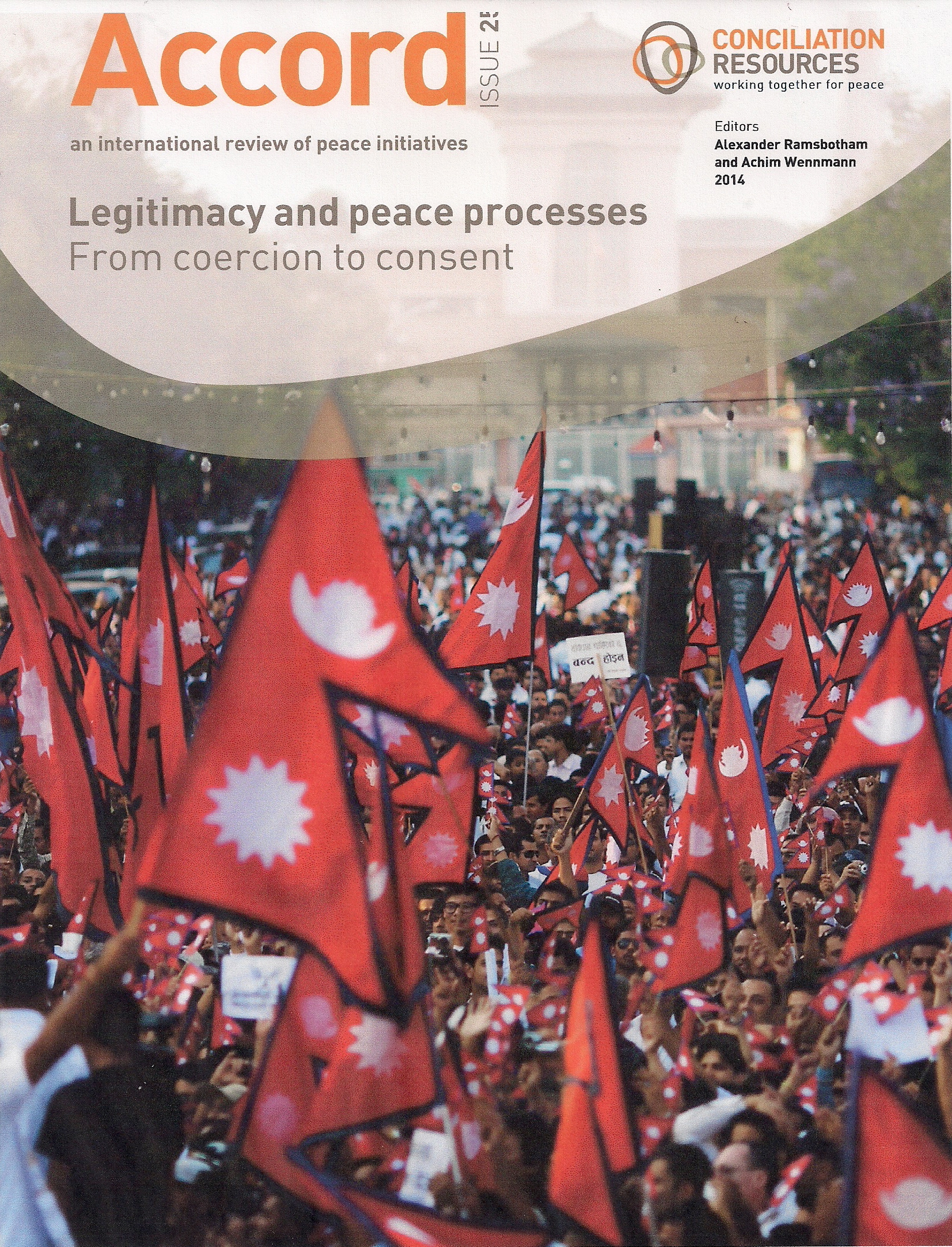
Reference: Legitimacy and peace processes – from coercion to consent

United Nations & NGOs
Click on Image to Enlarge

Contributing Editor Berto Jongman

Grounded legitimacy exists when the system of governance and authority flow from and is connected to local realities.

One helpful progression is when armed militias are able to migrate toward becoming non-violent domestic political actors.

PDF (134 Pages):

2014 Legitimacy and peace processes

“One function of a peace process can be understood as providing a structure to accommodate diverse or competing sources of, or claimants to, legitimacy in conflict-affected states and societies, and to cultivate broad consent on a satisfactory way forward for peace”


Berto Jongman: UK Army/PhD New Book – NATO Never Understood Afghanistan, Make the Conflict Worse

Cultural Intelligence
Berto Jongman
Berto Jongman

Nato troops in Afghanistan ‘often made conflict worse'

A Territorial Army captain has resigned to publish a book critical of British actions in Afghanistan. Mr Mike Martin said Nato troops in Helmand province “often made the conflict worse”. He quit his role in the TA after the Ministry of Defence (MoD) refused to give him permission to publish the study. An MoD spokesman said books by military personnel are “governed by well-established policy and regulations”.

Amazon Page
Amazon Page

Classified materials

Mr Martin studied Helmand for six years and completed an Army-funded PhD at King's College in London. He told the BBC Nato troops did not understand the “complexities” of Afghan tribal conflicts and were “manipulated” by tribal leaders fighting over land and water. “This meant that we often made the conflict worse, rather than better,” he wrote in the study. Mr Martin said he was originally told his final thesis could not be published as a book because it made use of secret cables published by Wikileaks and classified materials.

But he denied the book contained any intelligence material that was not in the public domain. Last week, he was then told by his commanding officer that he was “not authorised to published the book”. He resigned on Monday and will launch the book in London on Wednesday night. The MoD said the department had accepted the material in the book did not contravene the Official Secrets Act. But the book – An Intimate War – An Oral History of the Helmand Conflict 1978-2012 – had not been given official clearance, it added.

Read full article.

See Also:

Human Terrain @ Phi Beta Iota

David Swanson: Liberating Hawaii

Cultural Intelligence, Peace Intelligence
David Swanson
David Swanson

One Nation the U.S. Actually Should Liberate

“Secretary Kerry? It's Ukraine on the phone asking about liberation again. Have you been able to get them a reference letter yet from Libya or Iraq or Afghanistan? How about Vietnam? Panama? Grenada? Kosovo maybe? Ukraine says Syria says you have a reference letter in the works from Kosovo. No? Huh. They said they'd accept one from Korea or the Dominican Republic or Iran. No? Guatemala? The Philippines? Cuba? Congo? How about Haiti? They say you promised them a glowing reference from Haiti. Oh. They did? No, I am not laughing, Sir. What about East Timor? Oh? Oh! Sir, you're going to liberate the what out of them? Yes sir, I think you'd better tell them yourself.”

Some nations the United States should probably not liberate — except perhaps the 175 nations which could be liberated from the presence of U.S. soldiers.  But one nation I would make an exception for, and that is the nation of Hawai'i.

Jon Olsen's new book, Liberate Hawai'i: Renouncing and Defying the Continuing Fraudulent U.S. Claim to the sovereignty of Hawai'i, makes a compelling case — a legal case as well as a moral one.

Click on Image to Enlarge

Olsen's case, in very condensed summary, looks like this: Hawai'i was an independent nation, recognized as such by the United States and numerous other nations, with treaties in effect between Hawai'i and other nations, including the United States, that have never been terminated.  In 1893 U.S. profiteers and U.S. Marines, in a criminal act, overthrew Hawai'i's government and queen, setting up a new government that lacked any legal standing.  President Grover Cleveland investigated what had been done, admitted to the facts, and declared the new government illegitimate, insisting that the Queen retain the rule she had never abdicated.  But the fraudulent foreign government remained, and in 1898 once William McKinley was U.S. president, handed over Hawaii (thought it had no legal power to do so) to the United States, as the United States also picked up the Philippines, Guam, Puerto Rico, and Cuba in a bit of a global shopping spree.  By 1959, these events were growing lost in the mists of time, and the demographics of Hawai'i were radically altered, as Hawai'i was offered a vote between two bad choices: statehood or continued status as a colony or “territory” (liberation wasn't on the ballot). Thus did Hawai'i seem to become a state without legally becoming any such thing.  In 1993, the U.S. Congress passed and President Clinton signed U.S. Public Law 103-150, admitted to and apologizing for this history, without of course doing the one thing legally and morally required — liberating Hawai'i.

Continue reading “David Swanson: Liberating Hawaii”

Anthony Judge: Being neither Dead nor Alive But how to know now?

Cultural Intelligence
Anthony Judge
Anthony Judge

Being neither Dead nor Alive

But how to know now?

Introduction
Being alive — or considered alive
Being dead — or considered dead
Dilemmas: confusion and possible mystification
Symbolism indicative of paradox?
Systems perspective in the light of animal husbandry
Quest for life — and feeling alive
Quest for death — and the significance of closure
Excessive complexity engendering collapse
Sensing personal “world lines” and identifying with their convergence
Being alive through centering?
Feeling alive now and knowing it
References

Mini-Me: Carnegie Calls for Military to Hunt Corruption – Are They Proposing a Coup d’Etat in the USA?

Corruption, Government, Idiocy, Ineptitude, Military
Who?  Mini-Me?
Who? Mini-Me?

Huh?

The Military Must Hunt Corruption, Not Just Terrorists

Sarah Chayes

Senior Associate  Democracy and Rule of Law Program South Asia Program, Carnegie Endowment for International Peace

Defense One, 6 April 2014

As popular uprisings keep toppling governments like bowling pins, the latest round has morphed into a great power face-off — with Russia and the West glowering at each other across a divided Ukraine. Thailand, a key United States military friend in Southeast Asia, could be next on the list. Thousands of protests rock Chinese provinces each month, worrying President Xi Jinping’s still-green administration. The Egyptian and Syrian revolutions have spun off into bloody and widening strife, while extremist insurgencies in Afghanistan, Nigeria and the Philippines stubbornly challenge state stability.

What links these far-flung events, most of them high on the U.S. list of security priorities? Corruption. Not garden-variety corruption, the kind that exists everywhere. Acute and systemic corruption has taken hold in these countries. And it is driving indignant populations, who are networked and communicating as never before, to extremes. Around the world, pervasive corruption drives a list of other security risks too, such as terrorist facilitation; traffic in weapons or drugs; nuclear proliferation; theft of intellectual property; fractured financial systems; and governments that are enmeshed with transnational criminal superpowers. And yet, U.S. military and intelligence officials seem blind to both the character and the security implications of this type of corruption. Like an odorless gas, it fuels all these dangers without attracting much policy response inside or outside of Foggy Bottom.

It’s time to start paying attention. For, if military and civilian strategists agree on anything these days, it’s the need to reduce U.S. reliance on military responses to overseas crises. But to get there, containing military spending or constraining our forces’ missions won’t be enough. For starters, U.S. national security leaders urgently need a better grasp of the factors that build these crises. Then they must design and implement more precise and effective interactions with those factors upstream, before crises develop.

Acute corruption, in other words, can no longer be seen as just a nuisance or a “values issue” to be handed off for technical programming to the U.S. Agency for International Development. Even less should it be considered a factor of stability, as some maintain. Corruption is a problem that must be mainstreamed into national security decision-making. For military leaders, that means tasking intelligence collectors and analysts with new questions. It means better tailoring the terms of military assistance and the tenor of military-to-military relationships. And it means changing the ways that forward-deployed units gain access to territory and partner with locals once there.

Read full article.

Continue reading “Mini-Me: Carnegie Calls for Military to Hunt Corruption – Are They Proposing a Coup d'Etat in the USA?”

noble gold