Technology has become perhaps the greatest agent of change in the modern world. While never without risk, positive technological breakthroughs promise innovative solutions to the most pressing global challenges of our time, from resource scarcity to global environmental change. However, a lack of appropriate investment, outdated regulatory frameworks and gaps in public understanding prevent many promising technologies from achieving their potential.
The World Economic Forum’s Global Agenda Council on Emerging Technologies identifies recent key trends in technological change in its annual list of Top 10 Emerging Technologies. By highlighting the most important technological breakthroughs, the Council aims to raise awareness of their potential and contribute to closing gaps in investment, regulation and public understanding. For 2014, the Council identified ten new technologies that could reshape our society in the future.
Former presidential advisor says “soft corruption” will lead to domestic disorder
Paul Joseph Watson
Infowars.com
February 26, 2014
Pollster and former presidential advisor Pat Caddell warns that the rise of “soft oppression” and corruption in the United States will facilitate a violent Kiev-style uprising in the streets of America.
“What we’re seeing in the world… in Kiev… is American values at work. These people and the rest of the world are saying ‘we’re not putting up with this and we’ll put our lives on it,’” Caddell told Fox News.
“In this country a populace equally dissatisfied with its political class and its leadership. We don’t have the same overt oppression, but we have a very soft oppression of complacency and corruption,” he added.
One might think, given the record number of anti-gay bills being proposed across the United States, that the religious right’s legislative influence – and cultural entrenchment – is growing. In fact, they are evidence that the exact opposite is the case.
What we are seeing right now are the last gasps of religious fundamentalism and its normative influence on the national stage. Just as an individual on his deathbed experiences a momentary flurry of energy and clarity before descending into his final end, we are witnessing the religious right’s final flailing on the national stage. To understand this, one doesn’t need to examine Pew studies on changing attitudes, nor the consolidation of religious fundamentalism into pockets of the Southeast and the West.
All one needs to do is look at legislation being offered right now, and the mainstream ridicule such legislation is garnering.
As inmate populations have soared over the last 30 years, private prisons have emerged as an appealing solution to cash-starved states. Privately run prisons are cheaper and can be set up much faster than those run by the government. Nearly a tenth of all U.S. prisoners are housed in private prisons, as are almost two-thirds of immigrants in detention centers-and the companies that run them have cashed in. CCA, the oldest and largest modern private prison company, took over its first facility in 1983. Now it’s a Wall Street darling with a market cap of nearly $3.8 billion. Similarly, GEO Group, the second largest private-prison operator, last week reported $1.52 billion in revenue for 2013, its most ever and more than a hundredfold increase since the company went public ten years ago.
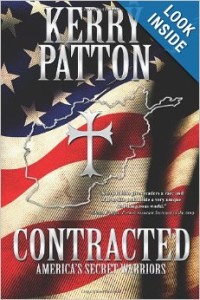
Who is fighting the war in Afghanistan? Did you know that 52% of people fighting in Afghanistan are contracted to do so? Contractors operate far beyond the borders of Afghanistan, they operate globally. Real people. Real missions. Real wars. After the United States was attacked and the President vowed to search and destroy the enemy, the government formed a secret unit comprised of civilians. Paid civilians. Contracted civilians. Many of these people left their jobs, families, and friends to voluntarily serve alongside their military brethren. They did it out of love, passion, and deep patriotism. Declan Collins is one of those men. Just another patriot you have never heard of working to keep America safe. A former member of the US Armed Forces trying to make it in the civilian world as a newlywed, Declan quickly found himself working for one of America's most secretive organizations. He fit the role of what they needed perfectly. This novel is about what happened after Declan received a mysterious phone call, was paid and given two weeks to get into Afghanistan all the while placing his life on hold to preserve and protect America. Find out about the fighting force rarely ever spoken of, those who were Contracted–America's Secret Warriors. Inspired by true events.
Amazon Page
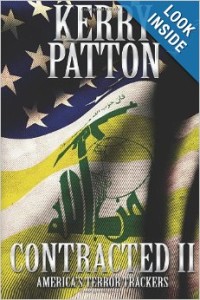
Contracted: America’s Terror Trackers takes readers into the very real world of covert and clandestine operations. These operations aren’t always conducted abroad; oftentimes they occur deep inside the United States. Those who conduct these missions are not always government employees. In fact, most of America’s government fails to recognize these patriotic warriors willing to sacrifice everything for this nation. They are contractors. Like Contracted: America’s Secret Warriors, the first of the Contracted trilogy, this novel was inspired by true events, real people, and real operations. It takes readers on a journey with contractor, Declan Collins, who recently returned from operating as an unconventional human intelligence collector in Afghanistan. A severely injured Collins, who refuses to allow his injuries to stop him from protecting America, accepts a challenge to hunt the world’s most ruthless terrorist organization–Hezbollah. With Hezbollah’s global footprint, Declan Collins travels throughout the United States and several locations abroad ranging from Jordan, Jamaica, Mexico, and of course Lebanon as he collects intelligence with hopes to take down the world’s number one evil. What he uncovers through his journey is overly alarming and makes him begin to dig deeper into his own faith as a modern day Christian Crusader.
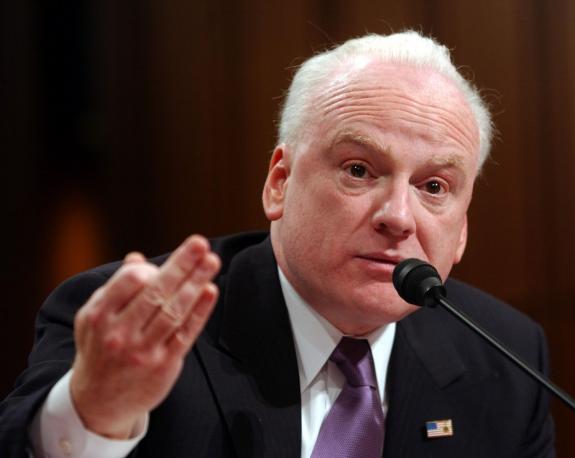
A veteran counter-terrorism advisor and Presidential Review Group member on Intelligence gives his executive summary
I'm in San Francisco this week to attend the RSA security conference, and to cover the Cloud Security Alliance summit for security professionals. The CSA is a terrific organization, a non-profit founded with the purpose of promoting best security practices for cloud computing. I've watched this summit grow over the years commensurate with the increase in visibility of cloud security concerns, and once again attendees filled up the largest venue yet.
The opening keynote speaker was Richard A. Clarke, chairman and CEO of Good Harbor and former advisor to several presidents on counter-terrorism subjects. His keynote was based on his tenure last fall on the highly select Review Group on Intelligence and Communications Technology requested by President Obama in the wake of the Snowden revelations. (There were only five men in this group.) Given carte blanche intelligence clearance to every program, this group issued a 300-page unclassified report*, with 46 recommendations on intelligence collection, specifically how the United States should improve privacy and civil liberties while continuing to protect national security. Clarke’s short but very interesting keynote focused on his takeaways and his top 10 observations in the 46 recommendations.
His big-picture takeaway was that “In terms of collecting intelligence, (the NSA and other intelligence agencies) are very good – far better than you can imagine. But they have created the potential for a police surveillance state.” As a result, the task of controlling them is more urgent than it ever was. The group found that the intelligence agencies were full of very talented individuals dedicated to the protection of the United States and its allies. What they did not find “was a bunch of people randomly (reading) your emails.” But the potential is there.
Here are 10 key observations from a Washington veteran who had the opportunity to see everything under the intelligence kimono.