The destruction of the bees is now beginning to affect agriculture, as this report makes clear. This story is going to keep growing. I just hope it isn't too late. Because if it is humanity has a real problem.
I talk about that session in my story, but let me note a few general takeaways:
The dual mission of the NSA generates cognitive dissonance. Right on its home page, the NSA says its core missions are “to protect U.S. national security systems and to produce foreign signals intelligence information.” The officials repeatedly claimed they pursue both responsibilities with equal vigor. There’s a built-in conflict here: If U.S. industries distribute strong encryption throughout the world, it should make the NSA’s signals-gathering job much harder. Yet the NSA says it welcomes encryption. (The officials even implied that the tension between the two missions winds up making both efforts more robust.) Nonetheless, the Snowden leaks indicate that the NSA has engaged in numerous efforts that tamper with the security of American products. The officials resisted this characterization. Why, they asked, would they compromise security of products they use themselves, like Windows, Cisco routers, or the encryption standards they allegedly compromised?
http://www.truthtalktunes.com/ – The Dopest Conscious Hip-Hop 24/7!! You can also tune in on Android and i-OS! An investigation into the long-obscured mystery of dimethyltryptamine (DMT), a molecule found in nearly every living organism and considered the most potent psychedelic on Earth.
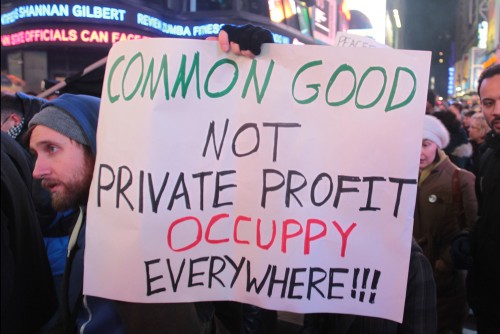
This month the US Congress could pass legislation that would make sure that complex trade agreements favored by multinational corporations – like the TransPacific Partnership (TPP) – would be pushed through Congress with little debate and little information provided to the public. This so-called “fast-track” authority – and the trade agreements it is designed to facilitate – would seriously undermine what remains of US democracy. We invite you to act on this matter soon as your conscience dictates.
Dear friends,
In my blog post The rapid growth of serious responses to climate disruption I mentioned the movement to protest the secretly negotiated Trans-Pacific Partnership agreement (TPP) that could have profound impacts on democracy, on public health and welfare, and on the fate of the planet.
Robert Steele is one of the more interesting writers on intelligence. Based in the US, and a former practitioner he has brought an enormous amount of energy to the questions around intelligence effectiveness and intelligence reform, and can rightly be thought of as a grandfather of the open source intelligence movement, and more recently the expanded “Open Source Everything” meme. I should insert the health warning that he has appeared in the Companion guide that Mike Goodman, Claudia Hillebrand and I edited, so I am not entirely impartial on this, but I would place myself as a ‘critical friend’ of his work.[i]
He has recently published a semi-manifesto piece about US intelligence and it can be found on this link. I have distilled the following key points from it, that I want to write around briefly here, but the original piece is where his take on these issues sit, obviously: 1) intelligence should be about decision support; 2) intelligence is currently being justified along the lines of the quantity of secrets it produces the Executive without regard to the total government need; 3) there is a dominant discourse that only secret intelligence agencies are equipped to ‘do’ intelligence; 4) Parliament and politicians in general desperately need intelligence qua decision-support, sense-making applied to all information secret and open that applies to their functional domains; and 5) the public desperately needs intelligence, again in the form of decision support. Recently the public has become the object – Americans would say the target – of intelligence agencies, which is quite the opposite of the public being a virtual intelligence network in being, contributing to national and public security more effectively by leveraging the creative commons approach to information, what some call collective or co-intelligence.[ii]
While gains have certainly been made toward a more inclusive, egalitarian society over the half-century since Martin Luther King delivered his iconic I Have a Dream Speech (as part of the March for Jobs and Justice in Washington, D.C.), in many respects – particularly in economic matters – there has been little or no progress at all.
Click on Image to Enlarge
Indeed, by certain measures equality has significantly diminished in the US. Accompanying a minimum wage that, when adjusted for inflation, is lower than it was in 1968, and wages that – except for the wealthy – haven’t risen in decades, the economy has polarized wealth to a greater degree than ever, reducing the economic classes more and more to two – rich and poor – and squeezing the middle and working classes into little more than a memory in the process. In among other places, this lack of change is observable in the fact that it’s five decades later and people are still talking about jobs – coveting jobs as though jobs were those necessities and luxuries that work is obtained to secure.