Lose your keys? Your cat? The TV remote? StickNFind has an app for that. Better yet, StickNFind has colorful sensors the size of a quarter, its own Bluetooth software stack, and a developer platform that could turn this crowd-funded Indiegogo product into a foundation piece for the coming “Internet of Things” revolution.
StickNFind Technologies, based in Davie, Fla., shipped its first products in March after raising nearly a million dollars in a campaign that ended earlier this year. The company’s low-power Bluetooth sensors are irresistible for the most mundane of reasons. Put a StickNFind sticker on virtually anything, and you can track it from your smartphone up to 100 feet away. In the company’s own survey of 12,000 users, about a third put the stickers on their keys, 20 percent on their wallets, and another 20 percent on pets (mostly cats).
In the nation's history this is one of the most extraordinary statements ever made by a former President. The fact that it has gone mostly unremarked by corporate media is, itself, a commentary on the country we have become.
Recently there have been well founded rumors that the USG is now in the process of setting up an official Office for Exopolitics and considering several esteemed individuals from which to choose a director to run this new office.
Exopolitics is the official, public admission by any government that that the earth is being visited by extra-terrestrial or inter-stellar alien entities and a declaration that such matters will be addressed in appropriate terms.
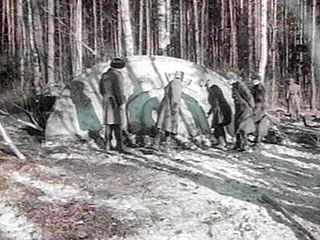
Actual KGB file photo of crashed UFO in Sverdlovsk, Russia in March of 1969. Note the “fusion” of the AGC’s hull with the ground which illustrates the sophisticated anti-gravity, phase shifting quality of the craft’s composition and anything it impacts. This is what a few survivors of the Philadelphia experiment remarked about and stated that some deck hands fused into the ships metal and died in that state shortly after.
Exopolitics encompasses all official governmental efforts to deal with the implications of the existence extraterrestrial or extra-stellar life and its visitation or presence on planet earth.
It is difficult to fully imagine the volcanic implications of such a complete disclosure, but it is fair to assume that it can and will affect almost every single area of contemporary human society and all public institutions including all governmental agencies as well as non-governmental organizations (NGOs).
For many years there have been rumors that the Secret Shadow Government (SSG) actually originated and developed around the Biggest USG Secret of all, that alien anti-gravity craft (AGC) had crashed and were recovered with live and dead aliens, after which their technology was back engineered as a part of several secret treaties made between the SSG and a certain alien group “visiting” planet Earth.
Phi Beta Iota: For the convenience of our subscribers and visitors, the entire article including all photographs, YouTubes, and links, can be found below the line. We subscribe to the view that many technologies relevant to creating a prosperous world at peace have been held back for the wrong reasons, and that full disclosure is in the public interest. We believe that advanced civilization believe strongly in self-determination and “do no harm,” one reason the last 50 years have been so terrible for 99% of humanity.
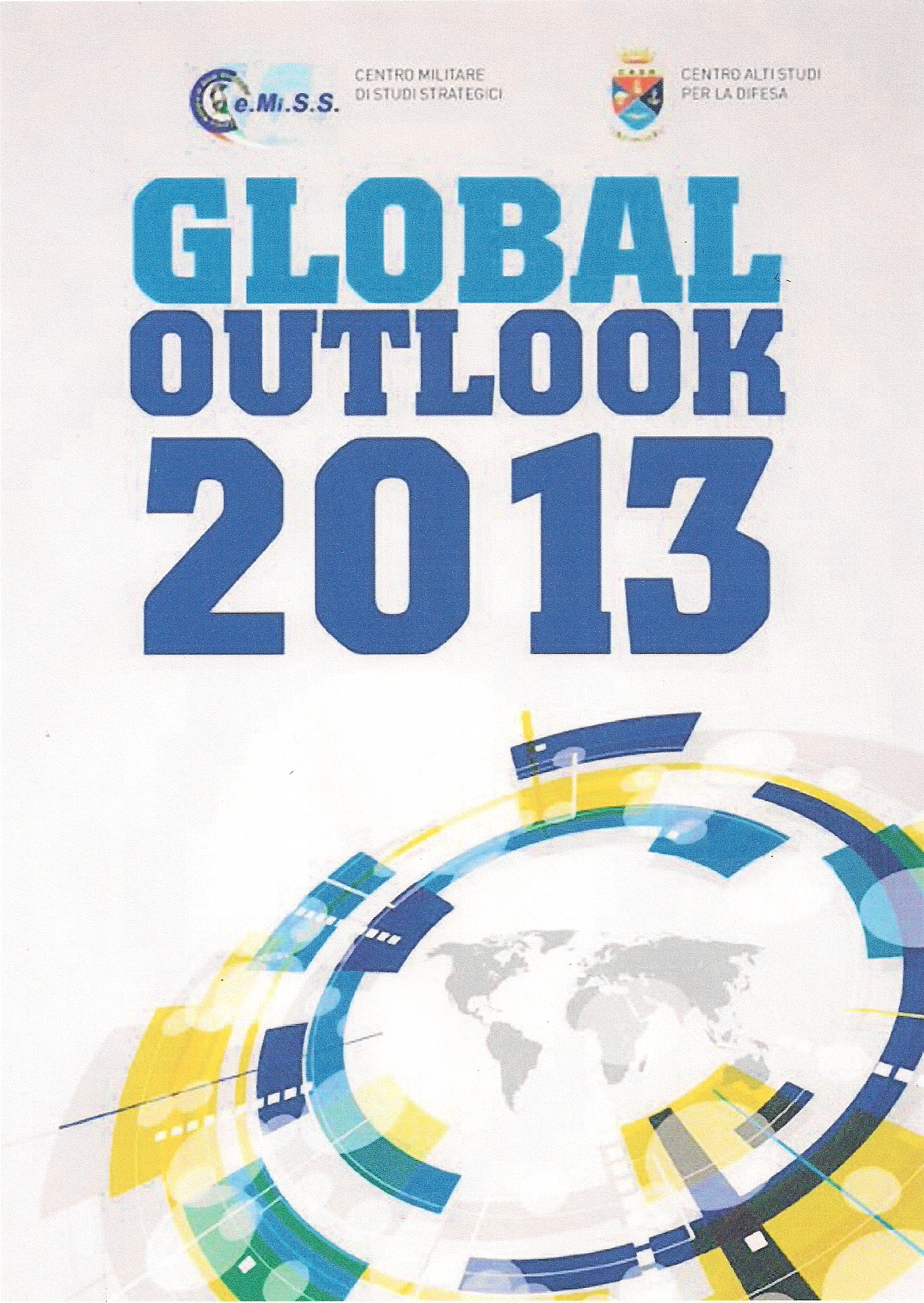
The next two years will be marked more by power vacuums and gaps than by a reassuring graceful degradation of the world order or by the rise of new power constellations. For this reason it is necessary to change the traditional geographic subdivision still built around the borders of nation states into a new vision more adapted to present and future realities. In fact one should conceive global relationships as wide area geopolitical and geoeconomic networks (i.e. geonetworks) crisscrossed by shaping flows.1
Click on Image to Enlarge
The Pacific Geonetwork is dominated by the shift of the strategic centre of gravity towards the Chinese Sea that is the focus of acute maritime controversies. The backdrop is provided by the ambiguous and controversial bond between China and the United States, who are interdependent through the dynamics of the economic global crisis. The banking sector is a particularly critical area because on one hand the US banks are still very vulnerable to higher interest rates (no stress tests have been carried out regarding this emergence) and because the US shadow financial system is practically still unregulated, with serious consequences on national debt as security risk. On the other the Chinese shadow lending system risks to cause another financial crisis with €1,4 billion outstanding wealth manage ment products. There is a serious recovery effort by the USA in the Pacific Ocean, but for the time being military action will be ruled out (Korean crises apart, which remain a serious concern) because the whole American continent is witnessing major political reorganization in all leading countries (USA, Mexico, Venezuela and Brazil).
The Indian Geonetwork is characterised by a strategic China-India rivalry that is moving away from the traditional confrontation along the mountainous arc of Himalaya; the fight for influence is now centred on increased air-sea presence in the Indian Ocean, despite the fact that Washington is the dominant naval power. At the same time a fluid relationship between China, India and the USA is emerging around a tangle of rather converging interests that could isolate Pakistan in the medium term, once the military part of the intervention in Afghanistan will end. The country itself will concentrate more on its internal transition after the 2013 parliamentary polls in May.
This article is divided into two parts: the first part will summarise the situation and propose solutions, explaining the analytical and geopolitical reasons behind the war, the main players and events, future evolution and political proposals; the second will set out the events in chronological form, in order to avoid including an excessive amount of detail in the previous part.
. . . . . . . .
Democratic politics has been kidnapped and intoxicated by the insidious totalitarianism of finanzcapitalism. If democracy is not capable of winning back its independence and freedom, we may only have the cold comfort of living in a science fiction world where financial zaibatsu control the planet and Blade Runner will seem like a children’s fairy-tale.
Here in America it’s somewhat notable to meet up with someone who can identify all fifty of our states if presented with a national map that doesn’t have a legend. European weapons and European diseases made quick work of the native population and there are only a few areas where there is any political friction from the survivors, mostly remote places like Pine Ridge, South Dakota.
Click on Image to Enlarge
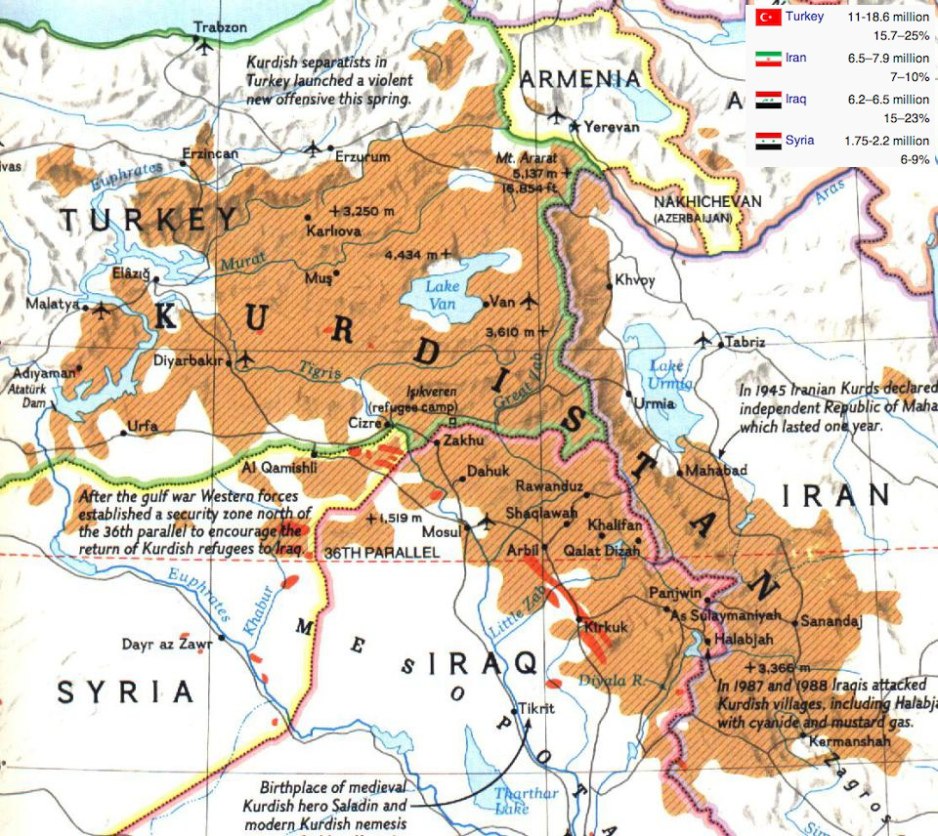
The ethnic, sectarian, and historical divisions of the Mideast are obscure and puzzling to us in general, and they remain puzzling to our policy makers. This is about expectations – the U.S. civil war was an anomaly. We had defined nation states, uniformed armies, a clear cut beginning, a fairly clean end, and while the meme has never died there hasn’t been any large scale violence since the cessation of the conflict, nearly 150 years ago. The Mideast is full and there are always tensions the likes of which we never experience here.
This being said, I am now going to put up a bunch of maps and engage in a bit of wild speculation about some things that aren’t all that likely to happen, but if they did … well … game changers.
When I wrote Mali Is Neither Afghanistan Nor Somalia in mid-January I was coming from a place of common sense. Mali does not have anything like Afghanistan’s opium poppy crop or Somalia’s piracy opportunities. The only shady business that goes on there is the keeping of western captives. It’s reported that half of all kidnap victims in all of Africa are kept somewhere in Azawad – the rebellious part of Mali north of the Niger river.
Economic Causes of Civil Conflict and their Implications for Policy, a 2006 paper on the analysis of 47 civil wars, provided a serious academic confirmation of what I had suspected – insurgencies without funding sources simply don’t last. What does this mean for Syria?
Autonomy was founded in 1996. That was 17 years ago. In my upcoming KMWorld column for August/September, I point out that search, content processing, and even analytics have been consistent for many years. There are a number of reasons for the “sameness” of systems and the corresponding difficulty prospects have in differentiating one system from another.
Perhaps I am off base. Search systems, content processing systems, and analytics systems are very, very different. I am looking at out dated notions such as precision and recall. I am missing the point that search is about interface, “smart” software which knows what I want based on my past behavior, and mobile computing demands search apps which just present information. No information retrieval baloney required like a carefully crafted Boolean query.

 Sign of the future: Sensors that stick everywhere
 StickNFind Technologies, based in Davie, Fla., shipped its first products in March after raising nearly a million dollars in a campaign that ended earlier this year. The company’s low-power Bluetooth sensors are irresistible for the most mundane of reasons. Put a StickNFind sticker on virtually anything, and you can track it from your smartphone up to 100 feet away. In the company’s own survey of 12,000 users, about a third put the stickers on their keys, 20 percent on their wallets, and another 20 percent on pets (mostly cats).