Berto Jongman: Dutch Move to Transform Education Using iPads

04 Education, Culture, Design, Education
Berto Jongman
Berto Jongman

Radical Reform: Dutch iPad Schools Seek to Transform Education

By Marco Evers

Plenty of schools use iPads. But what if the entire education experience were offered via tablet computer? That is what several new schools in the Netherlands plan to do. There will be no blackboards or schedules. Is this the end of the classroom?

Think different. It was more than an advertising slogan. It was a manifesto, and with it, former Apple CEO Steve Jobs upended the computer industry, the music industry and the world of mobile phones. The digital visionary's next plan was to bring radical change to schools and textbook publishers, but he died of cancer before he could do it.

Some of the ideas that may have occurred to Jobs are now on display in the Netherlands. Eleven “Steve Jobs schools” will open in August, with Amsterdam among the cities that will be hosting such a facility. Some 1,000 children aged four to 12 will attend the schools, without notebooks, books or backpacks. Each of them, however, will have his or her own iPad.

There will be no blackboards, chalk or classrooms, homeroom teachers, formal classes, lesson plans, seating charts, pens, teachers teaching from the front of the room, schedules, parent-teacher meetings, grades, recess bells, fixed school days and school vacations. If a child would rather play on his or her iPad instead of learning, it'll be okay. And the children will choose what they wish to learn based on what they happen to be curious about.

Preparations are already underway in Breda, a town near Rotterdam where one of the schools is to be located. Gertjan Kleinpaste, the 53-year-old principal of the facility, is aware that his iPad school on Schorsmolenstraat could soon become a destination for envious — but also outraged — reformist educators from all over the world.

And there is still plenty of work to do on the pleasant, light-filled building, a former daycare center. The yard is littered with knee-deep piles of leaves. Walls urgently need a fresh coat of paint. Even the lease hasn't been completely settled yet. But everything will be finished by Aug. 13, Kleinpaste says optimistically, although he looks as though the stress is getting to him.

‘Pretty Normal in 2020'

Last year, he was still the principal of a school that had precisely three computers, which he found frustrating. “It was no longer in keeping with the times,” he says. Soon, however, Kleinpaste will be a member of the digital avant-garde. He is convinced that “what we are doing will seem pretty normal in 2020.”

Read full article.

Continue reading “Berto Jongman: Dutch Move to Transform Education Using iPads”

Information Operations (IO) Newsletter vol 13, no 08

IO Newsletter

IO-Newsletter-JPEG-300x225

ARSTRAT_IO_Newsletter_v13_no_08

Articles in this issue:

1.      Clearing the Air on Cyber, Electronic Warfare
2.      American Gets Targeted by Digital Spy Tool Sold to Foreign Governments
3.      US Army Maps Future of the Electronic Battlefield
4.      Silent War
5.      US Disrupts Al-Qaeda's Online Magazine
6.      Marines Focused At the Tactical Edge of Cyber, Says Commander
7.      With Troops and Techies, US Prepares For Cyber Warfare
8.      Inside the NSA's Ultra-Secret China Hacking Group
9.      Internet Gurus Fear Iranian Assassins
10.     NSA's Keith Alexander Seeks Cyber Shield For Companies
11.     Killing with Kindness: How Foreign Aid Backfires
12.     Cyber Careers New Center, School to Bring Signals, Cyber, EW Together
13.     “Electronic Warfare is Becoming More Important and More Complex”
14.     Tweeting for the Caliphate: Twitter as the New Frontier for Jihadist Propaganda
15.     Facebook Being Used To Recruit Indonesians For Terrorist Attacks
16.     With Social Media, Middle Classes in Brazil, Turkey Grow Stronger, Angrier
17.     Big Pic: How Turkish Protesters Use Google Maps To Track Police

Neal Rauhauser: A Cognitive Prosthetic

Cultural Intelligence
Neal Rauhauser
Neal Rauhauser

A Cognitive Prosthetic

I recently wrote Curation & Cognition after receiving a paper that defined the practice of curation: Attention Doesn’t Scale. Summary: good curation is a treasure when you find it, and now we know what that entails.

Stemming A Torrent Of Garbage describes the poor condition of LinkedIn groups without naming names. The ones I admit to being in are fine, a lot of the others … not fine. Summary: There is a problem, and good curation can play a role in resolving it.

Click on  Image to Enlarge
Click on Image to Enlarge

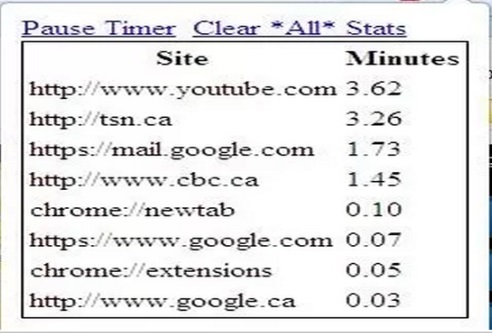
An acquaintance recently forwarded me a story about a young man who was using his cell phone as a ‘cognitive prosthetic’. He had some sort of dangerous sleep disorder and the phone served as means for him to self assess so he’d know when trouble was brewing. This set me to thinking about what sort of cognitive prosthetic I could arrange for myself in order to improve my focus. I had long been thinking I needed to do a time study on how long it took me to get through the policy oriented email I receive, I decided I’d look for a browser plugin that could assist in this, and I got something that will serve as a starting point with my very first search: Time Tracker.

Continue reading “Neal Rauhauser: A Cognitive Prosthetic”

Mike Lofgren: The Sleep of Reason Breeds Monsters – the Failure of American Public Institutions Enabled by the Collapse of American Public Intelligence

Communities of Practice, Corruption, Idiocy, Ineptitude
Mike Lofgren
Mike Lofgren

The Authoritarian Seduction

“The sleep of reason breeds monsters.”
-Francisco Goya

The Gallup organization has released yet another dog-bites-man opinion poll which found that Americans' confidence in Congress has fallen to a record low of 10 percent. This result is a continuation of a decades-long trend of declining approval ratings for Congress, and is justifiable based on that institution's shabby behavior. Wall Street's seizure of our national legislature in the 1990s and the consolidation of its control during the 2000s was at bottom a conspiracy of both parties to surrender popular self-government to the forces of plutocracy. Congress has reduced itself to diversionary behavior and the news media dutifully play along: abortion bills, Benghazi scandals, and similar emotional fodder crafted to stir up the animal juices get maximum press attention. Meanwhile, a bill that would effectively deregulate American financial institutions' overseas derivatives trades – remember the London Whale? – passed the House of Representatives by a 301-124 margin amid a near-blackout by the media.

While Congress's dismal approval rating was the lede in virtually all reporting on the Gallup poll, there are several other findings in that poll that establish a pattern. Labor unions? They are near the bottom, at 20 percent. The print and televised media? They clock in at 23 percent, deservedly so, for reasons explained in the paragraph above. Public Schools? They do better, but only relatively, at 32 percent.

What do those institutions have in common? They are all bodies necessary for enlightened self-government and the self-improvement of citizens. And they are all perceived to be failing in their roles, such that most poll respondents lack confidence in them. There is a good deal of justification in the public's view, but it cannot be healthy for a democracy if its instrument of representational government, its free press, its common provision of education, and the main organizational means by which working people improve their lives, are all held in such low regard.

Continue reading “Mike Lofgren: The Sleep of Reason Breeds Monsters – the Failure of American Public Institutions Enabled by the Collapse of American Public Intelligence”

David Swanson: A Manifesto on the Fraudulent Sequester and “Optional” Laws

Corruption, Government


David Swanson
David Swanson

Sequester Optionally Applied Only to Good Things

Spending cuts have been applied by Congress to both military and non-military spending.

In my view, the military cuts are much too small and the non-military cuts should not exist at all.  In the view of most liberal organizations, the military cuts — like the military spending and the military itself — are to be ignored, while the non-military cuts are to be opposed by opposing all cuts in general.

But, guess what?

The spending limits on the military are being blatantly violated.  Both houses of Congress have now passed military budgets larger than last year and larger than is allowed under the sequester.

Meanwhile the sequester is being used to cut away at all that is good and decent in public policy.

In fact, the House Appropriations Committee proposes to make up for its violation of the law on military spending levels by imposing yet bigger cuts to non-military spending.  And what's the harm in that if all cuts are equally bad?

The sequester, like the anti-torture statute, the war crimes statute, the Fourth Amendment, the First Amendment, the Foreign Intelligence Surveillance Act, the Kellogg-Briand Pact, or the U.N. Charter, turns out to be one of those optional laws.

Laws are for certain people.  The top general now being investigated as a whistleblower does not have a nude isolation cell at Quantico in his future, even though Bradley Manning was treated that way.

Laws are for certain things.  Shooting children in a U.S. school is a crime.  Dropping a missile on a foreign school is something more like law enforcement.  Mothers in Yemen now teach their neighbors' children at home so that they can avoid going out to school while the drones are overhead.  That's called freedom, the spread of democracy.

Continue reading “David Swanson: A Manifesto on the Fraudulent Sequester and “Optional” Laws”

SchwartzReport: Costs of (Allegedly) Hunting Terrorists versus (Alleged) Benefits of a Police State

Corruption, Government, Idiocy, Ineptitude, IO Deeds of War

schwartz reportIf you read my essay, A Sense of Proportion. (See: http://www.huffingtonpost.com/stephan-a-schwartz/surveillance-national-security_b_3436083.html) you know that I think this is the important unasked question. The answer though, as I have already published on this site, is that the terrorism argument is a cover for a deeper purpose, controlling society in the face of breakdown resulting from climate chan! ge. Here is a take from Germany, and you can see that other countries take considerable umbrage at the U.S.'s hubris. And have begun, as this report spells-out, to ask the right question.

‘Do Costs of Hunting Terrorists Exceed Benefits?'
Der Spiegel (Germany)

Phi Beta Iota:

Click on Image to Enlarge

See Also:

2013 Public Governance in the 21st Century: New Rules, Hybrid Forms, One Constant – The Public [Work in Progress]

2012 PREPRINT Foreword to NATO Book on Public Intelligence for Public Health

2010 The Ultimate Hack Re-Inventing Intelligence to Re-Engineer Earth (Chapter for Counter-Terrorism Book Out of Denmark)

2010: Human Intelligence (HUMINT) Trilogy Updated