INFILTRATION. SABOTAGE. MAYHEM. FOR YEARS FOUR-STAR GENERAL KEITH ALEXANDER HAS BEEN BUILDING A SECRET ARMY CAPABLE OF LAUNCHING DEVASTATING CYBERATTACKS. NOW IT’S READY TO UNLEASH HELL.
James Bamford
Wired, 12 June 2013
EXTRACT
Click on Image to Enlarge
Alexander runs the nation’s cyberwar efforts, an empire he has built over the past eight years by insisting that the US’s inherent vulnerability to digital attacks requires him to amass more and more authority over the data zipping around the globe. In his telling, the threat is so mind-bogglingly huge that the nation has little option but to eventually put the entire civilian Internet under his protection, requiring tweets and emails to pass through his filters, and putting the kill switch under the government’s forefinger. “What we see is an increasing level of activity on the networks,” he said at a recent security conference in Canada. “I am concerned that this is going to break a threshold where the private sector can no longer handle it and the government is going to have to step in.”
As we ask for your support for our ongoing work, we want to share a few thoughts on the nature of that work.
We are coming to see co-intelligence as the capacity of life and all of us to consciously participate in dynamic, evolving wholeness – in ourselves, in our groups and communities, in the life of our world, and in the wondrous ongoing story of our universe.
There is real joy in such participation. There is also abundance, peace, justice, and sustainability… and deep meaning and wisdom.
The Co-intelligence Institute seeks to help co-intelligent participation become an indelible part of our cultures, our political and economic systems, and the ways we all think, feel, and live our lives.
Today's crises make it increasingly hard to live in the old ways. We are rapidly learning we can't be oblivious participants, acting as if we are separate from each other and the world, treating life as if it is there just to torment or serve us.
The newly obvious consequences of those behaviors and attitudes have inspired a global wave of evolutionary engagement – what Swami Beyondananda calls “the Great Upwising” – creating new and better ways to participate consciously and vibrantly in and with life, together.
Unless he was an asset of the Chinese or some other foreign intelligence service prior to “coming out” as he did, I don't think it's likely any foreign intel service is going to latch onto Edward Snowden.
Amazon Page
If he were already a recruited asset, one would think that his case officers would have given him a better exfil plan than “fly to Hong Kong and hold a press interview.” In fact, were he already on some service's payroll, the counsel would have been “stay right where you are, you can do us the most good in your current Booz Allen position.” He is a “property,” but don't think it likely that he would be picked up in such a short time by any country's service, China included.
To use jargon, Snowden is “blown” — that is, he is a hot potato, with many downsides politically and from almost any perspective. My guess is that he realized after his flight to HK and going public that this was not a very swift move, and that he was in danger of being picked up by the authorities, acting on behalf of the local U.S. mission there (or, in his paranoid mind's eye, snatched and rendered by the hated CIA) — and he was relentlessly besieged by media — so he disappeared himself for the moment, which won't last in Hong Kong, a very well-organized society with a super security force. In short, any service that might like to contact him for a debriefing or other relationship would right now be appealing to its highers (the very top) with arguments as to just why they would wish to touch this guy at this time.
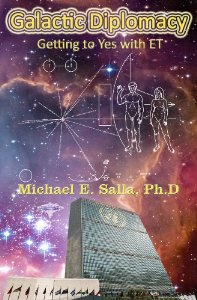
This book is a comprehensive source for individuals who think that sufficient evidence merits acceptance of the premise that intelligent extraterrestrials are already interacting with humanity and who are already asking what an appropriate, democratic, political response might be (even if an unsupervised shadow government maintains negotiations, exchanges and de facto agreements not only detached from common democratic processes but with the extraterrestrial groups it finds more appropriate. Galactic Diplomacy: Getting to Yes with ET is a seminal book written to offer a leading edge analysis of the nature of different extraterrestrial groups so that mindful citizens willing to represent their vital interests and even those of humanity, the Earth and even of all planetary sentient beings acquire basic, general information to intelligently proceed with a peaceful, track two, complementary, citizen s Galactic Diplomacy. … Galactic Diplomacy: Getting to Yes with ET showed me that it was possible to treat the complex and startling exopolitical situation with fairness, academic distinction and a form of reasonableness that includes an objective analysis and qualitative assessment suitable to a useful, normal and moral human standpoint. It succeeds in presenting a necessarily challenging overview of various unique categories that must be inclusively studied to practice exopolitics and to responsibly launch a new stage in real-world human-ET interacting with a vital and extraordinary political situation. –Giorgio Piacenza Cabrera
AMYGOODMAN: William Binney, can you respond to the director of national intelligence, James Clapper? And then I want to ask Glenn to do the same.
WILLIAMBINNEY: Sure. In my mind, that’s a red herring. I mean, it’s just a false issue. The point was, the terrorists have already known that we’ve been doing this for years, so there’s no surprise there. They’re not going to change the way they operate just because it comes out in the U.S. press. I mean, the point is, they already knew it, and they were operating the way they would operate anyway. So, the point is that they’re—we’re not—the government here is not trying to protect it from the terrorists; it’s trying to protect it, that knowledge of that program, from the citizens of the United States. That’s where I see it.
U.S. agencies did not find Headley or warn foreign counterparts about him in the first half of 2009 while he conducted surveillance in Denmark and India and met and communicated with ISI officers and known Lashkar and al-Qaida leaders.
In an exclusive interview carried out from a secret location in the city, the former Central Intelligence Agency analyst also made explosive claims that the US government had been hacking into computers in Hong Kong and on the mainland for years.
The government would like to shift the conversation to accuse other people of wrongdoing, when it is their own wrongdoing that should be discussed and examined before the American people. David Colapinto, a lawyer who has represented a number of whistleblowers
When the federal government went looking for phone numbers tied to terrorists, it grabbed the records of just about everyone in America. Why every phone number? “Well, you have to start someplace,” Director of National Intelligence James Clapper told NBC News on Monday. (J. Scott Applewhite / Associated Press / June 12, 2013)
According to Snowden, the NSA has engaged in more than 61,000 hacking operations worldwide, including hundreds aimed at Chinese targets. Among the targets were universities, businesses and public officials.
Snowden's allegations appear to give weight to claims by some Chinese government officials that the country has been a victim of similar hacking efforts coming from the United States.
With some honorable exceptions, their primary function is protecting the interests of the political and corporate establishments, often by finding some novel and tendentious way to legitimate their self-interested actions.
Within this framework, scandal is best understood as a disruption of the natural, sacred order, which is restored by ritual exposure, condemnation, punishment, and cleansing. Conceptually, the essence of scandal is that things are not as they seem, or as they should be – that supposedly “high” things are actually “low”, that righteous things are corrupt, honourable things dishonorable – and that all must be made right again.
The techno-social revolution that we are living through spurred by the Internet, social media and cleverly designed, inconspicuous platforms are inviting us to throw away our personal privacy. This revolution is driven by a combination of commercial competition between the Information Age commerical giants and encouraged by governments desperate to deliver us to the ‘promised land' of safety and security. The question is – whose safety, whose security?
A poll conducted by the Pew Research Center over the four days immediately after the news first broke found that just 41 percent of Americans deemed it unacceptable that the National Security Agency “has been getting secret court orders to track telephone calls of millions of Americans to investigate terrorism.”
“Existing laws do not seem to have kept up with the threat to privacy and other rights posed by the government’s relatively new capacity to collect and analyze quickly vast quantities of personal information,” said Kenneth Roth, executive director at Human Rights Watch.