Reflections: After the attempted tolls on bank savings in Cyprus for saving the Euro, a new kind of tolls can be heard in the distance for the currency. The fundamental trust in the currency as a store of value has been broken, according to multiple signs across Europe. Even with the Cypriot parliament backpedaling frantically, the situation appears snowballing – there could be a bank run in two weeks.
. . . . . . . . .
In the past days with the Cypriot bailout measure, these first signs of a currency collapse scenario have materialized. People are now actively seeking to trade off their Euros, no longer trusting them as a store of value. When this has happened in the past to currencies, they have not survived.
North Korea: On 21 March at 0930 local time, the Korean Central Broadcasting Station made the following unscheduled announcement:
“We inform all soldiers and residents!
“This is an air raid warning. This is an air raid warning. This is an air raid warning. Military units and units of all levels must quickly take measures to prevent damage from the enemy's air strikes.”
“This is an air raid warning. This is an air raid warning. This is an air raid warning. Military units and units of all levels must quickly take measures to prevent damage from the enemy's air strikes. This is the Korean People's Army Broadcasting Station.”
At 1028 local time the Korean Central Broadcasting Station carried a second unscheduled announcement:
“This is the Korean People's Army Broadcasting Station. We inform all residents and soldiers: The air raid warning is lifted. The air raid warning is lifted. The air raid warning is lifted.
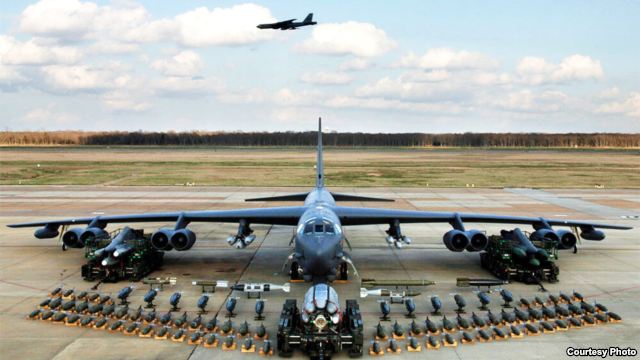
Comment: According to defectors queried by the Daily NK, this was the first use of the public radio system for broadcasting an air raid warning. It was a test because it was too brief to be a civil defense evacuation drill. In large cities they take up to a full day. This is significant because air raid warnings are never broadcast. This was probably a no-notice drill in response to the US announcement about B-52s operating over South Korea.
Air raid warnings were more common in the 1990s, but all were sent via the “Third Broadcast” which is a cable radio system, only accessible in North Korea. The Korean People's Army Broadcasting Station only has been known to use the Third Broadcast.
The use of a nationwide radio broadcast implies the North's leaders expect they will need such a system at a time when people would be away from their homes, in fields, on the street or in public conveyances. They expect the population to respond swiftly according to plan without advance warning. That is uncommonly realistic preparation. The B-52 announcement had effect.
North Korean drones. The Korean Central News Agency reported on 20 March that North Korea launched a drone attack on a simulated South Korean target. The press item touted that Kim Jong Un personally supervised the operation. The drone strike successfully shot down a target mimicking a South Korean cruise missile.
Comment: It is not clear just what transpired in the exercise, whether a drone actually flew. However, South Korean news sources in February 2012 reported North Korea had acquired older US drones, MQM-107D Streaker target drones built by Raytheon, from a Middle Eastern country. South Korea's Yonhap reported they possibly came from Syria. Photos of the drone are available on the Internet.
The North Koreans are extremely good at tinkering with older systems and finding value in materials that would end up on the cutting room floor in the US. Their entire missile program evolved from tinkering with obsolescent systems. They certainly have the science to boost the performance and capabilities of a target drone.
The North Korean news report disclosed information about the status of a fairly new weapons project. They are aware of the threat from Allied cruise missiles and have been working to counter them and probably build their own for over a year.
Speaking before a crowd of tech geeks at GigaOM's Structure:Data conference in New York City, CTO Ira “Gus” Hunt said that the world is increasingly awash in information from text messages, tweets, and videos — and that the agency wants all of it.
“The value of any piece of information is only known when you can connect it with something else that arrives at a future point in time,” Hunt said. “Since you can't connect dots you don't have, it drives us into a mode of, we fundamentally try to collect everything and hang onto it forever.”
CIA CTO Gus Hunt
Hunt's comments come two days after Federal Computer Week reported that the CIA has committed to a massive, $600 million, 10-year deal with Amazon for cloud computing services. The agency has not commented on that report, but Hunt's speech, which included multiple references to cloud computing, indicates that it does indeed have interest in storage and analysis capabilities on a massive scale.
The CIA is keenly interested in capabilities for so-called “big data” — the increasingly massive data sets created by digital technology. The agency even has a page on its website pitching big data jobs to prospective employees.
Hunt acknowleded that at some scale, data storage becomes impractical, adding that he meant “forever being in quotes” when he said the agency wants to keep data “forever.” But he also indicated that he was interested in computing capabilities like 1 petabyte of RAM, a massive capacity for on-the-fly calculations that has heretofore been seen only in computers that simulate nuclear explosions.
He referenced the failure to “connect the dots” in the case of Umar Farouk Abdulmutallab, the “underwear bomber” who was able to board a plan with an explosive device despite repeated warnings of his intentions. In that case, a White House review found that the CIA had all of the data it needed to identify the would-be bomber, but still failed to stop him. Nevertheless, the agency does not seem to have curbed its ambitions for an endless amount of data.
“It is really very nearly within our [NSA's] grasp to be able to compute on all human generated [digital] information,” Hunt said. After that mark is reached, Hunt said, the agency would also like to be able to save and analyze all of the digital breadcrumbs people don't even know they are creating.
“You're already a walking sensor platform,” he said, nothing that mobiles, smartphones and iPads come with cameras, accelerometers, light detectors and geolocation capabilities.
“You are aware of the fact that somebody can know where you are at all times, because you carry a mobile device, even if that mobile device is turned off,” he said. “You know this, I hope? Yes? Well, you should.”
Hunt also spoke of mobile apps that will be able to control pacemakers — even involuntarily — and joked about a “dystopian” future where self-driving cars force people to go to the grocery store to pick up milk for their spouses.
Hunt's speech barely touched on privacy concerns. But he did acknowledge that they exist.
“Technology in this world is moving faster than government or law can keep up,” he said. “It's moving faster I would argue than you can keep up: You should be asking the question of what are your rights and who owns your data.”
Big shots are above the law, the government now admits, but a three-tiered justice system has Congress churning out new bills to keep the prison industry booming.
“Equal Justice under Law,” is the motto inscribed on the frieze of the United States Supreme Court building.
Sticklers for semantics say that the modifiers “equal” and “under law” in the Supreme Court's motto are redundant, because justice by definition is equal treatment under a system of written and publicly accessible rules. Whether that is the case is precisely what is at issue in America today.
Did you know that there are more possible moves in a game of chess then there are atoms in the entire universe and seconds that have elapsed since the big bang? In fact, chess can be a virtually endless game. If that’s the case then how do chess masters emerge? What’s the point of trying to study something if the moves are endless? Any good chess player will tell you that one of the keys to success is the ability to recognize patterns and situations to help you identify what the best next move is.