Journal: The Activist Power of the Internet

Civil Society, Collective Intelligence, Gift Intelligence, IO Mapping, IO Multinational, IO Sense-Making, Peace Intelligence

Sarah Kessler About 3 hours ago Sarah Kessler 9

Why Social Media Is Reinventing Activism

The argument that social media fosters feel-good clicking rather than actual change, began long before Malcolm Gladwell brought it up in the New Yorker — long enough to generate its own derogatory term. “Slacktivism,” as defined by Urban Dictionary, is “the act of participating in obviously pointless activities as an expedient alternative to actually expending effort to fix a problem.”

If you only measure donations, social media is no champion. The national chapter of the Red Cross, for instance, has 208,500 “likes” on Facebook, more than 200,000 followers on Twitter, and a thriving blog. But according to the Chronicle of Philanthropy, online donations accounted for just 3.6% of private donations made to the organization in 2009.

But social good is a movement still in its infancy. Facebook launched in 2004, YouTube in 2005 and Twitter in 2006. Let’s give the tools a little while to grow up before we start judging them.

All of that virtual liking, following, joining, signing, forwarding, and, yes, clicking, has a lot of potential to grow into big change. Here’s why:

Read the entire piece.

Phi Beta Iota: Complementary observations are made by Steven Denning in his featured post, Reference: The Revolution IS Being Tweeted.

See Also:

Continue reading “Journal: The Activist Power of the Internet”
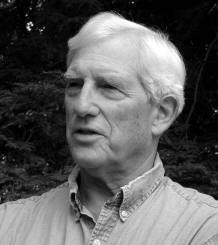
Who’s Who in Peace Intelligence: Harrison Owen

Alpha M-P, Collaboration Zones, Communities of Practice, Peace Intelligence
Harrison Owen
Harrison Owen

Harrison Owen lives in Maryland and is immediately available to help any element of the U.S. Government, from White House to the smallest independent element of the U.S. Intelligence Community.

“Learning as Transformation” is one of his more important and most widely-read online papers.

He is the inventor of Open Space Technology (OST).  Below are links to reviews of his two most important books.  At his home page (click on the photo) are links to Papers and other gold nuggets.

Review: Wave Rider: Leadership for High Performance in a Self-Organizing World

Review: The Practice of Peace

We consider his offering so very important to our shared future that below we summarize the ingredients.  This knowledge is free and can be used by anyone anywhere.

Continue reading “Who's Who in Peace Intelligence: Harrison Owen”

Journal: Who Controls (and Secures) the Internet?

10 Security, Computer/online security, Cyberscams, malware, spam, IO Secrets, Military, Officers Call
Marcus Aurelius Recommends

Who controls the internet?

By Misha Glenny

Published: October 8 2010 23:40 | Last updated: October 8 2010 23:40

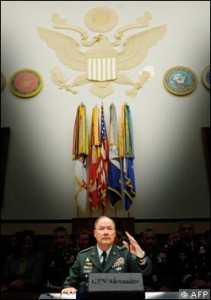
Squared-jawed, with four stars decorating each shoulder, General Keith Alexander looks like a character straight out of an old American war movie. But his old-fashioned appearance belies the fact that the general has a new job that is so 21st-century it could have been dreamed up by a computer games designer. Alexander is the first boss of USCybercom, the United States Cyber Command, in charge of the Pentagon’s sprawling cyber networks and tasked with battling unknown enemies in a virtual world.

CINC CYBER Full Story Online

Last year, US Defense Secretary Robert Gates declared cyberspace to be the “fifth domain” of military operations, alongside land, sea, air and­ space. It is the first man-made military domain, requiring an entirely new Pentagon command. That went fully operational a week ago, marking a new chapter in the history of both warfare and the world wide web.

In his confirmation hearing, General Alexander sounded the alarm, declaring that the Pentagon’s computer systems “are probed 250,000 times an hour, up to six million per day”, and that among those attempting to break in were “more than 140 foreign spy organisations trying to infiltrate US networks”. Congress was left with a dark prophecy ringing in its ears: “It’s only a small step from disrupting to destroying parts of the network.”

Phi Beta Iota: Of the $12 billion a year to be spent, roughly 90% if not more will be spent on “vapor-ware.”  To understand the gap between the 67 people who actually know what needs to be done, and the hundreds of thousands who will be employed in cyber-theater (pun intended), see below.  There are multiple sucking chest wounds in this enterprise, the two largest are a) the DoD Grid is a mess with no integrity in the fullest sense of the word, trying to “secure” that mess is next to impossible; and  b) the only way to make Pentagon information operations safe is to make ALL operations safe, but this is not how the US Government and especially not how the Pentagon thinks–hence, another decade will be wasted.  The upside is that OpenBTS and all sorts of other opens are emergent, and we may all end up going to Web 4.0 while the Pentagon stays at Web 2.0.

See Also:

2010: OPINION–America’s Cyber Scam

1994 Sounding the Alarm on Cyber-Security

Continue reading “Journal: Who Controls (and Secures) the Internet?”

Reference: “True Cost” of Private Military Contractors

Blog Wisdom, Hill Letters & Testimony
David Isenberg
Posted: October 9, 2010 12:20 AM

PMSC and the Quest for Perfect Information

Phi Beta Iota: Click on the PMSC title to read the entire post at Huffington Post.  Below is the quoted testimony followed by a link to our review of the officer's book.

Back on June 22 there was a hearing of the House Oversight and Government Reform Subcommittee on National Security and Foreign Affairs Hearing; “Investigation of Protection Payments for Safe Passage along the Afghan Supply Chain?” Let's look at the written testimony of Colonel Hammes, Senior Research Fellow, Institute for National Strategic Studies, National Defense University.

Col Hammes is not an opponent of PMSC. His statement opens by detailing the benefits of their use. But he goes on to detail their costs:

The Bad
When serving within the combat zone, particularly during a counterinsurgency, contractors create a number of significant problems from the tactical to the strategic level. Three primary characteristics of contractors, particularly armed contractors, create problems for the government. First, the government does not control the quality of the personnel the contractor hires. Second, unless it provides a government officer or NCO for each convoy, personal security detail or facilities protection unit, it does not control their daily interactions with the local population. Finally, the population holds the government responsible for everything the contractors do or fail to do. Since insurgency is essentially a competition for legitimacy between the government and insurgents, this factor elevates the issue of quality and tactical control to the strategic level.

Continue reading “Reference: “True Cost” of Private Military Contractors”

Reference: Interagency Conflict Assessment Framework (ICAF)

White Papers

What is the ICAF?

The ICAF is a framework that can be used to help people from different U.S. government departments and agencies work together to reach a shared understanding of a country’s conflict dynamics and consensus on potential entry points for additional U.S. government efforts. This assessment will provide for a deeper understanding of the underlying conflict dynamics in your country or region.

ICAF teams are situation-specific and should include Department/agency representatives with relevant technical or country expertise. ICAF teams are often co-led by the Conflict Prevention division of S/CRS and USAID’s Office of Conflict Management and Mitigation because people in those offices have conflict assessment expertise, but anytime two or more Departments/agencies want to conduct an ICAF, they may do so. Unless they have conflict assessment experience, however, they should request assistance from S/CRS/CP or USAID/CMM.
An ICAF allows an interagency team to identify potential entry points for future U.S. government efforts in conflict prevention and conflict transformation, but it does not make direct recommendations for program design. That is the role of the Sectoral Assessment. Use of sectoral assessments is consonant with use of ICAF in the following ways:

  • Results from sectoral assessments performed in the past provide data that is fed into the ICAF
  • During a situation assessment, the results of an ICAF identify sectors most critically in need of an in depth sectoral assessment prior to planning, or
  • After an ICAF is conducted and a plan has been created, sectoral assessments are conducted to assist in the design of programs.

Download the ICAF Document for more details.

Read Rest of Department of State Overview of ICAF Process

Journal: Alaska Selling Her Birthright…Water

12 Water, True Cost

Newsweek Story Online

The New Oil

Should private companies control our most precious natural resource?

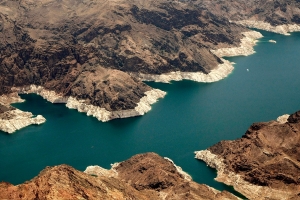
Sitka, Alaska, is home to one of the world’s most spectacular lakes. Nestled into a U-shaped valley of dense forests and majestic peaks, and fed by snowpack and glaciers, the reservoir, named Blue Lake for its deep blue hues, holds trillions of gallons of water so pure it requires no treatment. The city’s tiny population—fewer than 10,000 people spread across 5,000 square miles—makes this an embarrassment of riches. Every year, as countries around the world struggle to meet the water needs of their citizens, 6.2 billion gallons of Sitka’s reserves go unused. That could soon change. In a few months, if all goes according to plan, 80 million gallons of Blue Lake water will be siphoned into the kind of tankers normally reserved for oil—and shipped to a bulk bottling facility near Mumbai. From there it will be dispersed among several drought-plagued cities throughout the Middle East.

Phi Beta Iota: The commercialization of Earth has already resulted in enormous costs most of which are barely understood today, at the same time that changes to the Earth that used to take 10,000 years, now take three.  The “true cost” of shipping bulk water is already known to be much higher than the engaged parties recognize–these are costs to the environment, the balance of nature, and ultimately to the sustainability of the very water supply being looted.

Journal: Hungary Dismembered & Remembered

Cultural Intelligence
Then and Now Home Page

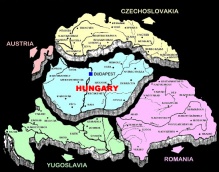
The 90th Anniversary of Hungary's Dismemberment: Hungary declares “National Day of Unity,” AHF issues statement: “Trianon is not only tragic history, it is a lingering tragedy which continues to affect the Hungarian minorities and historical communities living in the states neighboring Hungary even today.”

At the time President Wilson said: “The proposal to dismember Hungary is absurd” and later Sir Winston Churchill said: “Ancient poets and theologians could not imagine such suffering, which Trianon brought to the innocent.We are sad to report that they were right.

Phi Beta Iota: The day will come when many of the artificial political boundaries imposed by selected Western powers, not only in Africa but in Europe and elsewhere, are rejected.  Professor Philip Allott of Cambridge has written the best book to date on the insanity and the human cost of these ill-considered impositions, see Review: The Health of Nations–Society and Law beyond the State.  This is not to say that previous boundaries should be restored, but rather that the world is moving toward panarchy and hybrid governance–water may have one larger region and multinational governance, sewage a more local arrangement….and so on.

noble gold