Berto Jongman: The End of Factory Education

04 Education, 08 Wild Cards, Academia, Ethics
Berto Jongman
Berto Jongman

How a Radical New Teaching Method Could Unleash a Generation of Geniuses

EXTRACT:

Juárez Correa didn’t know it yet, but he had happened on an emerging educational philosophy, one that applies the logic of the digital age to the classroom. That logic is inexorable: Access to a world of infinite information has changed how we communicate, process information, and think. Decentralized systems have proven to be more productive and agile than rigid, top-down ones. Innovation, creativity, and independent thinking are increasingly crucial to the global economy.

Click on Image to Enlarge

And yet the dominant model of public education is still fundamentally rooted in the industrial revolution that spawned it, when workplaces valued punctuality, regularity, attention, and silence above all else. (In 1899, William T. Harris, the US commissioner of education, celebrated the fact that US schools had developed the “appearance of a machine,” one that teaches the student “to behave in an orderly manner, to stay in his own place, and not get in the way of others.”) We don’t openly profess those values nowadays, but our educational system—which routinely tests kids on their ability to recall information and demonstrate mastery of a narrow set of skills—doubles down on the view that students are material to be processed, programmed, and quality-tested. School administrators prepare curriculum standards and “pacing guides” that tell teachers what to teach each day. Legions of managers supervise everything that happens in the classroom; in 2010 only 50 percent of public school staff members in the US were teachers.

The results speak for themselves: Hundreds of thousands of kids drop out of public high school every year. Of those who do graduate from high school, almost a third are “not prepared academically for first-year college courses,” according to a 2013 report from the testing service ACT. The World Economic Forum ranks the US just 49th out of 148 developed and developing nations in quality of math and science instruction. “The fundamental basis of the system is fatally flawed,” says Linda Darling-Hammond, a professor of education at Stanford and founding director of the National Commission on Teaching and America’s Future. “In 1970 the top three skills required by the Fortune 500 were the three Rs: reading, writing, and arithmetic. In 1999 the top three skills in demand were teamwork, problem-solving, and interpersonal skills. We need schools that are developing these skills.”

That’s why a new breed of educators, inspired by everything from the Internet to evolutionary psychology, neuroscience, and AI, are inventing radical new ways for children to learn, grow, and thrive. To them, knowledge isn’t a commodity that’s delivered from teacher to student but something that emerges from the students’ own curiosity-fueled exploration. Teachers provide prompts, not answers, and then they step aside so students can teach themselves and one another. They are creating ways for children to discover their passion—and uncovering a generation of geniuses in the process.


Read full article.

Evan Ellis: China Pulls Back from Argentina

02 China, 02 Diplomacy, 03 Economy, 05 Energy, 08 Wild Cards
Evan Ellis
Evan Ellis

I am writing to pass along to you a story from Argentina which, in addition to the story itself, says much about the nature of Chinese engagement in the region, including how the Chinese approach to pursuing business and political objectives in the region differs from that of the US.

For me, the story below illustrates well the nuances, contradictions and complexity of Chinese engagement in the region:  here, it is not the Chinese who are behaving badly, but rather, their partners.   The Chinese are powerfully exercising influence, yet using informal channels and indirect pressures, rather than public conditions and demands.  The Chinese are both attempting to “save face” for their partner, and yet also indirectly show their ire when they themselves ‘lose face.”  And finally, a reminder that the dynamics of the China-Latin America engagement is a story of PEOPLE, and not just countries and faceless companies.

Continue reading “Evan Ellis: China Pulls Back from Argentina”

Chuck Spinney: Two Evaluations of Middle East After Arab Spring

08 Wild Cards
Chuck Spinney
Chuck Spinney

Attached below are two very important reports by two of the most astute observers of conflicts in the Middle East.  The first is a precisely-focused report by Rami Khouri, editor at large of Lebanon's Daily Star.  Khouri analyzes how the recent assassination of Mohamad Chatah needs to be interpreted in the context of complexities of (1) Lebanon's domestic politics, (2) the Syrian war's  spilling over and exacerbation of the domestic conflicts in Lebanon, and (3) the larger Sunni-Shi'a conflict in the Arab-Persian world.

The second attachment, “A Long Ferment in the Middle East,” by Patrick Cockburn, is a great bookend to Khouri's incisive analysis.  Cockburn has produced a wide-ranging, brilliantly written portrait of the larger context in which Lebanon is but one crisis.   Cockburn analyzes the growing instability across the Middle East, especially from the viewpoint of how the emerging political retrenchments triggered by western interventions and western naivety on the one hand, and/or the local authoritarian or religious forces on the other, have worked so surprisingly well to undo the popular secular pressures that exploded during the so-called Arab Spring.  He ends with an imaginative comparison of the apparent Kurdish success in Iraq to the seeming failures of the Syrian rebels. Without implying any kind of criticism or detracting from his points, two additional factors might also be involved in the Kurdish success: the international role of Iraqi Kurdistan's oil wealth and Israel's shadowy involvement in Iraqi Kurdistan, including its subtle impact on fault lines in Turkish politics.

>FYI, I reformatted and highlighted both attachment to make my impressions of these important papers a little clearer (readers who find this distracting will find Kouri's original at this link and Cockburn's original at this link)

Chuck Spinney 

Marcus Aurelius: Foreign Policy Think Again Piece on Drugs and Drug Routes

08 Wild Cards, 10 Security, 10 Transnational Crime, 11 Society
Marcus Aurelius
Marcus Aurelius

I don't work in the intelligence community but, IMHO, the most important issue here is logistics.  Also IMHO, the fight among the drug cartels is a fight for control of the smuggling routes.  Further IMHO, the long-established nexus between DTOs and terrorists suggests that it would be naive to believe that terrorists or VEOs [Violent Extremist Organizations, a more politically correct term] are not already exploiting the drug smuggling routes to move human, physical, and fiscal assets into the United States.

fp logoThink Again: Mexican Drug Cartels

They aren't just about Mexico or drugs anymore.

01 “Drugs Aren't a Foreign Policy Problem.”
02 “The Cartels Are Focused on Drugs.”
03 “But the Violence Is Unique to the Drug Trade.”
04 “At Least the Violence Is Contained to Mexico.”
05 “The Problem Is the War on Drugs. Legalization Would Help.”
06 “Decapitating the Cartels Will Render Them Powerless.”
07 “We Need to Hit Them Where It Hurts: the Wallet.”

Read full article.

Phi Beta Iota: A very strong piece. THINK AGAIN is a feature of the revitalized Foreign Policy offering, in which a number of conventional wisdom premises are brought together and critically challenged.

NIGHTWATCH: UN & AU Lack Intelligence (Strategic, Operational, Technical) in Central African Republic

08 Wild Cards, Cultural Intelligence, Peace Intelligence
Click on Image to Enlarge

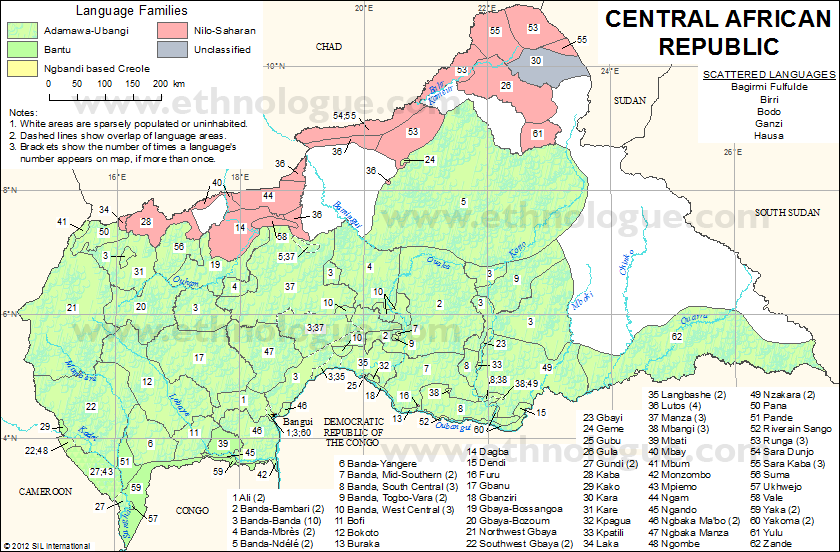
Central African Republic (CAR): Update. Six Chadian peacekeepers were killed on 25 December in Bangui, probably by Christian militias because the Chadians are Muslims.

On the 26th, assailants armed with heavy weapons, according to press reports, attempted to attack the presidential palace in Bangui, but were repulsed by loyal troops.

Some local experts conjectured that the attack was mounted by Christian militiamen who hoped to kill or overthrow the current president, Michel Djotodia – a Muslim and former rebel who overthrew Francois Bozize, the elected Christian president nine months ago.

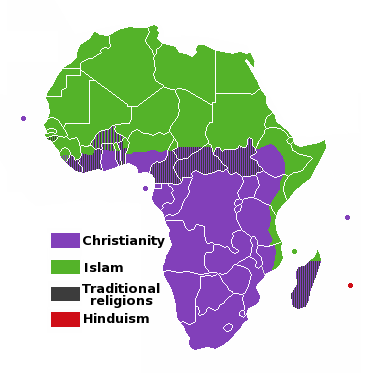
Comment: Most citizens of CAR are Christians. They are not fighting back against the Muslims who seized power by force last March under Djotodia's leadership. The African Union peacekeepers are either in the way or are targets because a large number of them are Muslims, such as the Chadians.

The UN has no idea how to deal with this. The Christians are taking back the capital from the Muslim Seleka rebels, led by Djotodia.

Today's events confirm the judgment that the presence of well-equipped ground forces mounting patrols will have no effect on the violence, and might be making it worse.

Click on Image to Enlarge

Phi Beta Iota: One can only speculate as to how much more effective the UN and the AU would be if they had a real intelligence architecture able to do what the Member states refuse to do — holistic analytics, including cultural and religious intelligence, at all four levels of analysis (strategic, operational, tactical, technical). CAR is on the fault line between Islam to the north and Christianity to the south.

Chuck Spinney: Re-Assessing the Conflict in Syria and Egypt

04 Inter-State Conflict, 05 Civil War, 07 Other Atrocities, 08 Proliferation, 08 Wild Cards
Chuck Spinney
Chuck Spinney

The War Continues

2013: Assessing the Conflict in Syria and Egypt

by RAMZY BAROUD

Counterpunch, DECEMBER 26, 2013

2013 has expectedly been a terrible year for several Arab nations. It has been terrible because the promise of greater freedoms and political reforms has been reversed, most violently in some instances, by taking a few countries down the path of anarchy and complete chaos. Syria and Egypt are two cases in point.

Syria has been hit the hardest. For months, the United Nations has maintained that over 100,000 people have been killed in the 33 months of conflict. More recently, the pro-opposition Syrian Observatory for Human Rights concluded that at least 125,835, of which more than third of them are civilians, have been killed.

The UN’s humanitarian agency (OCHA) says that millions of Syrians living in perpetual suffering are in need of aid, and this number will reach 9.3 million by the end of next year.

Read full article.

Chuck Spinney: Peter Van Buren – Any More U.S. “Stabilization” and Africa Will Collapse

08 Wild Cards, Corruption, Government, Idiocy, Ineptitude, IO Deeds of War, Military
Chuck Spinney
Chuck Spinney

Any More U.S. “Stabilization” and Africa Will Collapse

By: Peter Van Buren Monday

December 23, 2013 10:39 am

South Sudan is at the brink of civil war and societal collapse

History is just one of those hard things to ignore, especially in South Sudan.

In 2011, the U.S. midwifed the creation of a new nation, South Sudan. Though at the time Obama invoked the words of Dr. Martin Luther King speaking about Ghana (“I knew about all of the struggles, and all of the pain, and all of the agony that these people had gone through for this moment”) in officially recognizing the country, many were more focused on the underlying U.S. motives,

Continue reading “Chuck Spinney: Peter Van Buren – Any More U.S. “Stabilization” and Africa Will Collapse”

noble gold