SchwartzReport: Japan Solar Power Replaces Seven Nuclear Reactors — In ONE YEAR

03 Economy, 05 Energy, 07 Health, 08 Wild Cards, 11 Society, Commerce, Ethics, Government

schwartz reportThe Germans have done it. The Japanese are doing it. We remain in the grip of the carbon energy barons.

Japan: The World's New Star in Solar Power

FORTUNE — Until recently less than 1% of Japan's electrical power output came from renewables. But following the catastrophe of Fukushima and the power blackouts that followed, Japan has seen an explosion in investment in alternatives. Solar, in particular, in this averagely photon-blessed country, has seen a seismic rise of late and is this year poised to become the world's largest solar market in volume after China.

According to a report by energy analyst IHS on Japan's energy mix, Japan's solar installations jumped by “a stunning 270% (in gigawatts) in the first quarter of 2013.” That means by the end of 2013 there will be enough new solar panels equal to the capacity of seven nuclear reactors. Such massive growth will allow Japan to surpass Germany and become the world's largest photovoltaics (PV) market in terms of revenue this year.

“Japan is forecast to install $20 billion worth of PV systems in 2013, up 82% from $11 billion in 2012,” IHS said. “In contrast, the global market is set for tepid 4% growth. The strong revenue performance for Japan this year is partly driven by the high solar prices in the country.” Germany still leads with the total number of units and capacity, however, with its 32,192 megawatts. Japan is now closer to the U.S.'s 8,069 megawatts at 7,429 megawatts, according to London-based BNEF.
Read full article.

Koko: US Uranium Mining on Tribal Lands — Poisoning the Bread Basket, Decades of Human Rights and Health Abuses

05 Energy, 07 Health, 07 Other Atrocities, 08 Proliferation, 11 Society
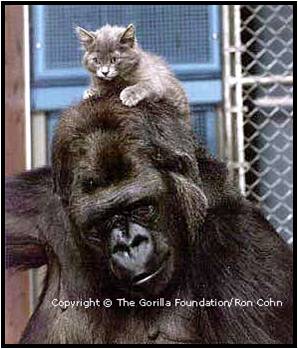
Koko
Koko

Sad.

America's Secret Fukushima Poisoning the Bread Basket of the World

Margaret Flowers and Devin Zeese

truthout, 5 June 2013

Early in the morning of July 16, 1979, a 20-foot section of the earthen dam blocking the waste pool for the Church Rock Uranium Mill in New Mexico caved in and released 95 million gallons of highly acidic fluid containing 1,100 tons of radioactive material. The fluid and waste flowed into the nearby Puerco River, traveling 80 miles downstream, leaving toxic puddles and backing up local sewers along the way.

Although this release of radiation, thought to be the largest in US history, occurred less than four months after the Three Mile Island partial nuclear meltdown, the Church Rock spill received little media attention. In contrast, the Three Mile Island accident made the headlines. And when the residents of Church Rock asked their governor to declare their community a disaster area so they could get recovery assistance, he refused.

Read full article with many links.

Also see:
Video footage here and here (time-stamped) from John Pilger's documentary “Utopia,” that tells of the Australian government/mining industry's discovery of uranium & precious minerals on aboriginal land and the deception & betrayal dealt to them.

Full Documentary: “Vegucated”

07 Health


Part sociological experiment and part adventure comedy, Vegucated follows three meat- and cheese-loving New Yorkers who agree to adopt a vegan diet for six weeks. Lured by tales of weight lost and health regained, they begin to uncover the hidden sides of animal agriculture that make them wonder whether solutions offered in films like Food, Inc. go far enough. This entertaining documentary showcases the rapid and at times comedic evolution of three people who discover they can change the world one bite at a time.

Also see:
+ Official site
+ Food overview from the Woodstock NY Animal Sanctuary
+ FoodIsPower.org
+ Documentary: Forks Over Knives (also search re-configure.org)
+ Documentary: Genetic Roulette
+
USDA's distribution of food dollar (foodpolitics.com)
+ Edible Schoolyard Project

Noteworthy: The United States Department of Agriculture every 5 years designs the food pyramid for all Americans.  In as much as all officers of the USDA have previously held executive positions with the cattle, dairy, pork and egg industry, it is not surprising that each new pyramid contains the foods that guarantees millions of Americans will perish each year (source).

Michelle Monk: Monsanto Wounded Still Dangeous

01 Agriculture, 03 Economy, 06 Family, 07 Health, 07 Other Atrocities, 11 Society, 12 Water
Michelle Monk
Michelle Monk

93% of Americans Want GMO Labeling… Why Isn't It Happening Already?! Oh, right, Monsanto's Sleeping With The Government

Ernest Barnes, Kansas Farmer, Sues Monsanto Over GMO Wheat Discovery

Genetic Roulette Full Documentary on Health Dangers of GMOs!

How The March Against Monsanto Can (and will) Change The World

Monsanto backing away from GMO crops in Europe

Monsanto Employees Within The Government

Monsanto's Losing! We Have Reached a Tipping Point!!

Roundup, An Herbicide, Could Be Linked To Parkinson's, Cancer And Other Health Issues, Study Shows

Victory!!! Monsanto Loses in Europe! Literally Giving Up!

Berto Jongman: Peak Soil

01 Agriculture, 01 Poverty, 07 Health, 07 Other Atrocities, 11 Society, Commerce, Corruption, Government, Ineptitude, True Cost
Berto Jongman
Berto Jongman

Experts unearth concerns over ‘peak soil'

In the past 40 years, 30 percent of the planet's arable land has become unproductive due to erosion, scientists say.

Reykjavik, Iceland – Soil is becoming endangered, and this reality needs to be part of our collective awareness in order to feed nine billion people by 2050, say experts meeting in Reykjavík.

And a big part of reversing soil decline is the use of carbon, the same element that is helping to overheat the planet.

“Keeping and putting carbon in its rightful place,” needs to be the mantra for humanity if we want to continue to eat, drink and combat global warming, concluded 200 researchers from more than 30 countries.

“There is no life without soil,” said Anne Glover, chief scientific adviser to the European Commission.

“While soil is invisible to most people it provides an estimated $1.5tn to $13tn dollars in ecosystem services annually,” Glover said at the Soil Carbon Sequestration conference that ended this week.

The dirt beneath our feet is a nearly magical world filled with tiny, wondrous creatures. A mere handful of soil might contain a half million different species including ants, earthworms, fungi, bacteria and other microorganisms. Soil provides nearly all of our food – only one percent of our calories come from the oceans, she said.

Soil also gives life to all of the world's plants that supply us with much of our oxygen, another important ecosystem service. Soil cleans water, keeps contaminants out of streams and lakes, and prevents flooding. Soil can also absorb huge amounts of carbon, second only to the oceans.

“It takes half a millennia to build two centimetres of living soil and only seconds to destroy it,” Glover said.

Read full article.

Michelle Monk: Monsanto Being Crushed Everywhere EXCEPT USA

01 Agriculture, 07 Health, 11 Society, Commerce, Corruption, Government
Michelle Monk
Michelle Monk

A good trend.

Shares of Monsanto (MON) dropped again Friday after South Korea joined Japan in suspending importation of genetically modified wheat sourced to the crop seed company.

The moves came after the U.S. Department of Agriculture announced Wednesday that it found genetically engineered wheat, never approved for sale and thought to have been shelved, growing on a farm in Oregon.

. . . . . . . .

Japan earlier canceled plans to buy more wheat from the U.S. Other Asian countries said they're mulling similar moves.

Meanwhile, Monsanto plans to quit lobbying for acceptance of its genetically modified seed in Europe, where it's met with strong resistance. Everyone from French wine producers to German crop growers has objected to its modified seed.

. . . . . . . .

Last year, GM crops accounted for 88% of all corn in the U.S., 94% of cotton and 93% of soybeans, according to USDA figures. In Europe, they're estimated to account for less than 1% of crops.

Read full article

noble gold